

Galaxy Z Fold4 Vs Xiaomi Redmi Note 13 Pro+

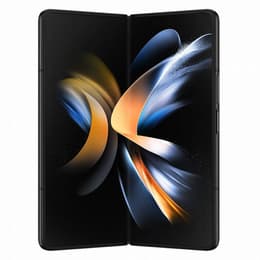
Galaxy Z Fold4
Galaxy Z Fold4
Starting at

Refurbished price:470.00

Versus €1,799.00 new

See options
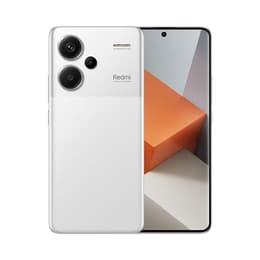
Xiaomi Redmi Note 13 Pro+
Starting at

Refurbished price:198.00

Versus €449.00 new

See options

Ratings

The Samsung Galaxy Z Fold4, released in August 2022, is a foldable smartphone that offers a unique dual-screen experience. In contrast, the Xiaomi Redmi Note 13 Pro+, launched in September 2023, presents a more traditional smartphone design with a focus on a balanced feature set. Both devices operate on the Android platform, but they cater to different user preferences through their distinct form factors and core capabilities.

Scores

Durability

When considering the long-term usability of these devices, their release timelines and software support policies are key factors.

  • Software Longevity: The Galaxy Z Fold4, released in August 2022, is eligible for four major Android OS updates and five years of security updates from Samsung, extending its software support well into the future. The Redmi Note 13 Pro+, launched in September 2023, is committed to receiving three major Android OS updates and four years of security updates, providing a solid, though slightly shorter, support period.
  • Physical Durability: The Galaxy Z Fold4 features an IPX8 water resistance rating, indicating protection against submersion in fresh water, and utilizes Gorilla Glass Victus+ on its cover screen and back, along with an Armor Aluminum frame for structural integrity. Its foldable design introduces a unique hinge mechanism, which has seen refinements over generations. The Redmi Note 13 Pro+ boasts an IP68 dust and water resistance rating, offering comprehensive protection against both dust ingress and water immersion, and its display is safeguarded by Gorilla Glass Victus.
  • Repairability: User experiences suggest that the Z Fold4's flexible inner screen and its pre-installed protector generally hold up well, though some users might observe minor separation over extended use. Repairability for the Z Fold4 has been noted to be more accessible and potentially less costly for screen repairs under a service plan compared to earlier foldable models. The Redmi Note 13 Pro+ has an average repairability score, with the use of adhesive for its back cover and battery potentially complicating some repairs, although battery removal is facilitated by pull tabs.

Year of Release

2022

2023

Compatible with latest Update

Yes

Yes

OS

Android

Android

Foldable

Yes

No

Performance

The performance of a smartphone directly impacts daily user experience, from app responsiveness to handling demanding tasks.

  • Processing Power: The Galaxy Z Fold4 is equipped with a high-end processor and 12GB of RAM, enabling it to manage intensive applications, complex multitasking, and graphic-heavy games with fluidity. This configuration ensures a responsive and seamless experience even under heavy load. The Redmi Note 13 Pro+ features a capable upper mid-range processor, available with either 8GB or 12GB of RAM. This hardware is well-suited for everyday operations, including web browsing, social media, and moderate gaming, providing a smooth user experience for most common tasks.
  • Multitasking and Responsiveness: For the Z Fold4, the generous RAM and powerful processor contribute to excellent system responsiveness, allowing users to switch between numerous applications and utilize its large foldable screen for split-screen productivity without noticeable slowdowns. The Redmi Note 13 Pro+ also offers good system responsiveness for its class, handling multiple applications open simultaneously without significant performance bottlenecks, making it a reliable device for daily use.
  • Battery Behavior: The Galaxy Z Fold4 houses a 4400 mAh battery, which typically provides sufficient power for a full day of use for many individuals, even with the demands of its dual displays. The Redmi Note 13 Pro+ is equipped with a larger 5000 mAh battery, often delivering all-day power and, for some users with lighter usage patterns, extending to two full days between charges.

Memory (GB)

12 GB

12 GB

Screen quality

The display is a primary interface for smartphone interaction, and both devices offer distinct visual experiences.

  • Display Technology and Size: The Galaxy Z Fold4 features two Dynamic AMOLED 2X displays. Its main, foldable screen measures 7.6 inches, providing an expansive canvas for content, while the external cover screen is 6.2 inches, offering a more traditional smartphone experience when folded. The Redmi Note 13 Pro+ comes with a single 6.67-inch AMOLED display, offering a generous viewing area in a conventional form factor.
  • Resolution and Clarity: The Z Fold4's main display boasts a resolution of 2176 x 1812 pixels, and its cover screen has a resolution of 2316 x 904 pixels, both delivering sharp and clear visuals. The Redmi Note 13 Pro+'s display offers a resolution of 1220 x 2712 pixels, resulting in crisp text and detailed images for an immersive viewing experience.
  • Brightness and Smoothness: Both devices feature an adaptive refresh rate of up to 120Hz, ensuring smooth scrolling, fluid animations, and a responsive touch experience. The displays on both phones offer high brightness levels, contributing to good outdoor visibility and vibrant color reproduction, enhancing the overall visual quality for various content types.

Resolution

1812 x 2176

1220 x 2712

Screen type

Foldable Dynamic AMOLED 2X

AMOLED

Audiovisual

Camera capabilities are a significant consideration for many users, and these devices offer different photographic strengths.

  • Rear Camera Systems: The Galaxy Z Fold4 is equipped with a versatile triple camera setup on its rear, comprising a 50MP wide-angle lens, a 12MP ultra-wide lens, and a 10MP telephoto lens with 3x optical zoom. This system is designed for flexibility across various shooting scenarios, delivering detailed and vibrant images, with notable improvements in low-light conditions compared to its predecessor. The Redmi Note 13 Pro+ features a 200MP main camera with optical image stabilization (OIS), an 8MP ultra-wide camera, and a 2MP macro lens. The high-resolution main sensor excels at capturing highly detailed photos, especially in well-lit environments.
  • Video Recording and Front Cameras: The Z Fold4 supports video recording up to 8K resolution at 24 frames per second, offering high-quality video capture. It includes a 10MP camera on the cover display and a 4MP under-display camera on the main foldable screen for video calls and selfies. The Redmi Note 13 Pro+ can record videos up to 4K resolution. Its front-facing camera is 16MP, capable of capturing clear selfies.
  • Audio Experience: Both smartphones feature stereo speakers, providing an enhanced audio experience for media consumption, gaming, and calls. The Z Fold4's microphone quality is also noted to be respectable for video recording and calls.

Main camera

50 megapixels

200 megapixels

Front camera

4 megapixels

16 megapixels

Miscellaneous

Beyond core features, several practical elements contribute to the overall user experience and device utility.

  • Connectivity and Ports: Both devices offer modern connectivity options. The Galaxy Z Fold4 supports 5G networks, Wi-Fi 6E for faster wireless internet, and Bluetooth 5.2. It utilizes a USB-C port for charging and data transfer. The Redmi Note 13 Pro+ also provides 5G connectivity, Wi-Fi 6, and Bluetooth 5.3, ensuring reliable wireless connections. It also features a USB-C port.
  • Biometrics and Sensors: The Galaxy Z Fold4 incorporates a side-mounted fingerprint sensor for secure and convenient unlocking. The Redmi Note 13 Pro+ features an under-display fingerprint sensor, offering a seamless and integrated biometric authentication method.
  • Design and Handling: The Galaxy Z Fold4, with its foldable design, weighs 263g, which is heavier than traditional smartphones, impacting its in-hand feel. Its dimensions change significantly when folded versus unfolded, offering different handling experiences. The Redmi Note 13 Pro+ has a more conventional slab design and weighs 204.5g, making it a lighter device that is generally comfortable for extended use.

Weight

263 g

204 g

Screen size (in)

7.6

6.67

Network

5G

5G

SIM card

Dual Physical SIM + eSIM

Dual Physical SIM

Carrier compatibility

Unlocked

Unlocked

User feedback for the Galaxy Z Fold4 frequently highlights its innovative foldable form factor, which provides a large, immersive screen for productivity and media consumption, effectively merging the functionalities of a smartphone and a tablet. Its robust performance and versatile camera system are also commonly praised. However, some users note its heavier build and the visible crease on the inner display as aspects to consider.

The Xiaomi Redmi Note 13 Pro+ is often commended for its vibrant AMOLED display, its capable 200MP main camera, and its rapid charging capabilities. Its consistent performance for daily tasks and overall value are generally well-received. Criticisms sometimes point to the secondary cameras being less impressive than the main sensor, and while battery life is generally good, it might not stand out for very heavy users despite its large capacity.

Users prioritizing a unique, expansive screen experience for advanced multitasking, content creation, and a premium, innovative design may find the Galaxy Z Fold4 aligns well with their needs. Conversely, individuals seeking a balanced smartphone with a strong main camera, a high-quality display, and reliable performance for everyday use in a traditional form factor may find the Redmi Note 13 Pro+ to be a suitable choice. Both devices are available as quality-assured refurbished options, offering an eco-friendly alternative for consumers looking to make informed and sustainable choices.

See all articles

Our recent comparisons