

Galaxy Z Fold4 Vs Xiaomi Redmi Note 13 Pro

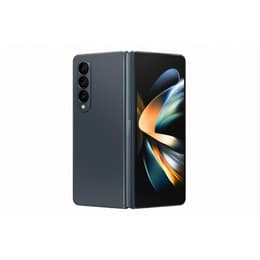
Galaxy Z Fold4
Galaxy Z Fold4
Starting at

Refurbished price:470.00

Versus €1,799.00 new

See options
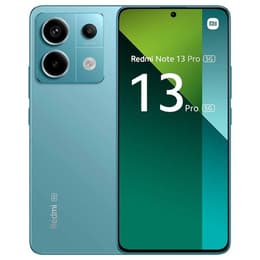
Xiaomi Redmi Note 13 Pro
Starting at

Refurbished price:179.00

Versus €349.00 new

See options

Ratings

The Samsung Galaxy Z Fold4, released in August 2022, represents a premium foldable smartphone experience, offering a unique form factor that transforms from a traditional smartphone into a tablet-sized display. In contrast, the Xiaomi Redmi Note 13 Pro, launched in January 2024, is a conventional slab-style smartphone designed to deliver a robust feature set within a more familiar design. While the Z Fold4 focuses on innovative versatility and high-end performance, the Redmi Note 13 Pro emphasizes a strong camera system and a vibrant display in a classic smartphone package. Both devices operate on the Android ecosystem, providing access to a vast array of applications and services.

Scores

Durability

When considering the long-term usability of these devices, their release timelines and software support policies are key differentiators. The Galaxy Z Fold4, being a premium device, benefits from an extended support window, while the Redmi Note 13 Pro, a newer release, also offers a competitive update schedule.

  • Software Longevity: The Samsung Galaxy Z Fold4 is expected to receive four major Android OS updates and five years of security updates, extending its software support until approximately 2027. The Xiaomi Redmi Note 13 Pro, despite its more recent launch, is slated for three major Android OS updates and four years of security patches, with support anticipated until January 2028. This means the Redmi Note 13 Pro will receive security updates for a similar duration, but one less major OS update compared to the Z Fold4.
  • Physical Durability: The Galaxy Z Fold4 features an IPX8 water resistance rating, indicating protection against submersion in water, but lacks official dust resistance. Its foldable design, while innovative, introduces complexities, and while Samsung has improved durability, some users have reported concerns regarding the inner screen protector over time. The Redmi Note 13 Pro comes with an IP54 rating, offering protection against dust and splashes. Its traditional form factor generally presents fewer moving parts, potentially leading to different long-term physical wear characteristics.
  • Repairability Considerations: Repairing a foldable device like the Z Fold4 can be more intricate due to its specialized components and design. Samsung has made efforts to reduce repair costs for screen damage with its care plans, but the overall complexity remains. The Redmi Note 13 Pro's repairability is considered average, with adhesive use for the back cover and battery potentially complicating repairs, and screen replacement requiring several components to be disassembled.

Year of Release

2022

2023

Compatible with latest Update

Yes

Yes

OS

Android

Android

Foldable

Yes

No

Performance

The performance of a smartphone is crucial for daily tasks, from navigating applications to engaging in demanding multimedia. Both devices offer capable hardware, but their underlying architectures cater to different user expectations.

  • Processing Power: The Galaxy Z Fold4 is equipped with a high-end processor from its release year, designed to handle intensive multitasking, demanding applications, and graphic-heavy gaming with smooth responsiveness. Users can expect rapid app loading and seamless transitions between various tasks. The Redmi Note 13 Pro features a current-generation processor that provides a fluid experience for everyday use, including social media, browsing, and moderate gaming. While capable, it is optimized for efficient performance rather than pushing the absolute limits of mobile processing.
  • Multitasking and Storage: The Z Fold4 typically comes with 12GB of RAM, allowing for extensive multitasking and keeping numerous applications active in memory without significant slowdowns. It offers generous internal storage options up to 1TB, catering to users with large media libraries or extensive app collections. The Redmi Note 13 Pro is available with 8GB or 12GB of RAM, providing ample capacity for most users' multitasking needs. Its storage options go up to 512GB, which is substantial for a wide range of content.
  • Battery Performance: The Galaxy Z Fold4 houses a 4400 mAh battery, which users generally find sufficient for a full day of regular use, with some reporting up to 18 hours under lighter usage. The Redmi Note 13 Pro features a larger 5000 mAh or 5100 mAh battery, often providing a day and a half of usage for many users, even with moderate to heavy activity. It also supports 67W turbo charging for quick power replenishment.

Memory (GB)

12 GB

8 GB

Screen quality

The display is a primary interaction point for any smartphone, and these two devices offer distinct visual experiences, largely influenced by their form factors and display technologies.

  • Display Technology and Clarity: The Galaxy Z Fold4 features two Dynamic AMOLED 2X displays. The main 7.6-inch foldable screen offers a high resolution of 2176 x 1812 pixels, providing exceptional clarity and vibrant colors, ideal for immersive content consumption and productivity. The cover display is a 6.2-inch Dynamic AMOLED 2X panel with a resolution of 904 x 2316 pixels, offering a more traditional smartphone experience when folded. The Redmi Note 13 Pro boasts a 6.67-inch AMOLED display with a resolution of 1220 x 2712 pixels, delivering sharp visuals and deep blacks.
  • Brightness and Smoothness: Both devices feature a 120Hz adaptive refresh rate on their main displays, ensuring smooth scrolling and fluid animations. The Redmi Note 13 Pro offers a high peak brightness of up to 1800 nits, making it highly visible even in bright outdoor conditions. The Z Fold4's displays also offer excellent brightness for various environments, though specific peak brightness figures are not as prominently highlighted in user reviews as the Redmi Note 13 Pro.
  • Viewing Experience: The Z Fold4's large, foldable inner screen provides a tablet-like experience, enhancing multitasking, media viewing, and reading. The wider aspect ratio of its cover screen also improves usability when the device is folded. The Redmi Note 13 Pro's expansive flat AMOLED display offers a premium viewing experience for a traditional smartphone, with slim bezels contributing to an immersive feel.

Resolution

1812 x 2176

1220 x 2712

Screen type

Foldable Dynamic AMOLED 2X

AMOLED

Audiovisual

Photography and videography capabilities are significant factors for many users, and both the Galaxy Z Fold4 and the Redmi Note 13 Pro offer compelling camera systems, albeit with different strengths and focuses.

  • Rear Camera Systems: The Galaxy Z Fold4 features a versatile triple-camera setup on the rear, including a 50 MP main sensor with optical image stabilization (OIS), a 12 MP ultrawide lens, and a 10 MP telephoto lens with 3x optical zoom and OIS. This configuration is praised for capturing detailed, balanced, and vibrant images with good low-light performance. The Redmi Note 13 Pro stands out with a high-resolution 200 MP main camera, also equipped with OIS, alongside an 8 MP ultrawide and a 2 MP macro lens. Its main sensor excels in capturing fine details and vibrant colors, particularly in well-lit conditions.
  • Low-Light and Auxiliary Cameras: Both devices perform well in everyday photography. The Z Fold4's telephoto lens provides useful optical zoom capabilities. While the Redmi Note 13 Pro's 200 MP main camera delivers strong results in low light, its 8 MP ultrawide and 2 MP macro cameras are considered functional but do not match the detail or quality of the main sensor.
  • Video Recording and Selfies: The Galaxy Z Fold4 supports video recording up to 8K at 24 frames per second and 4K at 30/60 frames per second. It includes a 10 MP cover selfie camera and a 4 MP under-display camera on the main screen, with the latter primarily suited for video calls rather than high-quality photos. The Redmi Note 13 Pro records video at up to 4K at 30 frames per second, and 1080p at 30/60 frames per second. It features a 16 MP front-facing camera that provides solid performance for selfies and video calls.

Main camera

50 megapixels

200 megapixels

Front camera

4 megapixels

16 megapixels

Miscellaneous

Beyond the core specifications, several practical elements contribute to the overall user experience, including connectivity, physical design, and additional features.

  • Connectivity and Ports: The Galaxy Z Fold4 supports 5G connectivity, Wi-Fi 6E for faster wireless internet, and Bluetooth 5.2. It features a USB-C 3.2 port for data transfer and charging. The Redmi Note 13 Pro also offers 5G connectivity and Bluetooth 5.2, with Wi-Fi 5 support. It includes a USB-C 2.0 port and retains a 3.5mm headphone jack, a feature absent on the Z Fold4.
  • Biometric Security and Design: The Z Fold4 incorporates a side-mounted fingerprint sensor and face recognition for secure unlocking. Its unique folding design allows it to be compact when closed and expansive when open, though it is heavier at 263g. The Redmi Note 13 Pro features an under-display optical fingerprint sensor and face unlock. It presents a more conventional, lighter design at 187g, making it comfortable for single-handed use.
  • Build Materials and Handling: The Galaxy Z Fold4 utilizes premium materials like Gorilla Glass Victus+ for its cover screen and back, with an aluminum frame, contributing to a robust feel. Its folded dimensions are 155.1 x 67.1 x 15.8-14.2 mm, expanding to 155.1 x 130.1 x 6.3 mm when unfolded. The Redmi Note 13 Pro features Gorilla Glass Victus on its front display and a glass back with a plastic frame, offering a durable yet lighter construction. Its dimensions are 161.15 x 74.24 x 7.98 mm.

Weight

263 g

187 g

Screen size (in)

7.6

6.67

Network

5G

5G

SIM card

Dual Physical SIM + eSIM

Dual Physical SIM

Carrier compatibility

Unlocked

Unlocked

The Samsung Galaxy Z Fold4 and the Xiaomi Redmi Note 13 Pro cater to different user needs and preferences, each excelling in its respective category. User sentiment for the Z Fold4 often highlights its innovative foldable design, enabling a versatile tablet-like experience for multitasking and media consumption. Its powerful performance and capable camera system are also frequently praised. However, some users express concerns about its weight, thickness, and the long-term durability of the inner screen, as well as the visibility of the crease.

The Redmi Note 13 Pro receives positive feedback for its vibrant AMOLED display, impressive 200 MP main camera, and strong battery life with fast charging capabilities. Users appreciate its solid everyday performance and the inclusion of a 3.5mm headphone jack. Criticisms often point to the less impressive performance of its auxiliary cameras (ultrawide and macro) and the absence of 4K@60fps video recording.

Users prioritizing a cutting-edge, adaptable device that offers both a smartphone and tablet experience in one, with top-tier performance for demanding tasks, may find the Galaxy Z Fold4 well-suited to their needs. Its extended software support also provides a longer period of updates. Conversely, individuals seeking a reliable, high-performing traditional smartphone with an excellent main camera, a brilliant display, and extended battery life for daily use will likely lean towards the Xiaomi Redmi Note 13 Pro. It offers a compelling package for those who value a strong core experience without the unique form factor of a foldable.

For those considering either device, exploring quality-assured refurbished options can provide an eco-friendly alternative, extending the life cycle of these technologies and offering a sustainable choice.


See all articles

Our recent comparisons






