
Galaxy Z Fold4 Vs iPhone 14 Pro

Galaxy Z Fold4
Galaxy Z Fold4
Starting at

Refurbished price:433.00

Versus €1,889.00 new

See options
iPhone 14 Pro
iPhone 14 Pro
Starting at

Refurbished price:424.00

Versus €1,339.00 new

See options

Ratings

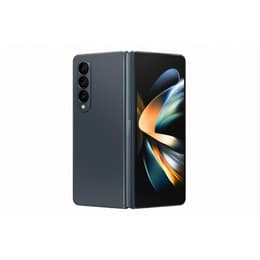
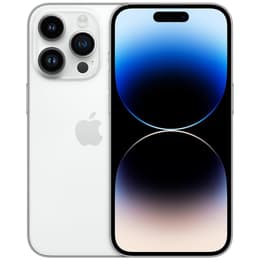
The Samsung Galaxy Z Fold4, released in August 2022, and the Apple iPhone 14 Pro, launched in September 2022, represent distinct approaches to high-end smartphone design. While the Galaxy Z Fold4 offers a unique foldable form factor, transforming from a traditional smartphone into a small tablet, the iPhone 14 Pro maintains a conventional smartphone design. These devices run on fundamentally different operating systems—Android and iOS respectively—offering unique ecosystems for users to navigate their daily digital tasks. The primary differentiator lies in their physical form: one prioritizes a massive, flexible workspace for multitasking, while the other focuses on a compact, high-performance experience with a focus on photography and software integration.

Scores

Durability

When considering the long-term usability of these devices, their release timelines and software support policies are key factors.

  • Software Longevity: The Galaxy Z Fold4 is eligible for up to four major Android OS updates and five years of security updates, extending its support until approximately 2027. The iPhone 14 Pro typically receives iOS updates for a longer duration, often five to six years from its release, potentially offering extended software support.
  • Physical Durability: The iPhone 14 Pro features a Ceramic Shield front cover and a textured matte glass back with a stainless steel design, offering IP68 water and dust resistance. In contrast, the Galaxy Z Fold4 features Gorilla Glass Victus+ on its cover screen and back panel, with an 'Armor Frame' aluminum outer frame, and boasts an IPX8 water resistance rating, though it lacks an official dust resistance rating.
  • Repairability Considerations: The foldable nature of the Z Fold4's inner screen introduces a different set of durability considerations compared to the rigid display of the iPhone 14 Pro, with some users reporting issues like hinge jamming or inner screen protector peeling after about a year. While the iPhone 14 Pro initially received a favorable repairability assessment, its score was later downgraded due to software limitations and parts pairing requirements that complicate independent repairs.

Year of Release

2022

2022

Compatible with latest Update

Yes

Yes

OS

Android

iOS

Foldable

Yes

No

Performance

Both devices are designed to handle demanding workloads, though they excel in different types of user interactions and multitasking scenarios.

  • Processing Power: The Galaxy Z Fold4 handles demanding applications and multitasking smoothly, thanks to its capable current-generation processor. The iPhone 14 Pro offers powerful performance, ensuring smooth operation for heavy apps and graphics-intensive games.
  • Multitasking and Memory: The Galaxy Z Fold4 comes with 12GB of RAM, facilitating extensive multitasking and app management, allowing users to run up to three applications simultaneously on its large internal screen. The iPhone 14 Pro has 6GB of RAM and provides a fluid experience for switching between applications.
  • Battery Behavior: The Galaxy Z Fold4 houses a 4400 mAh battery, which generally provides a full day of use for typical activities, though heavy usage like navigation or extensive streaming can lead to faster depletion. The iPhone 14 Pro has a 3200 mAh battery, noted for its efficient power management, often lasting through a full day of heavy use.

Memory (GB)

12 GB

6 GB

Screen quality

The display experience is a primary differentiator, with the Galaxy Z Fold4 offering a unique adaptable screen and the iPhone 14 Pro providing a consistently high-quality traditional display.

  • Display Technology and Size: The Galaxy Z Fold4 features two Dynamic AMOLED 2X displays: a 7.6-inch foldable inner screen with a resolution of 2176 x 1812 pixels, and a 6.2-inch cover screen with a resolution of 2316 x 904 pixels. The iPhone 14 Pro has a single 6.1-inch Super Retina XDR OLED display with a resolution of 2556 x 1179 pixels, resulting in a pixel density of approximately 460 ppi.
  • Brightness and Clarity: Both devices feature high peak brightness levels, ensuring that the screens remain legible even under direct sunlight during outdoor use. The iPhone 14 Pro's display can reach up to 2,000 nits peak brightness.
  • Refresh Rate and Features: Both models offer an adaptive refresh rate of up to 120Hz for smooth scrolling and responsiveness. The iPhone 14 Pro introduces a dynamic interface element at the top of the screen that changes shape to show notifications and background activity, while the Galaxy Z Fold4 uses an under-display camera on the main screen to provide an uninterrupted viewing area.

Resolution

1812 x 2176

1179 x 2556

Screen type

Foldable Dynamic AMOLED 2X

LTPO Super Retina XDR OLED

Audiovisual

Both devices offer advanced camera systems, but they approach photography with different strengths and user experiences.

  • Rear Camera Systems: The Galaxy Z Fold4 features a triple-camera setup on the rear, including a 50MP wide-angle lens, a 12MP ultrawide lens, and a 10MP telephoto lens with 3x optical zoom. The iPhone 14 Pro also has a triple-camera system, featuring a 48MP main sensor, a 12MP ultrawide, and a 12MP telephoto lens with 3x optical zoom.
  • Photography Performance: The iPhone 14 Pro's main camera, which typically produces 12MP binned images from its 48MP sensor, delivers excellent detail and dynamic range, with significant advancements in low-light performance across all cameras due to larger sensors and improved software processing. The Galaxy Z Fold4 provides good point-and-shoot capabilities, capturing warm and vibrant shots, and shows improvements over its predecessor, particularly in low light for its main and ultrawide lenses.
  • Front and Video Capabilities: The Galaxy Z Fold4 includes a 10MP cover camera and a 4MP under-display camera on the main screen, though the under-display camera may struggle in low-light conditions. The iPhone 14 Pro features a 12MP front camera and offers advanced video recording features like Cinematic Mode and ProRes. The Galaxy Z Fold4's speakers are noted for their quality, enhancing the media consumption experience.

Main camera

50 megapixels

48 megapixels

Front camera

4 megapixels

12 megapixels

Miscellaneous

Beyond the core specifications, the physical handling, connectivity, and security features of these devices impact daily comfort and utility.

  • Form Factor and Weight: The Galaxy Z Fold4 is significantly heavier at 263 grams and thicker than the iPhone 14 Pro, especially when folded. Its dimensions are 155.1 x 67.1 x 14.2-15.8 mm when folded, expanding to 155.1 x 130.1 x 6.3 mm when unfolded. The iPhone 14 Pro weighs 206 grams and measures 147.5 x 71.5 x 7.85 mm.
  • Connectivity and Ports: Both devices support 5G connectivity for fast mobile data speeds. The Galaxy Z Fold4 uses a USB-C port, a common standard for many modern electronics, while the iPhone 14 Pro uses a Lightning port, specific to the Apple ecosystem.
  • Unique Features and Security: The Galaxy Z Fold4 supports the S Pen Fold Edition on its main screen and offers enhanced multitasking with its taskbar and multi-window capabilities. It uses a side-mounted fingerprint sensor for security. The iPhone 14 Pro relies on facial recognition technology for secure unlocking and includes features like Emergency SOS via satellite and Crash Detection.

Weight

263 g

206 g

Screen size (in)

7.6

6.1

Network

5G

5G

SIM card

Dual Physical SIM + eSIM

Physical SIM + eSIM

Carrier compatibility

Unlocked

Unlocked

User feedback for the Galaxy Z Fold4 often highlights its innovative foldable screen as a significant advantage, offering unparalleled versatility for multitasking and media consumption. Users appreciate the ability to have a large, tablet-like display in a pocketable form factor. However, some common concerns revolve around the durability of the inner foldable screen, the visible crease, and the quality of the under-display camera for photography. The device is also noted for being thick and heavy.

The iPhone 14 Pro is frequently praised for its exceptional camera system, delivering high-quality photos and videos across various conditions, and its smooth overall performance. The Dynamic Island feature is also a point of positive user sentiment. Criticisms sometimes include its battery life, which, while generally good for a day, may not match the endurance of larger phones, and its charging speeds are not as fast as some competitors.

Users prioritizing a large, adaptable screen for productivity, extensive multitasking, and an immersive media consumption experience may find the Galaxy Z Fold4 well-suited to their needs. Conversely, users who value a compact, high-performance device with a top-tier camera system and a streamlined software experience will likely lean toward the iPhone 14 Pro. For those considering either of these devices, exploring quality-assured refurbished options can be an eco-friendly alternative.


See all articles

Our recent comparisons