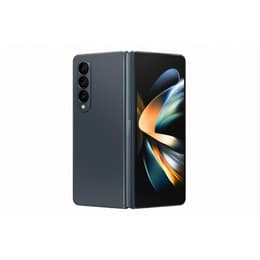
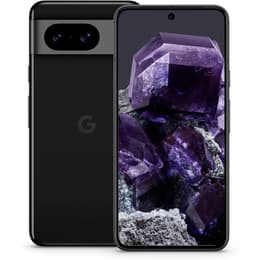


Galaxy Z Fold4 Vs Google Pixel 8

Galaxy Z Fold4
Galaxy Z Fold4
Starting at

Refurbished price:433.00

Versus €1,889.00 new

See options
Google Pixel 8
Google Pixel 8
Starting at

Refurbished price:235.00

Versus €999.00 new

See options

Ratings

The Samsung Galaxy Z Fold4, released in August 2022, is a foldable smartphone that transforms from a compact device into a larger tablet-like experience. In contrast, the Google Pixel 8, launched in October 2023, is a traditional slab-style smartphone known for its advanced camera capabilities and software experience. These devices offer distinct approaches to mobile technology, with the Fold4 prioritizing screen real estate and multitasking, while the Pixel 8 focuses on a streamlined user interface and computational photography.

Scores

Durability

When considering the long-term usability of these devices, their release timelines and software support policies are key differentiators.

  • Software Longevity: The Google Pixel 8 offers an extended software support period, promising seven years of OS, security, and feature updates from its release. The Galaxy Z Fold4, released a year earlier, typically receives four major Android OS updates and five years of security updates.
  • Repairability: The Google Pixel 8 has received moderate repairability scores, with some components being easier to replace than others, though certain repairs like battery replacement can be challenging due to adhesives. Information regarding the specific repairability score for the Galaxy Z Fold4 is less readily available, but foldable devices generally present more complex repair challenges due to their intricate design.
  • Expected Lifespan: Users prioritizing the longest possible software support and up-to-date features will find the Pixel 8's extended update commitment beneficial. The Z Fold4, while still receiving updates, will reach its end-of-life for major OS upgrades sooner.

Year of Release

2022

2023

Compatible with latest Update

Yes

Yes

OS

Android

Android

Foldable

Yes

No

Performance

The performance of both the Galaxy Z Fold4 and the Google Pixel 8 is tailored to their respective designs and user experiences.

  • Processing Power: The Galaxy Z Fold4 is equipped with a powerful processor that handles demanding applications and multitasking smoothly, providing a responsive experience across its dual displays. The Google Pixel 8 features an advanced processor designed with a strong emphasis on artificial intelligence and machine learning, which enhances features like camera processing and voice commands.
  • Multitasking and Responsiveness: The Galaxy Z Fold4, with its larger RAM capacity, is well-suited for extensive multitasking, allowing users to run multiple applications simultaneously on its expansive inner screen without significant slowdowns. The Pixel 8, while capable of smooth multitasking for most users, has a slightly lower RAM capacity.
  • Battery Behavior: The Galaxy Z Fold4, despite having a substantial battery, powers two displays, which can lead to varied battery life depending on usage patterns, particularly with heavy use of the larger inner screen. The Google Pixel 8, with its adaptive battery features and a slightly larger battery capacity, generally offers reliable all-day power for typical usage, though some users have reported faster drain with mobile data.

Memory (GB)

12 GB

8 GB

Screen quality

The display experience is a primary distinguishing factor between these two smartphones, offering different visual and interactive possibilities.

  • Display Technology and Size: The Galaxy Z Fold4 features a unique dual-screen setup, including a 7.6-inch foldable Dynamic AMOLED 2X inner display and a 6.2-inch Dynamic AMOLED 2X cover display. This allows for a tablet-like viewing experience when unfolded. The Google Pixel 8 has a single 6.2-inch Actua OLED display, providing a vibrant and clear viewing experience in a traditional form factor.
  • Resolution and Clarity: Both devices offer high-resolution displays. The Z Fold4's inner screen provides a sharp 2176 x 1812 pixel resolution, while its cover screen has a 2316 x 904 pixel resolution. The Pixel 8 features a 2400 x 1080 pixel resolution, ensuring crisp visuals for everyday content.
  • Brightness and Refresh Rate: Both phones feature adaptive refresh rates up to 120Hz for smooth scrolling and responsiveness. The Pixel 8's display can reach a peak brightness of up to 2000 nits, enhancing visibility in bright outdoor conditions.

Resolution

1812 x 2176

1080 x 2400

Screen type

Foldable Dynamic AMOLED 2X

OLED

Audiovisual

Both smartphones offer capable camera systems, though their strengths and approaches to photography differ.

  • Camera System Configuration: The Galaxy Z Fold4 features a versatile triple-camera system on the rear, including a 50MP main sensor, a 12MP ultrawide, and a 10MP telephoto lens with 3x optical zoom. It also has a 10MP cover screen selfie camera and a 4MP under-display camera on the main screen. The Google Pixel 8 is equipped with a dual-camera setup, featuring a 50MP main camera and a 12MP ultrawide camera with autofocus. It has a 10.5MP front-facing camera.
  • Photography Performance: The Z Fold4's camera system delivers detailed and vibrant photos, with improvements over its predecessor, particularly in its main sensor and telephoto capabilities. The Pixel 8 excels in computational photography, producing balanced tones and pulling detail from shadows, especially in challenging lighting conditions, making it a strong point-and-shoot option.
  • Video Recording and Features: Both devices offer high-quality video recording. The Z Fold4 supports up to 8K video recording. The Pixel 8 provides strong video stabilization and clean sound recording, with good performance up to 4K 60fps. The Pixel 8 also leverages its AI capabilities for enhanced video features.

Main camera

50 megapixels

50 megapixels

Front camera

4 megapixels

10.5 megapixels

Miscellaneous

Beyond the core features, several practical elements contribute to the overall user experience of these devices.

  • Connectivity: Both smartphones support modern connectivity standards, including 5G for fast mobile data, and advanced Wi-Fi protocols. The Pixel 8 supports Wi-Fi 7, offering potentially faster wireless speeds.
  • Ports and Sensors: Both devices utilize a USB-C port for charging and data transfer. The Galaxy Z Fold4 supports USB 3.2 Gen 1, while the Pixel 8 uses USB 3.2. The Pixel 8 includes an in-display fingerprint scanner and secure facial recognition for authentication. The Z Fold4 also features a fingerprint scanner, typically side-mounted.
  • Design and Handling: The Galaxy Z Fold4 is a heavier device due to its foldable design and dual screens, weighing 263g. Its folded dimensions make it thicker but narrower, while unfolded it offers a larger, thinner profile. The Google Pixel 8 is a more compact and lighter device at 187g, with a traditional slab form factor, making it easier for one-handed use. Both devices feature durable glass and aluminum constructions, with the Z Fold4 offering IPX8 water resistance and the Pixel 8 providing IP68 dust and water resistance.

Weight

263 g

187 g

Screen size (in)

7.6

6,2

Network

5G

5G

SIM card

Dual Physical SIM + eSIM

Physical SIM + eSIM

Carrier compatibility

Unlocked

Unlocked

The Samsung Galaxy Z Fold4 and Google Pixel 8 cater to different user preferences, each excelling in distinct areas. The Z Fold4 is often praised for its innovative foldable design, which provides a large, immersive display for productivity and media consumption. Users appreciate its multitasking capabilities and the ability to have a tablet-sized screen in a portable form factor. However, some users have noted concerns regarding its battery life, especially with heavy use of the inner display, and its overall weight.

The Google Pixel 8 receives acclaim for its exceptional camera performance, particularly its computational photography features that deliver consistent and high-quality images across various conditions. Its long-term software support commitment is also a significant advantage, ensuring the device remains updated for an extended period. Criticisms sometimes point to its battery life, with some users experiencing faster drain on mobile data, and a perception that its raw performance might not match some competitors.

Users prioritizing a versatile device with a large, adaptable screen for productivity and entertainment may find the Galaxy Z Fold4 well-suited to their needs. Those who value a top-tier camera experience, a streamlined Android interface, and extended software longevity will likely lean towards the Google Pixel 8. Both devices are available as quality-assured refurbished options, providing an eco-friendly alternative for consumers.

See all articles

Our recent comparisons