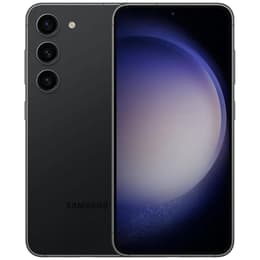



Galaxy S23 Vs Google Pixel 9 Pro XL

Galaxy S23
Galaxy S23
Starting at

Refurbished price:240.00

Versus €959.00 new

See options
Google Pixel 9 Pro XL
Starting at

Refurbished price:423.00

Versus €1,298.07 new

See options

Ratings

The Samsung Galaxy S23, released in early 2023, and the Google Pixel 9 Pro XL, launched in late 2024, represent distinct approaches to the premium smartphone experience. While both devices offer robust performance and advanced camera systems, they differentiate themselves through their design philosophies, software ecosystems, and specific hardware strengths. The Galaxy S23 emphasizes a compact form factor with a focus on a refined user interface, whereas the Pixel 9 Pro XL prioritizes a larger display, extended software support, and deep integration of artificial intelligence features.

Scores

Durability

The longevity of a smartphone is influenced by its physical resilience and the duration of its software support. These two devices offer different timelines for updates and exhibit varying characteristics in their physical construction.

  • Software Support: The Galaxy S23 launched with Android 13 and is slated to receive four major operating system updates, extending its support to Android 17, along with five years of security updates, concluding around 2028. In contrast, the Google Pixel 9 Pro XL, which debuted with Android 14, benefits from an extended commitment of seven years of both operating system and security updates, ensuring support until at least August 2031. This longer support period for the Pixel 9 Pro XL means it will remain current with the latest Android features and security patches for a significantly longer time.
  • Physical Durability: Both devices incorporate Gorilla Glass Victus 2 for screen protection and feature an aluminum frame, contributing to their overall structural integrity. The Galaxy S23 has demonstrated good resistance in controlled drop tests, often surviving with minor scuffs, though direct face drops can result in screen damage. The Pixel 9 Pro XL also utilizes Gorilla Glass Victus 2 and has shown strong performance in durability assessments, with Google claiming improved drop test resilience compared to its predecessors. Both phones carry an IP68 rating for dust and water resistance, indicating a high level of protection against environmental elements.
  • Expected Lifespan: Users can expect the Galaxy S23 to offer a reliable experience for approximately 4-5 years, considering its update policy. The Pixel 9 Pro XL, with its seven-year update promise, is designed for a longer practical lifespan, potentially serving users effectively for 6-7 years before software obsolescence becomes a significant factor.

Year of Release

2023

2024

Compatible with latest Update

Yes

Yes

OS

Android

Android

Foldable

No

No

Performance

Performance in daily use is a critical aspect for any smartphone, encompassing how smoothly applications run, the efficiency of multitasking, and the device's overall responsiveness. Both the Galaxy S23 and the Pixel 9 Pro XL deliver high-level performance, though they achieve this with different underlying architectures.

  • Processing Power: The Galaxy S23 is equipped with a processor that handles demanding applications and multitasking efficiently, providing a consistently smooth user experience. The Pixel 9 Pro XL features a newer generation processor specifically designed by Google, which places a strong emphasis on artificial intelligence and machine learning tasks, contributing to enhanced on-device AI capabilities and efficient processing for complex operations. This difference means the Pixel 9 Pro XL may offer more advanced AI-driven features and potentially better optimization for future AI workloads.
  • Memory and Storage: The Galaxy S23 typically comes with 8GB of RAM, which is sufficient for most multitasking scenarios and ensures smooth app switching. Storage options for the S23 range from 128GB to 512GB. The Pixel 9 Pro XL offers a more substantial 16GB of RAM, providing greater headroom for intensive multitasking, running numerous applications simultaneously, and handling large datasets. Its storage configurations are also more expansive, starting from 128GB and going up to 1TB, catering to users with extensive storage needs.
  • Battery Behavior: The Galaxy S23 houses a 3900 mAh battery, which users generally report as providing reliable all-day power under typical usage conditions, marking a notable improvement in efficiency over its predecessor. The Pixel 9 Pro XL is fitted with a larger 5060 mAh battery, designed to support its more powerful components and larger display, often resulting in excellent battery endurance that can extend beyond a single day for many users.

Memory (GB)

8 GB

16 GB

Screen quality

The display is a primary interface for smartphone interaction, and both the Galaxy S23 and Pixel 9 Pro XL offer high-quality viewing experiences, though with differences in size and specific characteristics.

  • Display Technology and Size: The Galaxy S23 features a 6.1-inch Dynamic AMOLED 2X display, known for its vibrant colors and deep blacks. The Pixel 9 Pro XL boasts a larger 6.8-inch Super Actua LTPO OLED display, providing a more expansive canvas for content consumption and productivity. The larger screen on the Pixel 9 Pro XL offers a more immersive viewing experience, particularly for video and gaming.
  • Resolution and Brightness: The Galaxy S23 has a resolution of 2340x1080 pixels, delivering sharp and clear visuals for its size. The Pixel 9 Pro XL offers a higher QHD+ resolution of 2992x1344 pixels, resulting in a slightly higher pixel density on its larger screen, which translates to exceptionally crisp details. In terms of brightness, the Pixel 9 Pro XL can achieve a higher peak brightness of up to 3000 nits, making it particularly well-suited for outdoor visibility and HDR content viewing, compared to the S23's capable but lower peak brightness.
  • Refresh Rate and Smoothness: Both devices feature a 120Hz adaptive refresh rate, ensuring smooth scrolling and fluid animations. The Galaxy S23's display can dynamically adjust its refresh rate to optimize power consumption. The Pixel 9 Pro XL's LTPO OLED panel can scale its refresh rate down to 1Hz, offering even greater power efficiency when displaying static content, while still providing a highly responsive experience when needed.

Resolution

1080 x 2340

1344 x 2992

Screen type

Dynamic AMOLED 2X

LTPO OLED

Audiovisual

Both the Galaxy S23 and the Pixel 9 Pro XL are equipped with advanced camera systems designed to capture high-quality photos and videos, each with its own strengths and computational photography philosophies.

  • Rear Camera System: The Galaxy S23 features a versatile triple-camera setup, including a 50 MP wide-angle main sensor, a 12 MP ultra-wide lens, and a 10 MP telephoto lens capable of 3x optical zoom and up to 30x digital zoom. It supports 8K video recording at 30 frames per second. The Pixel 9 Pro XL also comes with a triple-camera system, comprising a 50 MP main sensor, a 48 MP ultrawide lens, and a 48 MP telephoto lens that offers 5x optical zoom and up to 30x Super Res Zoom. The Pixel 9 Pro XL also supports 8K video recording at 30 frames per second.
  • Photography Performance: The Galaxy S23 delivers consistent image quality with natural color reproduction and good detail in various lighting conditions. Its camera system is well-regarded for its reliability. The Pixel 9 Pro XL is particularly noted for its exceptional computational photography, producing images with impressive detail, dynamic range, and strong low-light performance, often excelling in challenging scenarios. Its AI-driven features enhance image processing, including improved zoom capabilities and portrait mode effects.
  • Front Camera and Video Quality: The Galaxy S23 includes a capable front-facing camera for selfies and video calls. The Pixel 9 Pro XL features a higher-resolution 42 MP front camera, which provides greater detail and improved performance for selfies and vlogging, including autofocus for the first time in a Pixel front camera. Both devices offer high-quality video recording, with the Pixel 9 Pro XL's video capabilities often praised for their stability and clarity, especially in bright environments.

Main camera

50 megapixels

50 megapixels

Front camera

12 megapixels

42 megapixels

Miscellaneous

Beyond core performance and camera capabilities, several practical elements contribute to the overall user experience, including connectivity, physical design, and security features.

  • Connectivity and Ports: Both the Galaxy S23 and Pixel 9 Pro XL support 5G connectivity, ensuring access to the latest mobile network speeds. They also feature modern Wi-Fi standards and Bluetooth for wireless connections. The Galaxy S23 utilizes a USB-C port for charging and data transfer. The Pixel 9 Pro XL also uses a USB-C port, and both devices omit a traditional 3.5mm headphone jack, a common trend in contemporary smartphones.
  • Biometric Security: For secure unlocking and authentication, the Galaxy S23 incorporates an ultrasonic under-display fingerprint sensor, known for its speed and accuracy. It also offers facial recognition. The Pixel 9 Pro XL similarly features an under-display fingerprint sensor and facial recognition, providing convenient and secure access to the device.
  • Design and Handling: The Galaxy S23 presents a more compact and lighter design, with dimensions of approximately 146.3 x 70.9 x 7.6mm and a weight of around 168g. This makes it easier for one-handed use and more comfortable to carry in smaller pockets. The Pixel 9 Pro XL, with its larger 6.8-inch display, has dimensions of approximately 162.8 x 76.6 x 8.5mm and weighs around 213g, offering a more substantial feel and a larger viewing area, which might appeal to users who prioritize screen real estate. Both devices feature premium build materials, including glass backs and aluminum frames.

Weight

167 g

221 g

Screen size (in)

6.1

6.8

Network

5G

5G

SIM card

Physical SIM + eSIM

Physical SIM + eSIM

Carrier compatibility

Unlocked

Unlocked

The Samsung Galaxy S23 and Google Pixel 9 Pro XL cater to slightly different user preferences within the premium smartphone market. User feedback for the Galaxy S23 often praises its balanced performance, comfortable size, and reliable camera system, making it a solid choice for those seeking a compact yet powerful device. Common criticisms sometimes point to its battery life, though it was an improvement over its predecessor, and its software update policy, while good, is not as extensive as some competitors.

The Google Pixel 9 Pro XL is frequently lauded for its exceptional camera capabilities, particularly its computational photography and AI-enhanced features, which consistently produce high-quality images, even in challenging conditions. Its extended software support of seven years is a significant advantage, appealing to users who intend to keep their device for a longer period. Users also appreciate its large, bright display and robust battery life. Some discussions around Pixel devices occasionally touch upon the Tensor chip's raw performance compared to other flagship processors, though its real-world usage is generally smooth, especially with AI integration.

Users prioritizing a more compact form factor, a refined user interface, and a proven ecosystem may find the Galaxy S23 well-suited to their needs. Conversely, individuals who value a larger, more immersive display, cutting-edge computational photography, deep AI integration, and a significantly longer software support window will likely lean towards the Google Pixel 9 Pro XL. Both devices offer a premium experience, and for those considering a sustainable choice, quality-assured refurbished options for either model provide an eco-friendly alternative.


See all articles

Our recent comparisons






