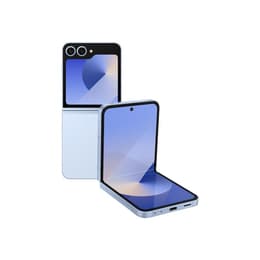
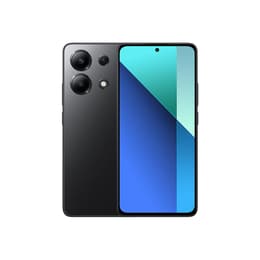


Galaxy Z Flip6 Vs Xiaomi Redmi Note 13

Galaxy Z Flip6
Galaxy Z Flip6
Starting at

Refurbished price:415.00

Versus €1,199.99 new

See options
Xiaomi Redmi Note 13
Starting at

Refurbished price:137.00

Versus €340.00 new

See options

Ratings

The Samsung Galaxy Z Flip6, released in July 2024, and the Xiaomi Redmi Note 13, launched globally in January 2024, represent distinct approaches to smartphone design and functionality. The Galaxy Z Flip6 offers a unique foldable clamshell form factor, emphasizing portability and a compact design when closed. In contrast, the Redmi Note 13 adheres to a traditional slab design, focusing on a large, immersive display experience. Both devices run on the Android operating system, but they cater to different user priorities through their hardware and software ecosystems.

Scores

Durability

The expected practical lifespan of a smartphone is influenced by its build quality, software support, and the longevity of its components. These two devices offer different propositions in this regard.

  • Release Timeline and OS Support: The Galaxy Z Flip6, being a premium device, benefits from Samsung's commitment to extended software support, offering seven years of Android OS upgrades and seven years of security updates from its July 2024 release. This provides a significantly longer period of up-to-date software and security. The Redmi Note 13, released in January 2024, typically receives fewer major Android updates, often around two to three OS upgrades and three to four years of security patches, which is common for its segment.
  • Durability Features: The Galaxy Z Flip6 features a strengthened folding edge, an enhanced Armor Aluminum frame, and Gorilla Glass Victus 2 protection on its cover screen, contributing to its resilience. It also carries an IP48 rating, indicating resistance to water submersion up to 1.5 meters for 30 minutes and some protection against solid particles larger than 1mm. The Redmi Note 13 is built with a composite panel back, an aluminum alloy die-cast middle bezel, and Corning Gorilla Glass 3 for screen protection. It has an IP54 rating, offering splash, water, and dust resistance, which protects against light splashes and limited dust ingress.
  • Repairability: While specific repairability scores can vary, foldable devices generally present more complex repair challenges due to their intricate hinge mechanisms and flexible displays. Traditional slab phones like the Redmi Note 13 often have a more straightforward internal layout, potentially making certain repairs less complex.

Year of Release

2024

2024

Compatible with latest Update

Yes

Yes

OS

Android

Android

Foldable

Yes

No

Performance

The performance of a smartphone is crucial for daily operations, from navigating apps to handling demanding tasks. These devices are equipped with different internal components that influence their responsiveness and capability.

  • Processor Capabilities: The Galaxy Z Flip6 is powered by a current-generation flagship processor, enabling it to handle demanding applications, intensive multitasking, and graphic-heavy gaming with smooth performance. This processor also supports advanced AI features, enhancing various aspects of user interaction and photography. The Redmi Note 13 utilizes a mid-range processor, which provides reliable performance for everyday tasks such as web browsing, social media, and casual gaming. While capable for general use, it may exhibit slower loading times or less fluid performance with very intensive applications compared to the Z Flip6.
  • RAM and Storage: The Galaxy Z Flip6 comes with 12GB of RAM, facilitating seamless multitasking and quick switching between numerous open applications. It offers 256GB or 512GB of internal storage, utilizing UFS 4.0 technology for faster data access. The Redmi Note 13 is available with 6GB or 8GB of RAM and 128GB or 256GB of storage, using LPDDR4X and UFS 2.2, respectively. It also supports expandable storage up to 1TB via a microSD card, offering flexibility for users who need more space for media and files.
  • Battery Behavior: The Galaxy Z Flip6 is equipped with a 4000 mAh battery, which, combined with its efficient processor and adaptive refresh rate display, is optimized for all-day use for many users. The Redmi Note 13 features a larger 5000 mAh battery, providing extended usage times for most users, often lasting beyond a full day on a single charge.

Memory (GB)

12 GB

8 GB

Screen quality

The display is a primary interface for smartphone interaction, and both devices offer distinct visual experiences tailored to their form factors.

  • Display Technology and Clarity: The Galaxy Z Flip6 features a 6.7-inch Foldable Dynamic AMOLED 2X main display with a resolution of 1080x2640 pixels, delivering vibrant colors, deep blacks, and excellent contrast. Its cover screen is a 3.4-inch Super AMOLED display with a 720x748 pixel resolution, useful for quick interactions when the phone is closed. The Redmi Note 13 sports a 6.67-inch AMOLED display with a 2400x1080 pixel resolution, offering sharp visuals and rich colors across its larger, uninterrupted surface.
  • Brightness and Refresh Rate: Both devices offer high brightness levels for outdoor visibility. The Galaxy Z Flip6's main and cover displays can reach a peak brightness of 2600 nits, ensuring content remains clear even in bright sunlight. Its main display features an adaptive refresh rate ranging from 1Hz to 120Hz for smooth scrolling and power efficiency. The Redmi Note 13 has a peak brightness of 1800 nits and a consistent 120Hz refresh rate, providing a fluid visual experience for daily use.
  • Viewing Experience: The Z Flip6's foldable design offers a compact form factor that unfolds into a full-sized screen, providing versatility for media consumption and productivity. The Redmi Note 13's traditional flat screen provides a consistent and expansive viewing area, ideal for users who prefer a conventional smartphone experience without a visible crease.

Resolution

1080 x 2640

1080 x 2400

Screen type

Foldable Dynamic LTPO AMOLED 2X

AMOLED

Audiovisual

Camera capabilities are a significant factor for many users, and both smartphones offer different photographic strengths.

  • Rear Camera Systems: The Galaxy Z Flip6 features a dual-camera setup on the rear, consisting of a 50MP wide-angle main sensor with optical image stabilization (OIS) and dual-pixel autofocus, alongside a 12MP ultra-wide-angle lens. This combination is designed for versatile photography with improved low-light performance and detail capture. The Redmi Note 13 comes with a triple-camera system, including a 108MP wide-angle primary camera with OIS, an 8MP ultra-wide-angle lens, and a 2MP macro lens. The high megapixel count on the main sensor allows for detailed images, especially in well-lit conditions.
  • Video Recording Quality: The Galaxy Z Flip6 supports video recording up to 4K resolution at 60 frames per second (fps) on all its cameras, including the front-facing one, offering high-quality video capture. It also supports slow-motion video at higher frame rates. The Redmi Note 13 typically records video at 1080p resolution at 30fps for both its rear and front cameras. Some variants may offer 720p at 120fps for slow motion.
  • Audio Experience: Both devices offer a capable audio experience for media consumption and calls. The Galaxy Z Flip6 provides clear speaker output and microphone quality suitable for daily communication and multimedia. The Redmi Note 13 also delivers clear audio, with some models featuring dual stereo speakers for a more immersive sound experience.

Main camera

50 megapixels

108 megapixels

Front camera

10 megapixels

16 megapixels

Miscellaneous

Beyond core features, several practical elements contribute to the overall user experience and daily convenience of these devices.

  • Connectivity and Ports: The Galaxy Z Flip6 supports 5G connectivity, Wi-Fi 6E, and Bluetooth 5.3, ensuring fast and reliable wireless connections. It features a USB 3.2 Type-C port for data transfer and charging. The Redmi Note 13 also supports 5G (on its 5G variant), Wi-Fi, and Bluetooth, providing standard connectivity options. It includes a USB Type-C port and, notably, retains a 3.5mm headphone jack on most models, offering flexibility for audio accessories.
  • Biometric Security: The Galaxy Z Flip6 incorporates a side-mounted fingerprint sensor for secure and convenient unlocking. The Redmi Note 13 features an in-screen fingerprint sensor, allowing for quick and integrated biometric authentication directly on the display.
  • Design and Handling: The Galaxy Z Flip6's foldable design makes it exceptionally compact when closed (85.1 x 71.9 x 14.9 mm), fitting easily into smaller pockets or bags. When unfolded, it offers a full-sized screen (165.1 x 71.9 x 6.9 mm). It weighs 187g. The Redmi Note 13, with its traditional slab form factor, measures 162.24 x 75.55 x 8.0 mm and weighs 188.5g, providing a familiar and comfortable grip for single-handed use.

Weight

187 g

175 g

Screen size (in)

6.7

6.67

Network

5G

5G

SIM card

Physical SIM + eSIM

Dual Physical SIM

Carrier compatibility

Unlocked

Unlocked

The Samsung Galaxy Z Flip6 and Xiaomi Redmi Note 13 cater to different user preferences and budgets, each excelling in specific areas. Users often praise the Galaxy Z Flip6 for its innovative foldable design, which offers a unique blend of portability and a large screen experience. Its powerful processor and extended software support are also frequently highlighted as significant advantages, ensuring long-term performance and up-to-date features. Some common criticisms, however, include the inherent durability concerns of foldable screens and the absence of a telephoto camera.

The Redmi Note 13 is generally lauded for its large, vibrant AMOLED display, impressive battery life, and the high-resolution main camera, which delivers detailed photos in good lighting. Users appreciate its traditional, robust design and the inclusion of features like expandable storage and a headphone jack. Criticisms sometimes point to its mid-range processor, which, while capable, may not match the raw power of flagship devices, and its more limited software update policy compared to premium offerings.

Users prioritizing a compact, innovative form factor with top-tier performance and extensive software longevity will find the Galaxy Z Flip6 well-suited to their needs. Its advanced camera features and premium build materials also appeal to those seeking a high-end smartphone experience. Conversely, users who value a large, traditional display, exceptional battery life, and a capable camera system for everyday photography, along with the flexibility of expandable storage, may lean toward the Redmi Note 13. Both devices are available as quality-assured refurbished options, providing an eco-friendly alternative for consumers.


See all articles

Our recent comparisons