


Compare models

Galaxy Z Flip6 Vs Google Pixel 9a

  • 1-year minimum warranty
  • Free delivery on all orders
  • Free 30-day returns
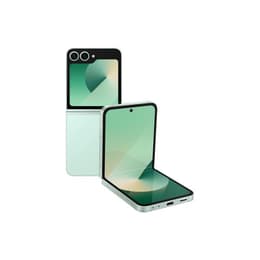
Galaxy Z Flip6
Starting at

Refurbished price:€367.00

Versus €1,231.31 new

See options
Google Pixel 9a
Starting at

Refurbished price:€360.00

Versus €586.09 new

See options

Differences at a glance

The Samsung Galaxy Z Flip6 (2024) and the Google Pixel 9a (2025) represent two very different approaches to modern smartphone design, contrasting a compact folding form factor with a traditional slate layout. While both run on the Android operating system, they cater to distinct preferences regarding hardware styling, daily functionality, and portability.

Available Models

Colour

Storage

Scores

Durability

Both devices offer robust build qualities and long-term software support commitments, though their physical designs introduce unique considerations for longevity.

  • Software update timeline: The Google Pixel 9a benefits from an extended multi-year software and security update schedule, whereas the Galaxy Z Flip6 offers a similarly generous update window typical of current flagship releases.
  • Repairability and physical endurance: The traditional slate build of the Pixel 9a generally presents fewer structural vulnerabilities over time compared to the folding hinge mechanism and flexible screen layers of the Galaxy Z Flip6.
  • Expected practical lifespan: Both handsets feature powerful internal hardware capable of maintaining responsive daily operation across several years of ownership.

Year of Release

2024

2025

Compatible with latest Update

Yes

Yes

OS

Android

Android

Foldable

Yes

No

Performance

Handling everyday tasks, demanding applications, and background multitasking smoothly, both models deliver reliable responsiveness suited to modern user demands.

  • Storage and memory configurations: The Galaxy Z Flip6 provides ample memory paired with spacious storage tiers, while the Pixel 9a balances everyday efficiency with standard internal storage capacities.
  • Battery behavior: The Pixel 9a incorporates a larger battery capacity that comfortably sustains moderate-to-heavy daily use, whereas the Galaxy Z Flip6 relies on a more compact power cell that may require a midday recharge under intensive workloads.
  • Multitasking and app loading: Current-generation internal processors ensure that both devices switch rapidly between open applications and handle routine productivity tasks without noticeable lag.

Screen quality

Visual experiences differ notably between the flexible main display of the foldable model and the rigid flat screen of the traditional slate device.

  • Display technology: The Galaxy Z Flip6 features a foldable organic light-emitting screen paired with an external cover panel for quick interactions, while the Pixel 9a utilizes a traditional flat organic light-emitting panel with high contrast and deep blacks.
  • Outdoor visibility and brightness: Both screens reach high peak brightness levels, ensuring clear legibility and vibrant text reproduction under direct sunlight.
  • Refresh rate and smoothness: Dynamic high refresh rate support enables fluid scrolling through web pages, social feeds, and user interface animations on both handsets.

Resolution

1080 x 2640

2424 x 1080

Audiovisual

Photography and media consumption capabilities are well-represented on both devices, featuring versatile sensor arrays and refined software processing.

  • Camera system performance: The Pixel 9a relies on a dependable dual-rear camera setup known for consistent point-and-shoot clarity in diverse lighting, while the Galaxy Z Flip6 utilizes a high-resolution main sensor alongside flexible shooting angles enabled by its folding design.
  • Video and audio output: Both models capture stable high-definition video with clear stereo sound recording, complemented by balanced built-in speakers suitable for casual media playback.
  • Low-light photography: Advanced computational imaging helps both phones preserve detail and manage noise levels effectively in dim environments.

Front camera

10 megapixels

13 megapixels

Miscellaneous

Practical daily usability elements, including connectivity standards, physical dimensions, and security sensors, shape how each device fits into routine use.

  • Connectivity and ports: Both smartphones support fast 5G data networks, modern wireless standards, and reliable positioning systems, utilizing reversible USB-C ports for charging and data transfer.
  • Security and biometrics: The Pixel 9a integrates a responsive in-display fingerprint sensor, while the Galaxy Z Flip6 provides a side-mounted fingerprint reader embedded within the power button alongside facial recognition options.
  • Handling and dimensions: The Galaxy Z Flip6 folds into a square pocket-friendly footprint, whereas the Pixel 9a maintains a lightweight, traditional slab profile that rests comfortably in one hand.

Weight

187 g

186 g

Screen size (in)

6.7

6.3

Network

5G

5G

SIM card

Physical SIM + eSIM

Physical SIM + eSIM

Carrier compatibility

Unlocked

Unlocked

What the community thinks

User feedback from online communities highlights distinct preferences for each device based on form factor and daily habits. Owners of the Galaxy Z Flip6 frequently praise its pocket-sized folded footprint and unique folding angles that facilitate hands-free photo capture, though some note that the internal screen crease remains visible under certain lighting conditions. Meanwhile, users of the Pixel 9a consistently commend its reliable battery stamina, clean software interface, and dependable camera results, though a portion of users mention that its flat rear panel lacks the novelty of folding hardware. Choosing a quality-assured refurbished option provides a sustainable, eco-friendly way to access either of these capable devices while reducing electronic waste.

Users who prioritize a compact, pocketable design and flexible viewing angles may prefer the Galaxy Z Flip6, while users prioritizing straightforward battery endurance and a traditional slate layout will lean toward the Pixel 9a. Weighing these differences against personal workflow needs helps clarify the right choice without leaning on promotional metrics or price comparisons.









