

Galaxy Z Flip6 Vs Google Pixel 7 Pro

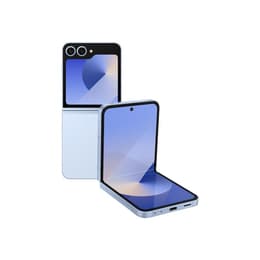
Galaxy Z Flip6
Galaxy Z Flip6
Starting at

Refurbished price:415.00

Versus €1,199.99 new

See options
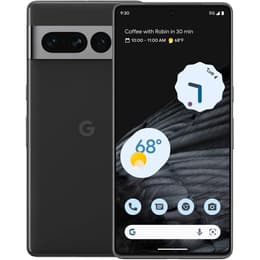
Google Pixel 7 Pro
Google Pixel 7 Pro
Starting at

Refurbished price:201.00

Versus €640.98 new

See options

Ratings

The Samsung Galaxy Z Flip6, a foldable clamshell smartphone released in 2024, and the Google Pixel 7 Pro, a traditional slab smartphone launched in late 2022, offer distinct approaches to mobile technology. While both devices operate on the Android platform, they cater to different user preferences through their unique designs and feature sets. The primary differentiators lie in the Z Flip6's innovative folding form factor and its more recent hardware, contrasting with the Pixel 7 Pro's established camera capabilities and integrated software experience.

Scores

Durability

These two smartphones present different timelines for software support and expected practical lifespan, largely due to their respective release dates and form factors.

  • Release Timeline: The Galaxy Z Flip6, launched in July 2024, benefits from being a newer device. The Pixel 7 Pro was released in October 2022, making it nearly two years older.
  • Software Longevity: The Z Flip6 is expected to receive a category-leading seven years of software support, including major Android updates and security patches. The Pixel 7 Pro, while known for timely updates, typically offers five years of security updates from its release, meaning its remaining update window is shorter.
  • Physical Durability: The Pixel 7 Pro features a traditional glass and metal construction with an IP68 rating for dust and water resistance, indicating robust protection against submersion. However, its anodized aluminum camera bar has been noted as prone to scratches, and some durability tests indicated significant flex. The Galaxy Z Flip6, with its folding screen and hinge mechanism, introduces additional moving parts. Samsung has continuously improved its foldable designs, and the Z Flip6 features an enhanced Armored Aluminum frame and an IP48 rating, offering protection against dust and water splashes. Its inner screen, protected by a PET plastic layer, shows scratches at a lower Mohs hardness level than its Gorilla Glass Victus 2-protected cover screen.

Year of Release

2024

2022

Compatible with latest Update

Yes

Yes

OS

Android

Android

Foldable

Yes

No

Performance

The performance capabilities of these devices reflect their different release timelines and underlying hardware architectures.

  • Processor Capabilities: The Galaxy Z Flip6 is equipped with a more recent generation processor, the Qualcomm Snapdragon 8 Gen 3 for Galaxy, which provides a boost in overall performance and efficiency. The Pixel 7 Pro utilizes the Google Tensor G2 processor. The Z Flip6's newer processor generally translates to faster app loading, smoother multitasking, and more efficient handling of demanding applications and graphics-intensive tasks.
  • Multitasking and Responsiveness: Both devices offer 12 GB of RAM, enabling competent multitasking. The Z Flip6's newer processor, combined with a vapor chamber cooling system, helps maintain sustained performance during extended use, such as gaming or heavy productivity. The Pixel 7 Pro delivers a responsive user experience with its integrated hardware and software optimization.
  • Storage Options: Both devices offer ample internal storage. The Galaxy Z Flip6 is available with 256 GB or 512 GB of storage. The Google Pixel 7 Pro offers 128 GB, 256 GB, and 512 GB configurations.
  • Battery Behavior: The Galaxy Z Flip6 features a 4000 mAh battery, which, combined with its efficient processor, often provides a full day of use for many users. It achieved over 16 hours in web browsing tests and over 9 hours in YouTube streaming. The Pixel 7 Pro has a larger 5000 mAh battery. In video streaming tests, it lasted nearly 11 hours, and users generally report 6-8 hours of screen-on time with mixed usage. However, heavy camera use can significantly reduce the Pixel 7 Pro's battery life.

Memory (GB)

12 GB

12 GB

Screen quality

The display experience is a primary differentiator between these two smartphones, influenced by their form factors and display technologies.

  • Display Technology and Clarity: The Galaxy Z Flip6 features a main 6.7-inch foldable Dynamic AMOLED 2X display with a resolution of 1080 x 2640 pixels, offering vibrant colors and deep blacks. It also includes a functional 3.4-inch Super AMOLED cover screen for quick interactions. The Pixel 7 Pro boasts a single, larger 6.7-inch LTPO OLED display with a higher resolution of 1440 x 3120 pixels, known for its excellent color reproduction and contrast.
  • Refresh Rate and Brightness: Both devices feature adaptive refresh rates up to 120 Hz on their main displays, contributing to smooth scrolling and responsive interactions. The Z Flip6's main display is noted for being very bright, even outdoors. The Pixel 7 Pro's display also offers good brightness levels for various lighting conditions.
  • Viewing Experience: The Z Flip6's foldable design allows for a compact form factor when closed, while unfolding reveals a full-sized screen. The crease on the Z Flip6's main display has been significantly minimized compared to previous generations. The Pixel 7 Pro's larger, higher-resolution main screen offers a more expansive and uninterrupted viewing area.

Resolution

1080 x 2640

1440 x 3120

Screen type

Foldable Dynamic LTPO AMOLED 2X

LTPO AMOLED

Audiovisual

The camera systems of the Galaxy Z Flip6 and Google Pixel 7 Pro offer different strengths, reflecting their design philosophies and target users.

  • Rear Camera Systems: The Galaxy Z Flip6 features a dual-camera setup on the rear, consisting of a 50 MP wide-angle main lens with optical image stabilization (OIS) and a 12 MP ultra-wide-angle lens. The Pixel 7 Pro offers a more versatile triple-camera system, including a 50 MP wide lens, a 12 MP ultrawide lens, and a 48 MP telephoto lens capable of 5x optical zoom and up to 30x Super Res Zoom.
  • Photography Performance: The Z Flip6's main camera captures impressive detail in bright environments and offers good color reproduction. Its ultra-wide camera has also seen improvements for low-light and HDR capture. The Pixel 7 Pro is widely recognized for its computational photography, delivering consistently excellent photos with natural colors and impressive detail across various lighting conditions. Its low-light performance and astrophotography mode are particularly strong.
  • Video Recording and Front Camera: Both devices are capable of high-quality video recording. The Pixel 7 Pro offers features like cinematic blur for videos and enhanced control over white balance and exposure. For selfies, the Z Flip6 allows users to utilize its higher-quality rear cameras with the cover screen as a viewfinder. The Pixel 7 Pro features a 10.8 MP front camera that captures good images in various lighting.
  • Audio Experience: Both smartphones provide a capable media consumption experience through their integrated speakers. Microphone quality on both is suitable for calls and recording.

Main camera

50 megapixels

50 megapixels

Front camera

10 megapixels

10.8 megapixels

Miscellaneous

Beyond core performance and display, several practical elements differentiate the user experience of these two devices.

  • Connectivity: Both the Galaxy Z Flip6 and the Google Pixel 7 Pro support modern connectivity standards, including 5G for fast mobile data, Wi-Fi 6E for high-speed wireless internet, and Bluetooth for connecting accessories.
  • Ports and Biometrics: Both devices feature a USB-C port for charging and data transfer, and neither includes a traditional 3.5mm headphone jack. For security, the Pixel 7 Pro offers both an in-display fingerprint sensor and secure face unlock. The Galaxy Z Flip6 typically features a side-mounted fingerprint sensor integrated into the power button, providing quick and reliable access.
  • Physical Characteristics: The Galaxy Z Flip6, with its foldable design, is more compact when closed, measuring 71.9 x 165.1 x 6.9 mm and weighing 187g. The Pixel 7 Pro is a larger, traditional slab phone, with dimensions of 76.6 x 162.9 x 8.9 mm and a weight of 212g. These differences impact handling and pocketability, with the Z Flip6 offering a more portable experience when folded.
  • Build Materials: The Z Flip6 incorporates an Armored Aluminum frame and Gorilla Glass Victus 2 on its cover screen and back panel. The Pixel 7 Pro features a glass and metal construction.

Weight

187 g

212 g

Screen size (in)

6.7

6.7

Network

5G

5G

SIM card

Physical SIM + eSIM

Physical SIM + eSIM

Carrier compatibility

Unlocked

Unlocked

The Samsung Galaxy Z Flip6 and the Google Pixel 7 Pro cater to distinct user needs, primarily defined by their form factors and the emphasis of their feature sets. Users frequently praise the Z Flip6 for its unique foldable design, which offers a compact footprint without sacrificing a large screen experience when unfolded. The improved battery life and enhanced durability over its predecessors are also common points of positive feedback. Some users, however, note that while the camera is good, it may not match the performance of non-foldable flagships in all scenarios, particularly in very low light.

The Google Pixel 7 Pro is consistently lauded for its exceptional camera system, with many users highlighting its computational photography capabilities, impressive zoom, and strong low-light performance. Its clean Android experience and integrated AI features are also frequently appreciated. Criticisms sometimes revolve around its battery life, which, despite a large capacity, can drain quickly with heavy camera use, and its charging speed. Some users have also expressed concerns about the long-term durability of its camera bar and overall bend resistance.

Users prioritizing a modern, compact, and stylish device with the flexibility of a large screen when needed, along with extended software support, may find the Galaxy Z Flip6 well-suited to their needs. Its ability to use the main camera for high-quality selfies via the cover screen is also a unique advantage. Conversely, users who prioritize a top-tier camera experience, a pure Android interface, and a robust, traditional smartphone form factor will likely lean towards the Google Pixel 7 Pro. Both devices offer compelling features, and considering a quality-assured refurbished option for either model can be an eco-friendly alternative for making an informed choice.


See all articles

Our recent comparisons