

Galaxy Z Flip4 Vs iPhone 13 Pro

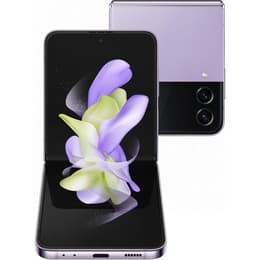
Galaxy Z Flip4
Galaxy Z Flip4
Starting at

Refurbished price:271.00

Versus €1,159.00 new

See options
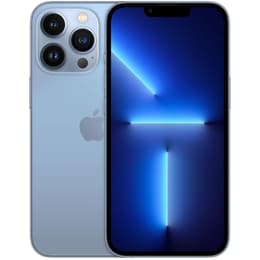
iPhone 13 Pro
iPhone 13 Pro
Starting at

Refurbished price:313.00

Versus €1,149.00 new

See options

Ratings

The Samsung Galaxy Z Flip4 (2022) and the iPhone 13 Pro (2021) represent distinct approaches to smartphone design and functionality. While the Z Flip4 offers a unique foldable clamshell form factor running on Android, the iPhone 13 Pro provides a traditional slab design powered by iOS. Key differentiators include the Z Flip4's compact, folding design and its dual-screen experience, contrasting with the iPhone 13 Pro's advanced camera system and robust performance.

Scores

Durability

The expected practical lifespan of a smartphone is influenced by its build quality, software support, and the nature of its components. Both devices offer robust construction, but their designs present different considerations for long-term use.

  • Release Timeline and Software Support: The iPhone 13 Pro was released in September 2021, while the Galaxy Z Flip4 followed in August 2022. This means the Z Flip4 will likely receive software updates for approximately one year longer than the iPhone 13 Pro, extending its functional longevity. Samsung has committed to 4-5 years of updates for the Z Flip4, including OS upgrades and security updates, with support expected to end around 2027.
  • Physical Durability: The iPhone 13 Pro features a Ceramic Shield front cover and a surgical-grade stainless steel frame, contributing to its overall resilience against drops and scratches. The Galaxy Z Flip4, with its foldable design, uses Ultra-Thin Glass (UTG) for its main display, which is covered by a plastic protective film that can be susceptible to scratches from fingernails or sharp objects. However, its cover screen is protected by Gorilla Glass Victus+. The Z Flip4 is rated for IPX8 water resistance, meaning it can withstand submersion in water, a feature also present in the iPhone 13 Pro with its IP68 rating. The Z Flip4's hinge is designed to endure up to 200,000 folds, which translates to roughly five years of typical use.
  • Repairability: While both devices are complex, the foldable nature of the Z Flip4 introduces unique repair considerations, particularly concerning the main display and hinge mechanism. The iPhone 13 Pro's more conventional design may offer a more straightforward repair path for common issues like screen or battery replacement.

Year of Release

2022

2021

Compatible with latest Update

Yes

Yes

OS

Android

iOS

Foldable

Yes

No

Performance

Performance in both devices is designed to handle demanding applications and multitasking, though they achieve this with different underlying architectures.

  • Processing Power: The iPhone 13 Pro is equipped with a powerful processor that delivers smooth performance across various tasks, from everyday browsing to intensive gaming and video editing. The Galaxy Z Flip4 features a current-generation processor that provides a responsive experience for daily use and handles multitasking efficiently, showing notable improvements over its predecessor.
  • System Responsiveness and Multitasking: Both devices offer excellent system responsiveness. The iPhone 13 Pro's operating system is optimized for fluid animations and quick app launches. The Galaxy Z Flip4, with its 8GB of RAM, manages multiple applications effectively, allowing users to switch between them without significant slowdowns.
  • Storage Options: The iPhone 13 Pro is available with storage capacities ranging from 128GB up to 1TB, offering ample space for media and applications. The Galaxy Z Flip4 comes with 128GB, 256GB, or 512GB storage options, which should suffice for most users, though it lacks the 1TB option. Neither device supports expandable storage via microSD cards.

Memory (GB)

8 GB

6 GB

Screen quality

The visual experience on both smartphones is characterized by vibrant displays, though they differ in form factor and specific display technologies.

  • Display Technology and Clarity: The iPhone 13 Pro features a 6.1-inch Super Retina XDR OLED display, known for its deep blacks, high contrast ratio, and accurate color reproduction. It has a resolution of 2532 x 1170 pixels, resulting in a pixel density of 460 pixels per inch (PPI). The Galaxy Z Flip4's main display is a 6.7-inch Foldable Dynamic AMOLED 2X screen with a resolution of 1080 x 2640 pixels, offering a pixel density of approximately 426 PPI. The Z Flip4 also includes a 1.9-inch Super AMOLED cover screen for quick notifications and interactions when folded.
  • Brightness and Refresh Rate: Both devices offer high brightness levels for good outdoor visibility. The iPhone 13 Pro can reach up to 1,000 nits of typical brightness and 1,200 nits peak brightness for HDR content. It also features ProMotion technology, providing an adaptive refresh rate that can scale from 10Hz to 120Hz for smooth scrolling and responsive gaming. The Galaxy Z Flip4's main display also boasts a 120Hz adaptive refresh rate and a peak brightness of 1,200 nits, contributing to a fluid visual experience.
  • Screen Size and Viewing Experience: The iPhone 13 Pro offers a traditional, immersive 6.1-inch viewing area. The Z Flip4's 6.7-inch main screen, when unfolded, provides a larger display, and its taller, narrower aspect ratio can be well-suited for media consumption and split-screen multitasking.

Resolution

1080 x 2640

1170 x 2532

Screen type

Foldable Dynamic AMOLED 2X

Super Retina XDR OLED

Audiovisual

Both smartphones offer advanced camera systems capable of capturing high-quality photos and videos, but they approach imaging with different hardware and software strengths.

  • Rear Camera System: The iPhone 13 Pro features a versatile triple 12MP camera system, including wide, ultra-wide, and telephoto lenses, offering 3x optical zoom in and 2x optical zoom out for a 6x optical zoom range. Its larger sensors and wider apertures contribute to improved low-light performance. The Galaxy Z Flip4 has a dual 12MP rear camera setup, comprising a wide-angle and an ultra-wide-angle lens. While it lacks a dedicated telephoto lens, its main sensor has seen improvements for better low-light photography compared to its predecessor.
  • Photography Features: The iPhone 13 Pro introduces features like Cinematic Mode for video with shallow depth of field, ProRes video recording for professional-grade footage, and a macro mode for close-up photography. It also includes Photographic Styles for customizable image looks. The Galaxy Z Flip4 leverages its foldable form factor with 'Flex Mode,' allowing for unique shooting angles and hands-free photography. It also offers various shooting modes, including Night Mode and Pro Mode.
  • Front Camera and Video Quality: Both devices feature capable front-facing cameras. The iPhone 13 Pro has a 12MP TrueDepth camera with features like Cinematic Mode and HDR video recording. The Z Flip4 includes a 10MP front-facing camera, and its cover screen can also be used as a viewfinder for high-quality selfies using the main rear cameras. Both phones are capable of 4K video recording.

Main camera

12 megapixels

12 megapixels

Front camera

10 megapixels

12 megapixels

Miscellaneous

Beyond core performance, several practical elements contribute to the overall user experience of these devices.

  • Connectivity and Ports: Both the Galaxy Z Flip4 and iPhone 13 Pro support 5G connectivity for fast mobile data. They also feature Wi-Fi 6 for high-speed wireless internet and Bluetooth for accessory connections (Bluetooth 5.2 on the Z Flip4, Bluetooth 5.0 on the iPhone 13 Pro). The Z Flip4 uses a USB-C 2.0 port for charging and data transfer, while the iPhone 13 Pro utilizes Apple's proprietary Lightning port. Neither device includes a traditional 3.5mm headphone jack.
  • Biometric Security: The iPhone 13 Pro relies on Face ID, an advanced facial recognition system, for secure unlocking and authentication. The Galaxy Z Flip4 incorporates a side-mounted capacitive fingerprint sensor for biometric security, alongside facial recognition.
  • Design and Handling: The Galaxy Z Flip4's defining characteristic is its foldable design, allowing it to transform from a standard smartphone size into a compact, pocketable square. It weighs 187 grams. The iPhone 13 Pro, at 204 grams, is a traditional slab phone with a premium feel, constructed from surgical-grade stainless steel and glass. The Z Flip4's folded dimensions are 84.9 x 71.9 x 15.9-17.1mm, while unfolded it measures 165.2 x 71.9 x 6.9mm. The iPhone 13 Pro measures 146.7 x 71.5 x 7.65mm.

Weight

183 g

203 g

Screen size (in)

6.7

6.1

Network

5G

5G

SIM card

Physical SIM + eSIM

Physical SIM + eSIM

Carrier compatibility

Unlocked

Unlocked

Connector

USB-C

Lightning

User sentiment for the Galaxy Z Flip4 often highlights its unique, compact form factor as a major draw, appreciating its pocketability and the novelty of a foldable screen. Many users praise the improved battery life over its predecessor and the enhanced camera capabilities, particularly in low light. Criticisms sometimes revolve around the durability of the inner foldable screen, with concerns about scratches from normal use, and the absence of a telephoto lens. Some users also note that while improved, the battery life might still require careful management for very heavy usage.

The iPhone 13 Pro is frequently lauded for its powerful performance, consistently excellent camera system with versatile features like Cinematic Mode and macro photography, and its vibrant, high-refresh-rate display. Users often commend its robust build quality and reliable software experience. Common points of discussion include its weight compared to non-Pro models and the continued use of the Lightning port.

Users prioritizing a compact, stylish device that offers a unique interaction experience and fits easily into smaller pockets may find the Galaxy Z Flip4 well-suited to their needs. Its foldable design and secondary cover screen offer distinct advantages for quick glances and hands-free use. Conversely, users who prioritize a consistently top-tier camera system with optical zoom, a traditional and highly durable display, and a powerful, long-supported operating system for demanding tasks will likely lean towards the iPhone 13 Pro. Both devices offer a quality-assured refurbished option, providing an eco-friendly alternative for consumers.


See all articles

Our recent comparisons