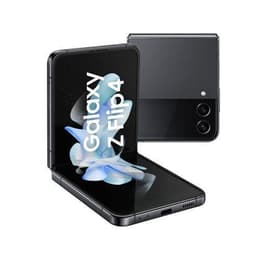
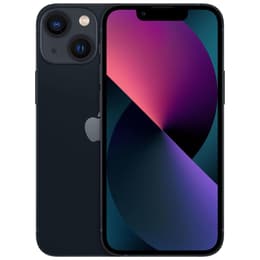


Galaxy Z Flip4 Vs iPhone 13 mini

Galaxy Z Flip4
Galaxy Z Flip4
Starting at

Refurbished price:288.00

Versus €1,289.99 new

See options
iPhone 13 mini
iPhone 13 mini
Starting at

Refurbished price:228.00

Versus €829.00 new

See options

Ratings

The Samsung Galaxy Z Flip4, released in August 2022, and the Apple iPhone 13 Mini, launched in September 2021, represent distinct approaches to smartphone design. The Z Flip4 offers a unique foldable clamshell form factor, transforming from a compact square into a larger smartphone, while the iPhone 13 Mini prioritizes a traditional, highly compact design. These devices cater to different user preferences, with the Z Flip4 running on Android and the iPhone 13 Mini on iOS, offering varied software experiences and ecosystems.

Scores

Durability

When considering the long-term usability of these devices, their release timelines and software support are key factors.

  • Release Timeline and Age: The iPhone 13 Mini, released in September 2021, is approximately a year older than the Galaxy Z Flip4, which launched in August 2022. This difference in age can influence the remaining period of official software support.
  • OS Support Duration: The Galaxy Z Flip4, running Android, was promised four major OS updates and five years of security updates from its release, meaning official support is expected to conclude around 2027. The iPhone 13 Mini, on the other hand, typically receives iOS updates for five to six years from its launch, suggesting its software longevity could extend into late 2026 or 2027.
  • Physical Durability: The iPhone 13 Mini features a Ceramic Shield front cover and an IP68 rating for water and dust resistance, offering robust protection against everyday elements. The Galaxy Z Flip4 boasts an Armor Aluminum frame and IPX8 water resistance, but its foldable display and hinge introduce a different set of durability considerations compared to a rigid smartphone.

Year of Release

2022

2021

Compatible with latest Update

Yes

Yes

OS

Android

iOS

Foldable

Yes

No

Performance

Both devices deliver capable performance for their respective platforms, though they achieve this with different underlying hardware and memory configurations.

  • Everyday Task Handling: The Galaxy Z Flip4 handles demanding applications and multitasking smoothly, supported by its current-generation processor and 8GB of RAM. The iPhone 13 Mini, despite its smaller size, also offers excellent responsiveness for daily tasks, gaming, and heavy apps, thanks to its efficient processor and optimized iOS environment, paired with 4GB of RAM.
  • Battery Behavior: The Galaxy Z Flip4 is equipped with a 3700 mAh battery, which generally provides a full day of moderate use, though heavy users might find themselves seeking a charge by evening. The iPhone 13 Mini, with a 2406 mAh battery, is often considered a 'one-day phone' for average use, but intensive usage may require a midday top-up.
  • Storage Options: Both devices offer various internal storage capacities, allowing users to choose based on their needs for apps, photos, and videos. The Galaxy Z Flip4 is available with 128GB, 256GB, or 512GB of storage, while the iPhone 13 Mini also comes in 128GB, 256GB, and 512GB variants.

Memory (GB)

8 GB

4 GB

Screen quality

The display experience on these two smartphones is a primary differentiator, largely due to the Z Flip4's unique foldable design.

  • Display Technology and Size: The Galaxy Z Flip4 features a 6.7-inch Foldable Dynamic AMOLED 2X main display when unfolded, offering vibrant colors and deep blacks. It also includes a 1.9-inch Super AMOLED cover screen for quick interactions when folded. The iPhone 13 Mini has a 5.4-inch Super Retina XDR OLED display, known for its excellent color accuracy and contrast in a compact form.
  • Resolution and Clarity: The Z Flip4's main screen has a resolution of 1080 x 2640 pixels, providing sharp visuals. The iPhone 13 Mini offers a resolution of 1080 x 2340 pixels, resulting in a high pixel density for clear text and images on its smaller screen.
  • Refresh Rate and Brightness: The Galaxy Z Flip4's main display features a 120Hz refresh rate, contributing to smoother scrolling and more fluid animations. It also reaches a peak brightness of 1200 nits. The iPhone 13 Mini has a standard 60Hz refresh rate but offers strong brightness, with typical brightness up to 800 nits and peak HDR brightness up to 1200 nits, ensuring good visibility in various lighting conditions.

Resolution

1080 x 2640

1080 x 2340

Screen type

Foldable Dynamic AMOLED 2X

Super Retina XDR OLED

Audiovisual

Both devices are equipped with capable camera systems designed to capture quality photos and videos in various scenarios.

  • Rear Camera Systems: The Galaxy Z Flip4 features a dual-camera setup on the rear, consisting of a 12MP wide-angle camera and a 12MP ultra-wide camera. The iPhone 13 Mini also has a dual 12MP camera system, with a wide and an ultra-wide lens, known for its consistent image quality.
  • Photography Performance: The iPhone 13 Mini's cameras are recognized for producing high-quality photos with good detail and color reproduction, performing well in various lighting, including improved low-light performance compared to its predecessors. The Z Flip4's cameras are suitable for everyday photography, offering good results in well-lit conditions, though its low-light capabilities may not match the top-tier performance of some other devices.
  • Video Recording and Features: Both phones support 4K video recording. The iPhone 13 Mini introduced features like Cinematic Mode, which provides a shallow depth of field effect in videos, and sensor-shift optical image stabilization for smoother footage. The Z Flip4 also offers stable video recording and various modes to enhance the user's creative options.
  • Front Camera: The Galaxy Z Flip4 includes a 10MP front-facing camera. The iPhone 13 Mini features a 12MP TrueDepth front camera, which also supports Face ID.

Main camera

12 megapixels

12 megapixels

Front camera

10 megapixels

12 megapixels

Miscellaneous

Beyond their core functionalities, several practical elements contribute to the overall user experience of these smartphones.

  • Connectivity Options: Both the Galaxy Z Flip4 and the iPhone 13 Mini support 5G cellular networks for fast data speeds. They also feature Wi-Fi 6 for efficient wireless internet connectivity. The Z Flip4 uses Bluetooth 5.2, while the iPhone 13 Mini uses Bluetooth 5.0 for connecting to accessories.
  • Ports and Biometrics: The Galaxy Z Flip4 utilizes a USB-C port for charging and data transfer. It incorporates a side-mounted fingerprint sensor for secure unlocking. The iPhone 13 Mini, on the other hand, uses Apple's proprietary Lightning port and relies on Face ID for biometric authentication.
  • Physical Design and Handling: The Z Flip4's defining characteristic is its foldable design, allowing it to be highly compact when closed (84.9 x 71.9 x 17.1 mm) and expand to a full-sized smartphone when open (165.2 x 71.9 x 6.9 mm). It weighs 187 grams. The iPhone 13 Mini is a small and light traditional smartphone, measuring 131.5 x 64.2 x 7.65 mm and weighing 141 grams, making it easy for one-handed use and pocketability.
  • Build Materials: The Z Flip4 features a glass front and back (Gorilla Glass Victus+) with an Armor Aluminum frame. The iPhone 13 Mini uses a Ceramic Shield front, a glass back, and an aluminum frame.

Weight

187 g

140 g

Screen size (in)

6.7

5.4

Network

5G

5G

SIM card

Physical SIM + eSIM

Physical SIM + eSIM

Carrier compatibility

Unlocked

Unlocked

Connector

USB-C

Lightning

User sentiment for both the Galaxy Z Flip4 and the iPhone 13 Mini highlights their unique strengths and specific appeals. Users often praise the Z Flip4 for its innovative foldable design, which offers a large screen experience in a highly portable form factor. The ability to stand the phone at various angles for content consumption or video calls is also frequently noted as a practical benefit. Some common criticisms, however, revolve around the perceived durability of the foldable screen and hinge over time, and for some users, the battery life, while improved over its predecessor, may still require careful management for heavy usage.

The iPhone 13 Mini is consistently lauded for its compact size and powerful performance, offering a premium smartphone experience without the bulk of larger devices. Its camera system receives frequent praise for its consistent quality and video capabilities. The primary concern often raised by users is its battery life, which, while improved from previous mini models, may still be a limiting factor for those with demanding usage patterns.

Users prioritizing a highly compact and lightweight device with a robust software ecosystem and consistent camera performance will find the iPhone 13 Mini well-suited to their needs. Conversely, users seeking an innovative form factor that combines portability with a larger display when needed, along with the flexibility of the Android operating system, may lean towards the Galaxy Z Flip4. Both devices offer distinct advantages, and choosing between them depends on individual priorities regarding size, design, and operating system preference. For those considering either of these models, exploring quality-assured refurbished options can be an eco-friendly alternative.


See all articles

Our recent comparisons







