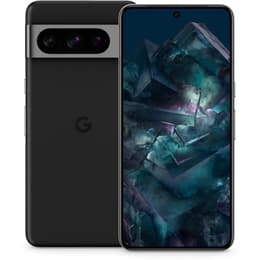


Galaxy Z Flip4 Vs Google Pixel 8 Pro

Galaxy Z Flip4
Galaxy Z Flip4
Starting at

Refurbished price:283.00

Versus €1,289.99 new

See options
Google Pixel 8 Pro
Google Pixel 8 Pro
Starting at

Refurbished price:317.00

Versus €1,099.00 new

See options

Ratings

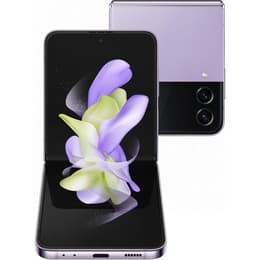
The Samsung Galaxy Z Flip4, released in August 2022, and the Google Pixel 8 Pro, launched in October 2023, represent distinct approaches to modern smartphone design. While the Z Flip4 offers a unique foldable clamshell form factor, the Pixel 8 Pro adheres to a traditional slate design, emphasizing advanced computational photography and extended software support. Both devices run on the Android operating system, but they cater to different user preferences through their core functionalities and design philosophies.

Scores

Durability

When considering the long-term usability of these devices, their release timelines and software support policies are key differentiators.

  • Software Longevity: The Google Pixel 8 Pro stands out with an industry-leading commitment of seven years of operating system and security updates from its October 2023 release, ensuring a prolonged period of software relevance. In contrast, the Samsung Galaxy Z Flip4, released in August 2022, is eligible for four major Android OS updates and up to five years of security updates, with support expected to end around 2027.
  • Physical Durability: The Galaxy Z Flip4 features an IPX8 water resistance rating, meaning it can withstand submersion in water but lacks official dust resistance, a common characteristic of foldable devices. Its main display uses ultra-thin glass protected by a plastic layer, rated for approximately 200,000 folds, equating to about five years of typical use. The Pixel 8 Pro, with its traditional design, boasts an IP68 rating for both dust and water resistance and features Corning Gorilla Glass Victus 2 on its display and back for enhanced scratch and drop protection.
  • Repairability: The repairability of both devices presents challenges. The Galaxy Z Flip4 generally receives repairability scores around 4 to 6 out of 10, primarily due to the use of adhesives and the intricate nature of its foldable screen assembly. The Pixel 8 Pro also scores moderately low, typically between 4 and 7 out of 10, with difficulties arising from glued components and the delicate process of screen removal.

Year of Release

2022

2023

Compatible with latest Update

Yes

Yes

Foldable

Yes

No

Performance

The performance of a smartphone is crucial for daily responsiveness and handling demanding applications, and both devices offer capable hardware.

  • Processing Power: The Galaxy Z Flip4 is equipped with a processor that handles everyday tasks and multitasking smoothly, providing a responsive user experience. The Pixel 8 Pro features a newer generation processor designed by Google, which offers enhanced capabilities for complex tasks, advanced AI features, and efficient handling of demanding applications and gaming.
  • Multitasking and Storage: The Z Flip4 comes with 8GB of RAM, which is sufficient for most multitasking needs. It offers storage options up to 512GB, but without expandable storage. The Pixel 8 Pro includes 12GB of RAM, providing more headroom for intensive multitasking and future-proofing. It offers storage configurations up to 1TB in some regions, also without expandable storage.
  • Battery Behavior: The Galaxy Z Flip4 has a 3700 mAh battery. Users generally report that it can last a full day with moderate usage, showing improvement over its predecessor, though it may require more frequent charging for heavy users. The Pixel 8 Pro houses a larger 5050 mAh battery, and user experiences often indicate all-day battery life, even with heavier use, benefiting from improved power efficiency.

Memory

8 GB

12 GB

Screen quality

The display is a primary interaction point, and these devices offer distinct visual experiences.

  • Display Technology and Clarity: The Galaxy Z Flip4 features a 6.7-inch Foldable Dynamic AMOLED 2X main display with a resolution of 2640 x 1080 pixels, offering vibrant colors and deep blacks. When folded, it utilizes a 1.9-inch Super AMOLED cover display for quick notifications and interactions. The Pixel 8 Pro boasts a 6.7-inch LTPO OLED display, which Google refers to as 'Super Actua,' with a sharper resolution of 2992 x 1344 pixels, providing exceptional clarity and detail.
  • Brightness and Refresh Rate: Both devices offer smooth scrolling and responsive visuals. The Z Flip4's main display has a 120Hz adaptive refresh rate. The Pixel 8 Pro's display features a variable refresh rate that can dynamically adjust from 1Hz to 120Hz, optimizing power consumption while maintaining fluidity. It also offers a high peak brightness of 2400 nits, enhancing visibility in bright outdoor conditions.
  • Viewing Experience: The Z Flip4's foldable design allows for a compact form factor when closed, while opening up to a full-sized smartphone screen. The cover screen provides a convenient glanceable display. The Pixel 8 Pro offers a consistently large, flat display, ideal for immersive media consumption and productivity without a crease.

Resolution

1080 x 2640

1344 x 2992

Screen type

Foldable Dynamic AMOLED 2X

LTPO OLED

Audiovisual

Photography capabilities are a significant factor for many users, and these phones approach imaging with different strengths.

  • Rear Camera Systems: The Samsung Galaxy Z Flip4 features a dual-camera setup on the rear, consisting of a 12MP wide-angle camera with optical image stabilization (OIS) and a 12MP ultra-wide camera. The Google Pixel 8 Pro offers a more versatile triple-camera system, including a 50MP wide-angle main sensor with OIS, a 48MP ultra-wide camera, and a 48MP telephoto lens capable of 5x optical zoom.
  • Photography Performance: The Z Flip4's cameras deliver good images in most lighting conditions, with improvements in low-light performance compared to its predecessor, producing photos with balanced colors and detail. The Pixel 8 Pro is renowned for its computational photography, excelling in various scenarios, including challenging low-light environments, and offering advanced AI-powered editing features.
  • Video and Audio: Both devices are capable of recording high-quality video. The Pixel 8 Pro's advanced processing often results in more stable and detailed video capture. For audio, both provide clear microphone quality for calls and recordings, and offer stereo speakers for media consumption. The Z Flip4's unique form factor allows for creative shooting angles by partially folding the device.

Main camera

12 megapixels

50 megapixels

Front camera

10 megapixels

10.5 megapixels

Miscellaneous

Beyond the core features, several practical elements contribute to the overall user experience.

  • Connectivity and Ports: Both smartphones support 5G connectivity for fast mobile data. The Galaxy Z Flip4 includes Wi-Fi 6 and Bluetooth 5.2, along with a USB-C 2.0 port. The Google Pixel 8 Pro features newer Wi-Fi 7 and Bluetooth 5.3 standards, and a USB-C 3.2 port, offering faster data transfer speeds.
  • Biometric Security: The Z Flip4 incorporates a side-mounted fingerprint sensor for secure unlocking. The Pixel 8 Pro utilizes an in-display fingerprint sensor and also offers secure face recognition for convenient access.
  • Design and Handling: The Galaxy Z Flip4's clamshell design allows it to fold into a compact square, making it highly pocketable. When unfolded, it provides a standard smartphone experience. The Pixel 8 Pro, as a traditional slab phone, offers a consistent, larger screen experience. It weighs 213g, while the Z Flip4 is lighter at 187g. The Z Flip4's build materials include an aluminum frame and glass panels, while the Pixel 8 Pro uses Gorilla Glass Victus 2 for both front and back.

Weight

187 g

213 g

Screen size (in)

6.7

6.7

Network

5G

5G

SIM card

Physical SIM + eSIM

Physical SIM + eSIM

Carrier compatibility

Unlocked

Unlocked

The Samsung Galaxy Z Flip4 and Google Pixel 8 Pro cater to different user priorities, each excelling in its own domain. Users frequently praise the Z Flip4 for its distinctive foldable design, which offers a blend of nostalgia and modern functionality, making it highly portable and a conversation starter. Its ability to stand on its own for hands-free viewing or photography is also a commonly appreciated feature. However, some users express concerns about its battery life, which, while improved over its predecessor, may still require careful management for heavy usage, and the lack of a dedicated telephoto camera.

The Google Pixel 8 Pro is often lauded for its exceptional camera capabilities, particularly its computational photography and advanced AI features that enhance image quality and offer unique editing tools. Its extended software support commitment is also a significant draw for users seeking long-term device relevance. User feedback generally highlights strong overall performance and improved battery life compared to previous Pixel generations. Some criticisms occasionally point to the device's size and weight, which might be less convenient for users preferring a more compact phone.

Users prioritizing a compact, stylish device with a unique form factor and the ability to easily pocket their phone may find the Galaxy Z Flip4 well-suited to their needs. Conversely, those who value cutting-edge camera technology, a consistently large display, and the longest possible software support will likely lean towards the Google Pixel 8 Pro. Both devices offer a quality-assured refurbished option, providing an eco-friendly alternative for consumers.


See all articles

Our recent comparisons