

Google Pixel 9 Pro Vs iPhone 16 Plus

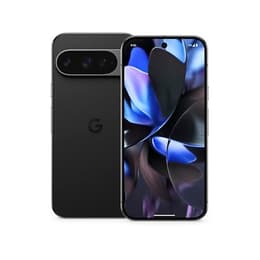
Google Pixel 9 Pro
Google Pixel 9 Pro
Starting at

Refurbished price:476.00

Versus €1,099.00 new

See options
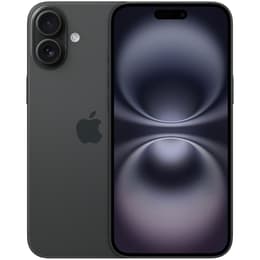
iPhone 16 Plus
iPhone 16 Plus
Starting at

Refurbished price:555.00

Versus €979.00 new

See options

Ratings

The Google Pixel 9 Pro, released in September 2024, and the iPhone 16 Plus, launched in September 2024, represent distinct approaches to the modern smartphone experience. While both are flagship devices offering advanced capabilities, they cater to different user preferences through their respective operating systems, Android and iOS. Key differentiators include screen technology, camera systems, and software ecosystems, influencing daily usage and overall device interaction.

Scores

Durability

When considering the long-term usability of a smartphone, software support and repairability are crucial factors.

  • Software Longevity: The Google Pixel 9 Pro is designed to receive seven years of operating system and security updates, extending its support until at least August 2031. This commitment ensures the device remains current with the latest features and security protocols for an extended period. The iPhone 16 Plus typically receives 5 to 7 years of major iOS updates, with security patches often continuing beyond that. It is expected to receive updates until approximately 2036, offering a comparable long-term software experience.
  • Repairability: The iPhone 16 Plus has demonstrated improved repairability, earning a score of 7 out of 10 from iFixit. This is attributed to a more modular design and a new method for battery removal, making common repairs more accessible. In contrast, the Google Pixel 9 Pro has a lower repairability score, with some assessments indicating challenges due to strong adhesives and complex component access, particularly for battery and screen replacements.
  • Practical Lifespan: Both devices are built with durable materials and are expected to offer a practical lifespan that aligns with their software support. Users can anticipate several years of reliable performance from either model, with the iPhone 16 Plus potentially offering a smoother repair process should components need servicing.

Year of Release

2024

2024

Compatible with latest Update

Yes

Yes

Foldable

No

No

Performance

Both the Google Pixel 9 Pro and the iPhone 16 Plus are equipped with powerful internal components designed for smooth operation and efficient multitasking.

  • Processing Power: The Google Pixel 9 Pro features a current-generation processor that handles demanding applications and complex AI tasks efficiently, supported by a substantial 16GB of RAM. The iPhone 16 Plus is powered by Apple's A18 Bionic chip, which delivers robust performance for everyday use, gaming, and advanced features, complemented by 8GB of RAM.
  • System Responsiveness: Users of the Pixel 9 Pro generally report a responsive experience, with applications loading quickly and smooth transitions between tasks. The ample RAM contributes to effective multitasking, allowing many apps to remain open in the background without performance degradation. The iPhone 16 Plus also offers a fluid user experience, with its optimized software and hardware working in tandem to ensure quick app launches and seamless navigation.
  • Storage Options: The Pixel 9 Pro is available with storage capacities ranging from 128GB up to 1TB, providing flexibility for users with varying storage needs. The iPhone 16 Plus offers storage options of 128GB, 256GB, and 512GB.
  • Battery Behavior: The Pixel 9 Pro includes a 4700 mAh battery, providing reliable all-day power for most users, with some reports indicating over 17 hours of video playback. The iPhone 16 Plus, with its 4674 mAh battery, is noted for its extended battery life, often lasting up to two days with heavy use and nearly three days with casual usage, making it a strong contender for users prioritizing longevity between charges.

Memory (GB)

16 GB

8 GB

Screen quality

The visual experience on both devices is a highlight, though they employ different display characteristics to achieve their clarity and vibrancy.

  • Display Technology and Size: The Google Pixel 9 Pro features a 6.3-inch LTPO OLED display, offering deep blacks and vibrant colors. The iPhone 16 Plus comes with a larger 6.7-inch Super Retina XDR OLED display, also known for its rich contrast and color accuracy.
  • Resolution and Clarity: The Pixel 9 Pro's display has a resolution of 2856 x 1280 pixels, resulting in a pixel density of 495 ppi, providing sharp and detailed visuals. The iPhone 16 Plus offers a resolution of 2796 x 1290 pixels with a pixel density of 460 ppi, ensuring clear text and images.
  • Refresh Rate and Smoothness: The Pixel 9 Pro boasts an adaptive refresh rate that can dynamically adjust from 1Hz to 120Hz, contributing to smooth scrolling and a responsive feel while conserving battery life. The iPhone 16 Plus maintains a standard 60Hz refresh rate, which provides a consistent viewing experience, though it does not offer the ultra-smooth scrolling found on higher refresh rate displays.
  • Brightness: Both phones offer high brightness levels for good visibility in various lighting conditions. The Pixel 9 Pro can reach a peak brightness of 3000 nits for HDR content, making it suitable for outdoor use. The iPhone 16 Plus also provides excellent outdoor visibility with a peak brightness of up to 2000 nits.

Resolution

1280 x 2856

1290 x 2796

Screen type

LTPO OLED

Super Retina XDR OLED

Audiovisual

Both smartphones offer advanced camera systems, each with unique strengths in photography and videography.

  • Rear Camera Systems: The Google Pixel 9 Pro features a versatile triple-camera setup, including a 50MP main sensor, a 48MP ultrawide lens, and a 48MP telephoto lens capable of 5x optical zoom and up to 30x digital zoom. This configuration allows for a wide range of photographic styles, from expansive landscapes to detailed distant subjects. The iPhone 16 Plus is equipped with a dual-camera system, featuring a 48MP main wide-angle camera with macro capabilities and a 12MP ultrawide camera with autofocus. It does not include a dedicated telephoto lens.
  • Photography Performance: The Pixel 9 Pro is highly regarded for its computational photography, offering features like Night Sight for low-light conditions and Super Res Zoom for enhanced detail at higher zoom levels. Users often praise the natural look of Pixel photos. The iPhone 16 Plus delivers strong everyday photography with vibrant colors and good dynamic range. Its ultrawide camera with autofocus improves close-up shots.
  • Video Recording: The Pixel 9 Pro supports video recording up to 8K resolution at 30 frames per second, providing high-fidelity video capture. The iPhone 16 Plus offers high-quality video recording and includes features for spatial photos and videos, which can be viewed on compatible headsets.
  • Front Camera: The Pixel 9 Pro has a 42MP front-facing camera, which includes autofocus capabilities. The iPhone 16 Plus features a 12MP front camera.

Main camera

50 megapixels

48 megapixels

Front camera

42 megapixels

12 megapixels

Miscellaneous

Beyond core features, several practical elements contribute to the overall user experience and daily convenience of these devices.

  • Connectivity: Both the Google Pixel 9 Pro and the iPhone 16 Plus support modern connectivity standards, including 5G for fast cellular data, and Wi-Fi 7 for high-speed wireless internet. They also feature Bluetooth 5.3 for efficient accessory pairing. The iPhone 16 Plus also includes satellite capabilities for emergency communication.
  • Ports and Biometrics: The Pixel 9 Pro utilizes a USB-C port for charging and data transfer. It incorporates an under-display ultrasonic fingerprint sensor for secure unlocking. The iPhone 16 Plus also features a USB-C port. For security, it relies on Face ID for facial recognition.
  • Design and Handling: The Pixel 9 Pro has dimensions of 152.8 x 72 x 8.5 mm and weighs 199g, offering a relatively compact form factor for a flagship device. The iPhone 16 Plus is slightly larger at 160.9 x 77.8 x 7.8 mm and also weighs 199g, providing a substantial screen size while maintaining a manageable weight. Both devices feature durable build materials, with the iPhone 16 Plus incorporating Ceramic Shield protection and IP68 water resistance.
  • Unique Features: The Pixel 9 Pro integrates Google's advanced AI features, such as Gemini, Call Screening, and Direct My Call, enhancing smart assistance and call management. The iPhone 16 Plus introduces an Action Button, which can be customized for quick access to various functions, and a dedicated Camera Control button for enhanced photography. It also supports Apple Intelligence features.

Weight

199 g

199 g

Screen size (in)

6.3

6.7

Network

5G

5G

SIM card

Physical SIM + eSIM

eSIM

Carrier compatibility

Unlocked

Unlocked

Connector

USB-C

USB-C (USB 2)

The Google Pixel 9 Pro and the iPhone 16 Plus each offer a compelling smartphone experience, tailored to different user priorities. User feedback for the Pixel 9 Pro often highlights its exceptional camera capabilities, particularly its computational photography and versatile zoom options, along with its long-term software support and integrated AI features. Some users have noted that while performance is strong for everyday tasks, it might not always match the raw power of some competitors in intensive benchmarks. The battery life is generally praised as reliable for a full day's use.

For the iPhone 16 Plus, common praise centers on its impressive battery life, often extending to two days or more for many users, and its large, vibrant OLED display. The improved repairability is also a significant positive. Criticisms sometimes point to the 60Hz refresh rate, which some users find less fluid compared to devices with higher refresh rates, and the absence of a dedicated telephoto lens.

Users prioritizing a comprehensive camera system with advanced zoom capabilities and a deeply integrated AI experience within the Android ecosystem may find the Google Pixel 9 Pro well-suited to their needs. Its compact size for a Pro model also appeals to those seeking high-end features in a more manageable form factor. Conversely, users who value exceptional battery longevity, a larger display for media consumption, and the robust, user-friendly iOS ecosystem with enhanced repairability may lean toward the iPhone 16 Plus. Both devices represent quality-assured options, and considering a refurbished model can be an eco-friendly alternative for acquiring either of these advanced smartphones.