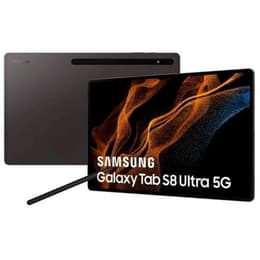
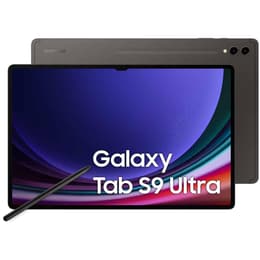


Galaxy Tab S8 Ultra (14.6", 2022) Vs Galaxy Tab S9 Ultra (14.6", 2023)

Galaxy Tab S8 Ultra (14.6", 2022)
Starting at

Refurbished price:604.00

Versus €1,249.00 new

See options
Galaxy Tab S9 Ultra (14.6", 2023)
Starting at

Refurbished price:754.00

Versus €1,800.00 new

See options

Ratings

The Samsung Galaxy Tab S8 Ultra, released in early 2022, and its successor, the Galaxy Tab S9 Ultra, launched in mid-2023, represent Samsung's largest and most powerful Android tablets. Both devices feature expansive 14.6-inch displays and operate on the Android platform with Samsung's One UI. The primary distinctions lie in the newer model's enhanced processing power, improved display characteristics, and increased environmental resistance, offering refinements for users seeking a top-tier tablet experience.

Scores

Durability

When considering the long-term usability of these large-format tablets, their release timelines and software support are key factors.

  • Software Support: The Galaxy Tab S8 Ultra, launched with Android 12, is expected to receive four major Android OS updates, extending its support to Android 16. The Galaxy Tab S9 Ultra, released with Android 13, will similarly receive four major OS updates, pushing its support to Android 17, providing an additional year of software longevity. [2, 6, 10, 20, 27, 28]
  • Durability Features: Both tablets feature an armored aluminum frame and Gorilla Glass for structural integrity. However, the Galaxy Tab S9 Ultra introduces an IP68 rating for dust and water resistance, offering enhanced protection against environmental elements. [2, 3, 4, 21]
  • Practical Lifespan: Users generally report that both models maintain strong performance over several years, making them suitable for extended use. The S9 Ultra's newer processor and additional year of software updates may offer a slightly longer period of optimal performance and feature compatibility. [7, 9, 28, 30]

Year of Release

2022

2023

Compatible with latest Update

Yes

Yes

OS

Android

Android

Performance

The performance of these tablets is central to their utility, particularly for demanding applications and multitasking.

  • Processing Power: The Galaxy Tab S8 Ultra is equipped with a capable processor that handles everyday tasks, web browsing, and media consumption smoothly. The Galaxy Tab S9 Ultra features a newer, more efficient processor, which provides a noticeable improvement in handling resource-intensive applications, complex multitasking, and graphic-heavy gaming. [2, 3, 24, 25, 28]
  • Multitasking and Responsiveness: Both tablets offer robust multitasking capabilities, allowing users to run multiple applications simultaneously on their large screens. The S9 Ultra's enhanced processor contributes to a slightly snappier overall experience and better thermal management during prolonged heavy use, reducing potential slowdowns. [2, 25, 28]
  • Storage and Memory: The Galaxy Tab S8 Ultra offers configurations starting from 8GB of RAM and 128GB of internal storage. The Galaxy Tab S9 Ultra starts with 12GB of RAM and 256GB of storage, with options extending up to 16GB of RAM and 1TB of storage, providing more headroom for demanding users and larger files. Both models support microSD card expansion for additional storage. [2, 6, 15, 19]

Memory (GB)

8 GB

12 GB

Processor

Qualcomm SM8450 Snapdragon 8 Gen 1

Qualcomm SM8550-AC Snapdragon 8 Gen 2

Screen quality

The visual experience on these tablets is a significant highlight, given their expansive displays.

  • Display Technology and Size: Both the Galaxy Tab S8 Ultra and S9 Ultra feature a large 14.6-inch display with a resolution of 2960x1848 pixels, providing ample screen real estate. The S8 Ultra uses a Super AMOLED panel, while the S9 Ultra upgrades to a Dynamic AMOLED 2X panel, both known for deep blacks and vibrant colors. [1, 2, 6, 8, 19, 21, 24]
  • Brightness and Clarity: The Galaxy Tab S8 Ultra offers good clarity and brightness, suitable for most indoor environments, with a peak brightness around 500 nits. The Galaxy Tab S9 Ultra significantly improves on this with a higher peak brightness of approximately 930 nits and includes Vision Booster technology, enhancing visibility and color reproduction in bright outdoor conditions. [2, 21, 24, 25]
  • Refresh Rate and Smoothness: Both tablets support a 120Hz refresh rate, ensuring smooth scrolling and fluid animations. The S9 Ultra's display also features an adaptive refresh rate, which can dynamically adjust between 60Hz and 120Hz to optimize power consumption while maintaining visual fluidity. [2, 21, 24, 25]

Resolution

1848 x 2960

1848 x 2960

Screen type

Super AMOLED

Dynamic AMOLED 2X

Pixel density

240ppp

240ppp

Audiovisual

While tablets are not typically primary photography devices, both models offer capable camera systems for video calls and document scanning.

  • Rear Camera System: The Galaxy Tab S8 Ultra features a dual rear camera setup with a 13-megapixel wide lens and a 6-megapixel ultrawide lens. The Galaxy Tab S9 Ultra retains the 13-megapixel wide lens but upgrades the ultrawide camera to an 8-megapixel sensor, offering a slight improvement in detail for wider shots. [1, 2, 6, 19, 21]
  • Front Camera System: Both tablets are equipped with a dual front-facing camera system, consisting of two 12-megapixel sensors (one wide and one ultrawide). This setup is well-suited for high-quality video conferencing and selfies, with both models capable of 4K video recording at 60 frames per second from both front and rear cameras. [1, 2, 4, 6, 19, 21]
  • Audio Experience: Both devices feature a quad-speaker setup with sound tuned by AKG and Dolby Atmos support, providing a rich audio experience for media consumption. User feedback indicates strong audio performance from both models, with the S9 Ultra offering a slightly louder output. [18, 21, 23]

Miscellaneous

Beyond core specifications, several practical features differentiate these large tablets.

  • Connectivity: Both the Galaxy Tab S8 Ultra and S9 Ultra support modern wireless standards, including Wi-Fi 6E for fast and stable internet connections. The S8 Ultra features Bluetooth 5.2, while the S9 Ultra upgrades to Bluetooth 5.3, offering minor improvements in wireless accessory connectivity and efficiency. [1, 6, 19, 24]
  • Ports and Sensors: Both tablets include a USB-C 3.2 port for charging and data transfer, and an in-display optical fingerprint scanner for secure authentication. Neither model includes a traditional headphone jack. [1, 3, 6, 19]
  • Design and Handling: The physical dimensions of both tablets are nearly identical, measuring 326.4 x 208.6 x 5.5 mm. The S9 Ultra is marginally heavier at 732 grams compared to the S8 Ultra's 726 grams, a negligible difference in practical use. Both come with an S Pen included, which attaches magnetically to the back for charging. [1, 3, 5, 6, 8, 19, 21]

Weight

726 g

732 g

Screen size (in)

14.6

14.6

Network

Wi-Fi + 5G

Wi-Fi

Carrier compatibility

Unlocked

Without SIM Port

Connector

USB Type-C

USB Type-C

The Samsung Galaxy Tab S8 Ultra and S9 Ultra are both formidable large-screen Android tablets, each excelling in different areas based on user priorities. Users frequently praise both for their expansive, vibrant displays, which are ideal for media consumption, detailed note-taking, and efficient multitasking. The included S Pen is a consistent highlight, offering a responsive and versatile input method for creative and productivity tasks. Some users find the sheer size of these tablets to be a consideration for portability, though many appreciate the immersive experience it provides. [7, 9, 11, 16, 18, 22, 23, 32, 33]

For those prioritizing the latest advancements in performance, display brightness, and environmental durability, the Galaxy Tab S9 Ultra presents a compelling option. Its more efficient processor, brighter adaptive display, and IP68 water and dust resistance offer notable upgrades for users who push their devices with demanding applications or frequently use them in varied environments. [2, 3, 21, 25, 28]

Conversely, the Galaxy Tab S8 Ultra remains a highly capable device that continues to deliver a premium tablet experience for most users. It handles everyday tasks, media, and productivity applications with ease, and its display quality is still considered excellent. Users who do not require the absolute peak performance or the added durability features may find the S8 Ultra to be a strong choice. [2, 21, 25]

Ultimately, the decision between these two tablets hinges on individual needs. Users prioritizing cutting-edge performance and enhanced durability may lean towards the Galaxy Tab S9 Ultra, while those seeking a powerful large-screen tablet for general use and media consumption will find the Galaxy Tab S8 Ultra to be a robust and reliable option. Both models, available as quality-assured refurbished options, offer a sustainable choice for consumers.

See all articles

Our recent comparisons