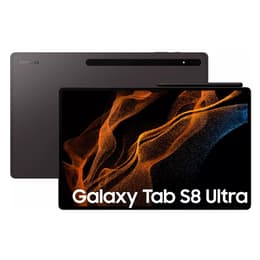
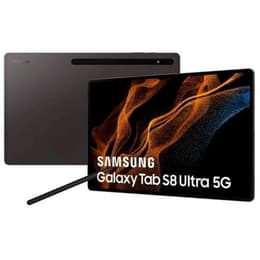


Galaxy Tab S8 (11.0", 2022) Vs Galaxy Tab S8 Ultra (14.6", 2022)

Galaxy Tab S8 (11.0", 2022)
Starting at

Refurbished price:332.00

Versus €745.19 new

See options
Galaxy Tab S8 Ultra (14.6", 2022)
Starting at

Refurbished price:604.00

Versus €1,249.00 new

See options

Ratings

The Samsung Galaxy Tab S8 and the Galaxy Tab S8 Ultra, both released in 2022, are Android tablets designed to cater to different user needs within the premium segment. While they share a common operating system and core performance capabilities, their primary distinctions lie in their physical size, display technology, and camera configurations. These differences significantly influence their suitability for various tasks, from portable everyday use to immersive creative work and extensive media consumption.

Scores

Durability

Both the Galaxy Tab S8 and the Galaxy Tab S8 Ultra were introduced in early 2022, establishing them within the same generation of Samsung's tablet lineup. This shared release timeline means they benefit from a consistent software support policy, which is a key factor in their practical lifespan.

  • Software Support: Samsung committed to providing four major Android operating system upgrades and five years of security updates for the Galaxy Tab S8 series. This policy suggests that both devices will continue to receive official software support until approximately 2027, ensuring access to new features and security patches for several years.
  • Build Quality: Both tablets feature an aluminum body, contributing to their overall durability and a premium feel. The Ultra model is notably thin at 5.5 mm, while the standard S8 is 6.3 mm thick.
  • Practical Lifespan: Given their robust build and extended software support, both the Tab S8 and Tab S8 Ultra are designed for a practical lifespan of several years, capable of handling current and future applications. Users can expect consistent performance and security throughout this period.

Year of Release

2022

2022

Compatible with latest Update

Yes

Yes

OS

Android

Android

Performance

The performance capabilities of the Galaxy Tab S8 and Tab S8 Ultra are largely consistent, as both devices are equipped with the same generation of processing hardware.

  • Processing Power: Both tablets are powered by a current-generation octa-core processor, enabling smooth operation across demanding applications, multitasking, and graphic-intensive games. This ensures a responsive user experience whether navigating the interface or running complex software.
  • Multitasking and Storage: The Galaxy Tab S8 is available with 8GB or 12GB of RAM, while the Tab S8 Ultra offers additional configurations, including a 16GB RAM option, which can provide more headroom for extensive multitasking with numerous applications open simultaneously. Both models offer various internal storage options, ranging from 128GB to 256GB for the S8 and up to 512GB for the S8 Ultra, with expandable storage via microSD card up to 1TB.
  • Battery Behavior: The Galaxy Tab S8 features an 8,000mAh battery, while the larger Tab S8 Ultra houses an 11,200mAh battery. Both support 45W fast charging, allowing for quicker replenishment of power. The larger battery in the Ultra model generally translates to longer usage times, especially considering its larger display.

Memory (GB)

8 GB

8 GB

Processor

Qualcomm SM8450 Snapdragon 8 Gen 1

Qualcomm SM8450 Snapdragon 8 Gen 1

Screen quality

The display is a primary differentiator between the Galaxy Tab S8 and the Tab S8 Ultra, impacting visual experience and overall device interaction.

  • Display Technology and Size: The Galaxy Tab S8 features an 11-inch LTPS TFT LCD, offering clear visuals and good color reproduction. In contrast, the Galaxy Tab S8 Ultra boasts a significantly larger 14.6-inch Super AMOLED display. The Super AMOLED technology provides deeper blacks, higher contrast, and more vibrant colors compared to the LCD panel.
  • Resolution and Clarity: The Tab S8 has a resolution of 2560x1600 pixels, resulting in a pixel density of approximately 274 ppi. The Tab S8 Ultra, with its 2960x1848 pixel resolution, has a slightly lower pixel density of around 240 ppi due to its much larger screen size. Both displays offer sharp and detailed images for reading, browsing, and media consumption.
  • Refresh Rate and Brightness: Both tablets feature a 120Hz refresh rate, contributing to smoother scrolling and more fluid animations. While specific brightness levels can vary, the Super AMOLED panel on the Ultra generally offers better outdoor visibility and overall brightness compared to the LCD on the standard S8.

Resolution

1600 x 2560

1848 x 2960

Screen type

TFT LCD

Super AMOLED

Pixel density

280ppp

240ppp

Audiovisual

Both Galaxy Tab S8 models offer capable camera systems, though the Ultra variant includes an enhanced front-facing setup.

  • Rear Camera System: Both the Galaxy Tab S8 and Tab S8 Ultra feature a dual rear camera setup, consisting of a 13-megapixel wide-angle lens and a 6-megapixel ultra-wide-angle lens. This configuration allows for versatile photography, from general shots to capturing broader landscapes. Both are capable of recording 4K video at 30 frames per second.
  • Front Camera System: The Galaxy Tab S8 is equipped with a 12-megapixel ultra-wide front camera, suitable for video calls and selfies. The Tab S8 Ultra elevates this with a dual front camera system, featuring both a 12-megapixel wide-angle and a 12-megapixel ultra-wide-angle lens, housed within a small notch. This dual setup enhances video conferencing capabilities, offering features like auto-framing to keep subjects centered. Both front camera systems can record 4K video at 30 or 60 frames per second on the Ultra.
  • Audio Experience: Both tablets integrate quad stereo speakers with Dolby Atmos support, providing an immersive audio experience for media consumption. They also feature multiple microphones with noise cancellation for clearer audio during calls and recordings.

Miscellaneous

Beyond core specifications, several practical elements differentiate the user experience between the Galaxy Tab S8 and Tab S8 Ultra.

  • Connectivity and Ports: Both tablets support modern connectivity standards, including Wi-Fi 6E for fast wireless internet and Bluetooth 5.2 for accessories. Both also feature a USB-C 3.2 port for charging and data transfer. 5G-enabled variants are available for both models, offering mobile data connectivity.
  • Security and Sensors: The Galaxy Tab S8 incorporates a side-mounted fingerprint sensor for secure unlocking. The Tab S8 Ultra, on the other hand, features an under-display optical fingerprint sensor. Both devices also include various other sensors such as accelerometers, gyroscopes, and ambient light sensors.
  • Physical Design and Handling: The Galaxy Tab S8, with its 11-inch display, measures 253.8 x 165.3 x 6.3 mm and weighs approximately 503 grams (Wi-Fi model). This makes it a more compact and portable device. The Tab S8 Ultra is significantly larger, featuring a 14.6-inch display, dimensions of 326.4 x 208.6 x 5.5 mm, and a weight of around 726 grams (Wi-Fi model). Its larger size provides an expansive viewing area but also makes it less convenient for one-handed use or frequent travel. Both tablets come with the S Pen stylus included, which attaches magnetically.

Weight

507 g

726 g

Screen size (in)

11.0

14.6

Network

Wi-Fi + 5G

Wi-Fi + 5G

Carrier compatibility

Unlocked

Unlocked

Connector

USB Type-C

USB Type-C

The Samsung Galaxy Tab S8 and Galaxy Tab S8 Ultra, both released in 2022, offer distinct experiences tailored to different user priorities. User feedback often praises the standard Tab S8 for its balance of performance and portability, making it a versatile choice for everyday tasks, note-taking, and media consumption on the go. Its more compact form factor is frequently highlighted as a benefit for those who prefer a traditional tablet size.

Conversely, the Galaxy Tab S8 Ultra receives consistent acclaim for its expansive and immersive Super AMOLED display, which is a significant draw for users engaged in creative work, extensive multitasking, or high-quality media viewing. Its larger screen real estate and enhanced front camera setup are often cited as advantages for productivity and video conferencing. Some users, however, note that the Ultra's considerable size can make it less convenient for casual, handheld use.

Users prioritizing a highly portable device that still delivers strong performance and a quality display for general use, studying, or light creative tasks may find the Galaxy Tab S8 well-suited to their needs. Its smaller footprint makes it easier to carry and handle. On the other hand, users who require a vast screen for professional design, detailed digital art, immersive entertainment, or who frequently use their tablet as a laptop replacement will likely lean towards the Galaxy Tab S8 Ultra. Its larger display and potentially more robust multitasking capabilities cater to these intensive use cases.

Both models represent capable Android tablets, and choosing between them largely depends on the desired screen size and portability. For those considering these devices, exploring quality-assured refurbished options can provide a sustainable choice for acquiring either model.


See all articles

Our recent comparisons