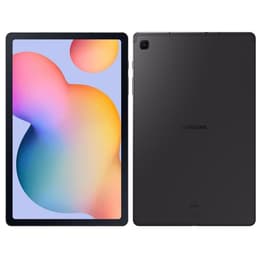
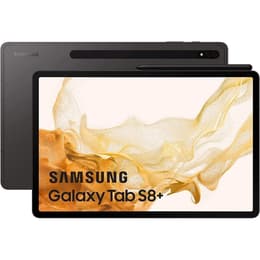


Galaxy Tab S6 Lite (10.4", 2024) Vs Galaxy Tab S8+ (12.4", 2022)

Galaxy Tab S6 Lite (10.4", 2024)
Starting at

Refurbished price:170.00

Versus €482.00 new

See options
Galaxy Tab S8+ (12.4", 2022)
Starting at

Refurbished price:479.00

Versus €999.00 new

See options

Ratings

The Samsung Galaxy Tab S6 Lite (2024) and the Samsung Galaxy Tab S8 Plus (2022) are two distinct Android tablets from Samsung's lineup. While the Tab S6 Lite (2024) is a more recent refresh of a mid-range device, the Tab S8 Plus (2022) was a flagship offering at its release. The primary differences lie in their display technology, processing power, and overall size, catering to different user needs and expectations. Both tablets operate on the Android ecosystem, featuring Samsung's One UI for a consistent user experience.

Scores

Durability

When considering the longevity of these tablets, several factors come into play, including their release timelines, software support, and physical durability.

  • Release Timeline: The Galaxy Tab S8 Plus was released in February 2022, making it over four years old as of early 2026. The Galaxy Tab S6 Lite (2024) was launched in March 2024, positioning it as a much newer device in terms of its initial availability.
  • Software Support: Samsung typically provides substantial software support for its devices. The Galaxy Tab S8 Plus was promised four OS updates and security updates through 2027, meaning it is nearing the end of its major OS update cycle but still receives security patches. The Galaxy Tab S6 Lite (2024), being a newer model, is expected to receive four years of Android version upgrades and five years of security updates from its 2024 release, offering a longer period of official software support.
  • Expected Practical Lifespan: The Tab S8 Plus, with its more powerful internal components, may maintain smoother performance for demanding tasks over a longer period, even as software updates cease. The Tab S6 Lite (2024), while newer, has more modest specifications, and some users have noted it might struggle with future Android versions that require more power. Both devices feature durable builds, with the Tab S8 Plus utilizing an Armor aluminum case and Gorilla Glass Victus+ for enhanced protection.

Year of Release

2024

2022

Compatible with latest Update

Yes

Yes

OS

Android

Android

Performance

The performance capabilities of these two tablets present a significant contrast, largely due to their differing hardware tiers.

  • Processor Capabilities: The Galaxy Tab S8 Plus is equipped with a high-end processor from its release year, enabling it to handle demanding applications, complex multitasking, and graphic-intensive games with ease and responsiveness. The Galaxy Tab S6 Lite (2024) features a mid-range processor, which provides adequate performance for everyday tasks like web browsing, video streaming, and note-taking, but may show limitations with more intensive applications or heavy multitasking.
  • Multitasking and Responsiveness: The Tab S8 Plus typically comes with 8GB or 12GB of RAM, allowing for seamless switching between multiple applications and smooth operation even with several apps open simultaneously. The Tab S6 Lite (2024) generally includes 4GB of RAM, which is sufficient for lighter use but can lead to noticeable slowdowns or app reloads when managing many applications concurrently.
  • Storage Options: Both tablets offer expandable storage via a microSD card, providing flexibility for users who need more space for files and media. The Tab S8 Plus starts with higher internal storage options (128GB, 256GB, or 512GB) compared to the Tab S6 Lite (2024) (64GB or 128GB), offering more built-in capacity for applications and data.

Memory (GB)

4 GB

8 GB

Processor

Exynos 1280

Qualcomm SM8450 Snapdragon 8 Gen 1

Screen quality

The visual experience is a key differentiator between these two Samsung tablets, primarily due to their display technologies and specifications.

  • Display Technology and Size: The Galaxy Tab S8 Plus features a larger 12.4-inch Super AMOLED display, known for its deep blacks, vibrant colors, and excellent contrast. In contrast, the Galaxy Tab S6 Lite (2024) has a more compact 10.4-inch TFT LCD panel.
  • Resolution and Clarity: The Tab S8 Plus offers a higher resolution of 2800 x 1752 pixels, resulting in a sharper image with a pixel density of approximately 266 PPI. The Tab S6 Lite (2024) has a resolution of 2000 x 1200 pixels, providing a pixel density of 224 PPI, which is clear for general use but less sharp than the S8 Plus.
  • Refresh Rate and Brightness: The Tab S8 Plus boasts a 120Hz refresh rate, contributing to smoother scrolling and a more fluid visual experience, especially in supported content and games. It also supports HDR10+ for enhanced dynamic range. The Tab S6 Lite (2024) operates at a standard 60Hz refresh rate, which is suitable for most tasks but lacks the fluidity of a higher refresh rate display. The S8 Plus generally offers higher brightness levels, improving visibility in bright environments.

Resolution

1200 x 2000

1752 x 2800

Screen type

TFT LCD

Super AMOLED

Pixel density

230ppp

270ppp

Audiovisual

While tablets are not typically chosen for their camera prowess, both devices offer camera systems suitable for video calls, document scanning, and casual photography.

  • Rear Camera Capabilities: The Galaxy Tab S8 Plus features a dual-camera setup on the rear, consisting of a 13-megapixel wide lens and a 6-megapixel ultrawide lens, allowing for more versatile shots. The Galaxy Tab S6 Lite (2024) has a single 8-megapixel rear camera with autofocus, which is functional for basic photography and scanning documents.
  • Front Camera for Video Calls: For video conferencing, the Tab S8 Plus is equipped with a 12-megapixel ultrawide front camera that includes intelligent autoframing software, designed to keep the user centered during calls. The Tab S6 Lite (2024) features a 5-megapixel front camera, which is adequate for video calls but offers less detail and a narrower field of view.
  • Video Recording and Audio: Both tablets can record video, with the Tab S8 Plus capable of 4K recording at 30/60fps, while the Tab S6 Lite (2024) records at FHD (1920 x 1080) at 30fps. The Tab S8 Plus also benefits from a quad-speaker setup, providing a richer audio experience for media consumption, compared to the dual speakers on the Tab S6 Lite (2024).

Miscellaneous

Beyond core specifications, several practical elements contribute to the overall user experience of these tablets.

  • Connectivity and Ports: The Galaxy Tab S8 Plus supports more advanced connectivity, including Wi-Fi 6 (802.11ax) and optional 5G cellular connectivity, offering faster wireless speeds and broader network access. It also features a USB-C 3.2 port for quicker data transfer. The Galaxy Tab S6 Lite (2024) supports Wi-Fi 5 (802.11ac) and optional 4G LTE, with a USB-C 2.0 port. Notably, the Tab S6 Lite (2024) retains a 3.5mm headphone jack, which is absent on the Tab S8 Plus.
  • Dimensions and Handling: The Tab S8 Plus is a larger device, measuring 285 x 185 x 5.7mm and weighing around 567g (Wi-Fi), making it a substantial tablet for immersive viewing and productivity. The Tab S6 Lite (2024) is more compact and lighter at 244.5 x 154.3 x 7.0mm and 465g (Wi-Fi), offering greater portability and easier one-handed use.
  • Biometric Security and S Pen: The Tab S8 Plus includes an in-display fingerprint reader for secure and convenient unlocking. The Tab S6 Lite (2024) relies on facial recognition via the front camera for biometric security, lacking a fingerprint reader. Both tablets come with an S Pen included, providing a precise tool for note-taking, drawing, and navigation.

Weight

467 g

567 g

Screen size (in)

10.4

12.4

Network

Wi-Fi + 4G

Wi-Fi

Carrier compatibility

Unlocked

Without SIM Port

Connector

USB Type-C

USB Type-C

User feedback for the Galaxy Tab S6 Lite (2024) often praises its value as an entry-level tablet, particularly for note-taking and content consumption, with the included S Pen being a significant highlight. Users appreciate its metal build and the presence of a headphone jack. However, common criticisms revolve around its display, which some find outdated due to its TFT technology and 60Hz refresh rate, and its performance, which can feel sluggish with heavy multitasking or demanding applications due to limited RAM.

The Galaxy Tab S8 Plus (2022) generally receives high acclaim for its stunning Super AMOLED display, powerful performance, and premium build quality. Users frequently highlight its suitability for productivity tasks, gaming, and immersive media consumption. Criticisms are less frequent but sometimes point to its battery life, which, while decent, may not always last a full day of very heavy use, and the fact that Android tablet software, despite Samsung's efforts, can still feel less optimized than on other platforms.

Users prioritizing a large, vibrant, and fluid display for media, gaming, and demanding productivity tasks will find the Galaxy Tab S8 Plus well-suited to their needs. Its superior processing power and higher RAM capacity make it ideal for those who frequently multitask or use intensive applications. Conversely, users seeking a more compact, portable tablet primarily for note-taking, casual browsing, and video streaming, where the included S Pen is a key feature, may prefer the Galaxy Tab S6 Lite (2024). It serves as a practical option for students or those with lighter usage requirements. For those considering either device, exploring quality-assured refurbished options can provide an eco-friendly alternative to extend the lifecycle of these electronics.


See all articles

Our recent comparisons