

Galaxy Tab S6 Lite (10.4", 2024) Vs Galaxy Tab S8 (11.0", 2022)

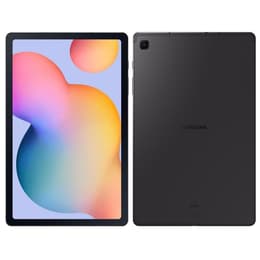
Galaxy Tab S6 Lite (10.4", 2024)
Starting at

Refurbished price:170.00

Versus €482.00 new

See options
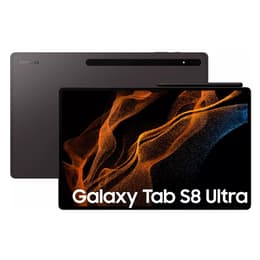
Galaxy Tab S8 (11.0", 2022)
Starting at

Refurbished price:332.00

Versus €745.19 new

See options

Ratings

The Samsung Galaxy Tab S6 Lite (2024) and the Samsung Galaxy Tab S8 (2022) are Android tablets designed for different user needs and performance expectations. While the Tab S6 Lite (2024) offers a refreshed mid-range experience with an included S Pen, the Tab S8 (2022) was positioned as a flagship device, providing more robust performance and advanced features. Both operate on the Android ecosystem, offering access to a wide array of applications and Samsung's One UI interface.

Scores

Durability

The practical lifespan of a tablet is influenced by its release timeline, software support, and physical durability. These two models, released two years apart, offer different expectations in these areas.

  • Release Timeline: The Galaxy Tab S8 was released in March 2022, making it an older model compared to the Galaxy Tab S6 Lite (2024), which launched in March 2024. This difference in release year impacts their respective software support cycles.
  • Software Longevity: The Galaxy Tab S6 Lite (2024) launched with Android 14 and One UI 6.1, suggesting it will receive software updates for a longer period into the future. The Galaxy Tab S8, initially released with Android 12, has already received several updates and is expected to continue receiving major Android updates, potentially up to Android 15 or 16, extending its usable software life.
  • Physical Durability: Both tablets feature a metal build, contributing to their overall sturdiness. The Galaxy Tab S8 is constructed with an Armor Aluminum unibody, designed for enhanced resilience against daily wear.

Year of Release

2024

2022

Compatible with latest Update

Yes

Yes

OS

Android

Android

Performance

Performance is a key differentiator, with the internal components dictating how smoothly applications run and how efficiently the device handles demanding tasks.

  • Processing Power: The Galaxy Tab S8 is equipped with a high-performance processor, enabling it to handle demanding applications, complex multitasking, and graphic-intensive games with fluidity. Users will experience quick app loading times and smooth transitions between tasks. In contrast, the Galaxy Tab S6 Lite (2024) features a mid-range processor that provides adequate performance for everyday tasks like browsing, streaming, and note-taking, but may show limitations with very demanding applications or high-end gaming.
  • Multitasking and Responsiveness: The Galaxy Tab S8 typically comes with 8GB of RAM, allowing for robust multitasking and keeping multiple applications open without significant slowdowns. The Galaxy Tab S6 Lite (2024) includes 4GB of RAM, which is suitable for moderate multitasking but may require more frequent app reloading when switching between many applications.
  • Storage Options: Both tablets offer internal storage options of 64GB or 128GB, with the Galaxy Tab S8 also available in a 256GB configuration. Both models support expandable storage via a microSD card, providing flexibility for users who need more space for files and media.

Memory (GB)

4 GB

8 GB

Processor

Exynos 1280

Qualcomm SM8450 Snapdragon 8 Gen 1

Screen quality

The display is a primary interface for tablets, and differences in screen technology, resolution, and refresh rate significantly impact the visual experience.

  • Display Technology and Resolution: The Galaxy Tab S8 features an 11-inch LTPS TFT LCD with a resolution of 2560 x 1600 pixels, offering a sharp and detailed viewing experience. The Galaxy Tab S6 Lite (2024) has a 10.4-inch TFT LCD with a resolution of 2000 x 1200 pixels, which provides clear visuals for general use.
  • Refresh Rate and Smoothness: A notable difference is the refresh rate; the Galaxy Tab S8 boasts a 120Hz refresh rate, resulting in smoother scrolling, more fluid animations, and a more responsive feel, particularly noticeable during gaming or fast-paced content. The Galaxy Tab S6 Lite (2024) maintains a standard 60Hz refresh rate, which is sufficient for most daily tasks but does not offer the same level of visual fluidity.
  • Brightness and Viewing Experience: The Galaxy Tab S8's display generally offers higher brightness levels, making it more comfortable for outdoor use or in brightly lit environments. The Galaxy Tab S6 Lite (2024) provides adequate brightness for indoor use, though some users note it may struggle in direct sunlight.

Resolution

1200 x 2000

1600 x 2560

Screen type

TFT LCD

TFT LCD

Pixel density

230ppp

280ppp

Audiovisual

While tablets are not typically primary photography devices, their camera systems are important for video calls, document scanning, and casual photography.

  • Rear Camera Capabilities: The Galaxy Tab S8 features a dual-camera setup on the rear, including a 13MP wide-angle lens and a 6MP ultra-wide-angle lens, capable of recording 4K video. This allows for more versatile photography and better detail capture. The Galaxy Tab S6 Lite (2024) has a single 8MP rear camera with autofocus, suitable for basic photography and document scanning.
  • Front Camera for Communication: For video conferencing, the Galaxy Tab S8 includes a 12MP ultra-wide front-facing camera with an auto-framing feature that keeps the subject centered during calls. The Galaxy Tab S6 Lite (2024) is equipped with a 5MP front camera, which is sufficient for standard video calls.
  • Audio Experience: Both tablets feature stereo speakers with Dolby Atmos support, enhancing the audio experience for media consumption. The Galaxy Tab S8, however, often includes a quad-speaker system tuned by AKG, providing a richer and more immersive sound output compared to the dual speakers on the Galaxy Tab S6 Lite (2024).

Miscellaneous

Beyond core specifications, several practical elements contribute to the overall user experience and device utility.

  • Connectivity and Ports: The Galaxy Tab S8 supports Wi-Fi 6E, offering faster and more stable wireless connections, and features a USB 3.2 Type-C port for quicker data transfer speeds. The Galaxy Tab S6 Lite (2024) supports Wi-Fi 5 (802.11ac) and has a USB 2.0 Type-C port, which are standard for its category. Both models offer Bluetooth connectivity, with the S6 Lite (2024) featuring Bluetooth 5.3 and the S8 having Bluetooth 5.2.
  • S Pen Integration: Both tablets come bundled with an S Pen, providing a natural writing and drawing experience. The Galaxy Tab S8's S Pen benefits from lower latency, offering a more responsive and precise interaction, which is particularly advantageous for detailed creative work.
  • Design and Security: The Galaxy Tab S8 has a slightly thinner profile and incorporates a fingerprint sensor for secure and convenient unlocking. The Galaxy Tab S6 Lite (2024) has a slightly thicker build and relies on traditional unlock methods, lacking a fingerprint reader. Both devices support Samsung's DeX mode, allowing for a desktop-like experience when connected to external displays or used with a keyboard.

Weight

467 g

507 g

Screen size (in)

10.4

11.0

Network

Wi-Fi + 4G

Wi-Fi + 5G

Carrier compatibility

Unlocked

Unlocked

Connector

USB Type-C

USB Type-C

The Samsung Galaxy Tab S6 Lite (2024) and Galaxy Tab S8 (2022) cater to different segments of the tablet market, each with distinct strengths and user profiles.

Users frequently praise the Galaxy Tab S6 Lite (2024) for its inclusion of the S Pen, making it a valuable tool for note-taking, sketching, and educational purposes. Its refreshed processor offers decent performance for everyday tasks, and its metal build provides a sense of durability. However, some users note that its 60Hz TFT LCD display and 4GB of RAM can feel less responsive compared to higher-end tablets, and its camera system is considered basic.

The Galaxy Tab S8 (2022), on the other hand, is often lauded for its powerful processor, which ensures smooth performance across demanding applications and games. Its 120Hz LCD display provides a fluid visual experience, and its quad-speaker setup delivers rich audio. The improved S Pen with lower latency and the more capable camera system are also frequently highlighted as strong points. Criticisms sometimes point to its LCD panel not being as vibrant as AMOLED displays found in other premium tablets, and its initial Android version being older than the S6 Lite (2024)'s launch OS.

Users prioritizing a responsive display, robust performance for intensive tasks, and a more advanced camera system may find the Galaxy Tab S8 better suited to their needs. Its higher RAM and faster connectivity also make it a strong choice for professionals or power users. Conversely, individuals seeking an affordable tablet primarily for note-taking, casual media consumption, and light productivity, especially those who value an included S Pen, will likely find the Galaxy Tab S6 Lite (2024) to be a practical option. Both tablets offer a quality-assured refurbished option, providing an eco-friendly alternative for consumers looking to make informed and sustainable choices.


See all articles

Our recent comparisons