

Compare models

Galaxy Tab S10 Ultra (14.6", 2024) Vs iPad 10 (2022, A14 series)

  • 1-year minimum warranty
  • Free delivery on all orders
  • Free 30-day returns
Galaxy Tab S10 Ultra (14.6", 2024)
Starting at

Refurbished price:750.00

Versus €1,454.07 new

See options
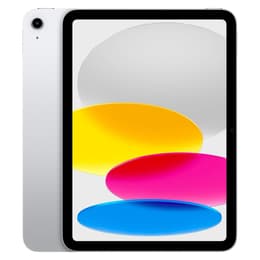
iPad 10 (2022, A14 series)
Starting at

Refurbished price:347.00

Versus €449.00 new

See options

Differences at a glance

The Samsung Galaxy Tab S10 Ultra (2024) and the Apple iPad 10 (2022) represent two distinct approaches to large-format portable computing, catering to different form factors and software ecosystems. While the Galaxy Tab S10 Ultra offers an expansive canvas and runs on the Android operating system, the iPad 10 provides a compact build governed by Apple's iPadOS platform. Choosing between these devices involves looking closely at physical scale, software environments, and workflow compatibility.

Available Models

Colour

Storage (GB)

Scores

Durability

Long-term usability depends on release timing, software support windows, and physical durability under everyday travel conditions.

  • Release timeline and software support: The Galaxy Tab S10 Ultra debuted in late 2024, whereas the iPad 10 launched in late 2022, giving the Samsung tablet a newer baseline for multi-year manufacturer security patches and operating system refreshes.
  • Build and structural integrity: Both tablets feature sturdy metal chassis construction designed to withstand daily transport, though the expansive glass surface of the larger Samsung model requires careful handling during transit.
  • Expected lifespan: Both units incorporate robust internal components that maintain functional reliability over years of standard use, though choosing a quality-assured refurbished option provides a sustainable choice that extends device lifecycles without compromising on hardware longevity.

Year of Release

2024

2022

Compatible with latest Update

No

Yes

OS

Android

iPadOS

Performance

System responsiveness and day-to-day multitasking capabilities vary depending on internal memory configurations and resource management.

  • Multitasking and memory headroom: The Galaxy Tab S10 Ultra includes generous RAM allocations that facilitate smooth split-screen workflows and heavy background tasks, while the iPad 10 handles standard multi-app usage efficiently within its memory limits.
  • App execution and system speed: Both devices load everyday productivity applications, web browsers, and media streaming tools swiftly, maintaining consistent fluidity during routine navigation and document editing.
  • Battery behavior: The Samsung model features a massive physical footprint housing a high-capacity battery suited for extensive daily usage, whereas the iPad 10 balances a moderate battery size with efficient power management for standard routines.

Screen quality

Display characteristics differ significantly in terms of technology, physical dimensions, and visual immersion.

  • Panel technology and contrast: The Galaxy Tab S10 Ultra utilizes an advanced OLED display technology that delivers deep black levels and vivid contrast, while the iPad 10 relies on a traditional liquid crystal display offering bright and accurate color reproduction.
  • Dimensions and workspace: The Samsung model provides an oversized 14.6-inch viewing area well-suited for side-by-side app windows and digital sketching, whereas the iPad 10 features a more compact 10.9-inch screen tailored for handheld reading and portable media viewing.
  • Outdoor visibility: Both screens reach sufficient brightness levels to maintain legibility under ambient indoor lighting and shaded outdoor environments.

Resolution

1848 x 2960

2360 x 1640

Screen type

Dynamic AMOLED 2X

Liquid Retina display

Pixel density

240ppp

264ppp

Audiovisual

Optics and audio setups cater primarily to remote communication, casual scanning, and media consumption.

  • Camera arrays: The Galaxy Tab S10 Ultra equips dual front and rear lenses for versatile framing during video conferences, while the iPad 10 features single front and rear cameras optimized for scanning documents and quick snapshots.
  • Video communication: Both tablets incorporate landscape-oriented front camera placements that naturally frame users during virtual meetings and online classes.
  • Audio output: Multi-speaker arrays on both models deliver clear sound reproduction for voice calls, podcasts, and casual video playback without requiring external speakers.

Miscellaneous

Physical dimensions, accessory integration, and connection standards define how each tablet fits into specialized routines.

  • Portability and handling: The iPad 10 offers a lightweight, easily packable design for travelers and students moving between classes, while the Galaxy Tab S10 Ultra functions more like a stationary workstation due to its broad physical footprint.
  • Peripheral integration: The Samsung model comes bundled with a responsive stylus for note-taking and precise graphic work, whereas the iPad 10 supports separate keyboard and stylus accessories sold independently.
  • Connectivity and ports: Both units utilize modern universal USB-C ports for charging and data transfer, alongside wireless standards for stable network access.

Weight

576 g

477 g

Screen size (in)

14.6

10.9

Network

Wi-Fi

Wi-Fi

Carrier compatibility

Unlocked

Without SIM Port

What the community thinks

User feedback from online communities highlights distinct preferences for each platform. Owners of the Galaxy Tab S10 Ultra frequently praise its massive canvas, included stylus, and vibrant OLED panel for creative tasks and split-screen multitasking. Conversely, iPad 10 users often emphasize the approachable software layout, reliable everyday performance, and comfortable handheld portability.

Users prioritizing an expansive workspace for digital art, multi-window productivity, and media immersion may prefer the Galaxy Tab S10 Ultra. Meanwhile, users prioritizing a lightweight, straightforward device for everyday reading, casual streaming, and simple administrative tasks will likely lean toward the iPad 10. Exploring quality-assured refurbished options provides an eco-friendly alternative for acquiring either model while supporting sustainable technology consumption.


Our recent comparisons