

Galaxy S9 Vs iPhone 13 Pro

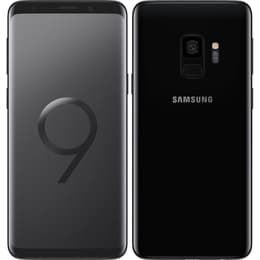
Galaxy S9
Galaxy S9
Starting at

Refurbished price:131.41

Versus €499.00 new

See options
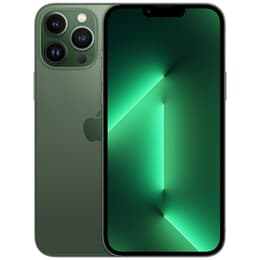
iPhone 13 Pro
iPhone 13 Pro
Starting at

Refurbished price:313.00

Versus €1,149.00 new

See options

Ratings

The Samsung Galaxy S9, released in March 2018, and the iPhone 13 Pro, launched in September 2021, represent different generations and operating system ecosystems in the smartphone market. While both are premium devices from their respective eras, the primary differentiators lie in their release timelines, the underlying software platforms (Android versus iOS), and the advancements in hardware technology over a three-year period.

Scores

Durability

The practical lifespan of a smartphone is heavily influenced by its software support and the availability of security updates.

  • Release Timeline and OS Support: The Galaxy S9, released in March 2018, originally shipped with Android 8.0 Oreo and received its last major Android OS update with Android 10 in 2020. Security updates for the S9 series officially ended in April 2022, meaning it no longer receives official software support. In contrast, the iPhone 13 Pro, launched in September 2021, shipped with iOS 15 and is expected to receive major iOS updates until at least 2027 or 2028, potentially supporting iOS 28 or iOS 29. This provides the iPhone 13 Pro with several more years of software longevity and access to the latest features and security patches.
  • Physical Durability: Both devices feature a glass front and back with an aluminum frame and carry an IP68 rating for dust and water resistance. The iPhone 13 Pro, however, incorporates Apple's Ceramic Shield front cover, which offers enhanced drop performance compared to previous generations.
  • Repairability: While both phones utilize glass in their construction, making repairs potentially intricate, the older Galaxy S9 might present challenges in sourcing original parts due to its age.

Year of Release

2018

2021

Compatible with latest Update

No

Yes

OS

Android

iOS

Foldable

No

No

Performance

Performance differences between these two devices are substantial, primarily due to the three-year gap in their release dates and the rapid evolution of mobile processing technology.

  • Processing Power: The Galaxy S9 is powered by an older generation processor, which capably handles everyday tasks such as web browsing, social media, and light applications. However, users may experience noticeable slowdowns or stutters when running more demanding applications, graphic-intensive games, or engaging in heavy multitasking. The iPhone 13 Pro, on the other hand, features a powerful, current-generation processor designed to manage highly demanding applications, complex games, and extensive multitasking with remarkable smoothness and efficiency.
  • Memory and Storage: The Galaxy S9 typically comes with 4GB or 6GB of RAM, which was standard for its time, alongside storage options up to 256GB, expandable via microSD. The iPhone 13 Pro is equipped with 6GB of RAM, providing ample capacity for fluid app switching and background processes, and offers internal storage configurations ranging from 128GB up to 1TB, without expandable storage.
  • Battery Behavior: The Galaxy S9 has a 3000 mAh battery, while the iPhone 13 Pro has a 3095 mAh battery. Despite similar capacities, the iPhone 13 Pro's more efficient processor and optimized software generally translate to longer real-world battery life for most users, often lasting a full day of heavy use.

Memory (GB)

4 GB

6 GB

Screen quality

The display technology in both devices offers a high-quality viewing experience, though the iPhone 13 Pro benefits from more recent advancements.

  • Display Technology and Resolution: The Galaxy S9 features a 5.8-inch Super AMOLED display with a 2960 x 1440 pixel resolution, providing vibrant colors and deep blacks. The iPhone 13 Pro sports a 6.1-inch Super Retina XDR OLED display with a resolution of 2532 x 1170 pixels, also delivering excellent color accuracy and contrast.
  • Refresh Rate and Brightness: The Galaxy S9 has a standard 60Hz refresh rate, which was common for its release year. The iPhone 13 Pro significantly enhances the visual experience with its ProMotion technology, offering an adaptive refresh rate that can scale up to 120Hz. This results in noticeably smoother scrolling, more fluid animations, and a more responsive feel. Additionally, the iPhone 13 Pro boasts higher peak brightness levels, improving visibility in bright outdoor conditions and enhancing HDR content.
  • Viewing Experience: Both displays offer an immersive viewing experience with rich colors and excellent contrast, suitable for media consumption and daily use. The iPhone 13 Pro's larger size and higher refresh rate contribute to a more modern and fluid visual interaction.

Resolution

1440 x 2960

1170 x 2532

Screen type

Super AMOLED

Super Retina XDR OLED

Audiovisual

The camera systems of the Galaxy S9 and iPhone 13 Pro reflect the significant progress in mobile photography over several years.

  • Rear Camera System: The Galaxy S9 features a single 12-megapixel main camera with a variable aperture, which was innovative at its release, allowing it to adapt to different lighting conditions. It performs well in good lighting but shows its age in challenging low-light scenarios compared to newer devices. The iPhone 13 Pro, on the other hand, comes with a versatile triple 12-megapixel camera system, including wide, ultrawide, and telephoto lenses. This setup, combined with advanced computational photography, delivers excellent image quality across various conditions, particularly excelling in low-light performance and detail retention.
  • Front Camera and Video: The Galaxy S9 has an 8-megapixel front camera. The iPhone 13 Pro features a 12-megapixel front camera that supports advanced features like Portrait Mode and Cinematic Mode for video. For video recording, the iPhone 13 Pro offers advanced capabilities such as Cinematic Mode for shallow depth-of-field effects and ProRes video recording, providing more control for professional users. The Galaxy S9 can record 4K video, but the iPhone 13 Pro offers more refined video features and better stabilization.
  • Special Features: The iPhone 13 Pro includes a LiDAR scanner for improved augmented reality experiences and faster autofocus in low light, along with macro photography capabilities.

Main camera

12 megapixels

12 megapixels

Front camera

8 megapixels

12 megapixels

Miscellaneous

Beyond core features, several practical elements differentiate the user experience between these two smartphones.

  • Connectivity: The Galaxy S9 supports 4G LTE networks, Wi-Fi 5, and Bluetooth 5.0. The iPhone 13 Pro offers more advanced connectivity with 5G support, Wi-Fi 6, and Bluetooth 5.0, providing faster cellular data speeds and improved wireless performance.
  • Ports and Biometrics: The Galaxy S9 includes a traditional 3.5mm headphone jack and a USB-C port for charging and data transfer. It features both a rear-mounted fingerprint sensor and an iris scanner for biometric authentication. The iPhone 13 Pro relies on its Lightning port for charging and data and uses Face ID for secure facial recognition.
  • Physical Characteristics: The Galaxy S9 is lighter at 163 grams and has a slightly smaller form factor with its 5.8-inch display. The iPhone 13 Pro is heavier at 204 grams, partly due to its larger 6.1-inch display and more robust build materials. Both devices feature premium glass and metal constructions and are IP68 rated for water and dust resistance.

Weight

163 g

203 g

Width

6,87 cm

7,15 cm

Height

14,77 cm

14,67 cm

Depth

0,85 cm

0,76 cm

Screen size (in)

5.8

6.1

Network

4G

5G

SIM card

Physical SIM

Physical SIM + eSIM

Carrier compatibility

Unlocked

Unlocked

Connector

USB-C + Jack 3.5mm

Lightning

The Samsung Galaxy S9 and iPhone 13 Pro cater to different user expectations, largely shaped by their respective release dates and technological advancements. User sentiment for the Galaxy S9 often highlights its once-innovative design, the inclusion of a 3.5mm headphone jack, and its capable camera for its time. However, common criticisms revolve around its battery life and, more significantly, the cessation of official software updates, which impacts its long-term usability and security.

The iPhone 13 Pro, conversely, receives widespread praise for its exceptional performance, advanced camera system, vibrant ProMotion display, and robust battery life. Some users have noted that the camera's image processing can sometimes lead to overly saturated photos, though this is often a matter of personal preference and can be adjusted.

Users prioritizing a device with long-term software support, cutting-edge performance for demanding applications, and a highly versatile camera system will find the iPhone 13 Pro well-suited to their needs. Its advanced display and robust ecosystem offer a premium experience for those who value the latest mobile technology. Conversely, individuals seeking a more basic smartphone for essential communication and light tasks, who appreciate features like a traditional headphone jack, might consider the Galaxy S9, understanding that it operates on an older software platform. For those looking for an eco-friendly alternative, both models are available as quality-assured refurbished options, offering a sustainable choice for consumers.


See all articles

Our recent comparisons