

Galaxy S9 Vs iPhone 13 mini

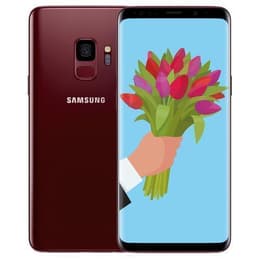
Galaxy S9
Galaxy S9
Starting at

Refurbished price:131.41

Versus €499.00 new

See options
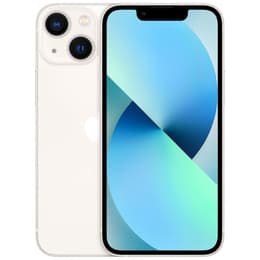
iPhone 13 mini
iPhone 13 mini
Starting at

Refurbished price:220.00

Versus €829.00 new

See options

Ratings

The Samsung Galaxy S9, released in March 2018, and the iPhone 13 Mini, launched in September 2021, represent different eras and operating systems in the smartphone landscape. While the Galaxy S9 runs on Android, offering a more open ecosystem, the iPhone 13 Mini operates on Apple's iOS, known for its integrated services and compact design. The primary differentiators lie in their release timelines, software ecosystems, and physical form factors.

Scores

Durability

The longevity of a smartphone is influenced by its release date, software support, and repairability. These two devices offer distinct experiences in terms of their expected practical lifespan.

  • Release Timeline and Software Support: The Galaxy S9, released in March 2018, received its last major Android update to Android 10 in late 2020, with security updates concluding around March 2022. In contrast, the iPhone 13 Mini, released in September 2021, is expected to receive major iOS updates until at least 2026 or 2027, followed by security updates for several more years. This means the iPhone 13 Mini offers a significantly longer period of official software support.
  • Repairability: Both devices present challenges for repair. The Galaxy S9 scored a 4 out of 10 on iFixit's repairability scale, primarily due to its glass front and back and strong adhesive, making screen and battery replacements difficult. The iPhone 13 Mini initially received a 5 out of 10, later adjusted to 6 out of 10 with an iOS update that addressed Face ID issues after screen replacement. While some components are modular, strong adhesives and specific tools are often required for both, suggesting professional assistance is advisable for repairs.
  • Expected Practical Lifespan: Given the difference in software support, the iPhone 13 Mini is likely to remain a fully functional and secure device for a longer duration than the Galaxy S9. The Galaxy S9 has already reached its end-of-life for official software updates, meaning it will not receive new Android operating system updates from its manufacturer.

Year of Release

2018

2021

Compatible with latest Update

No

Yes

OS

Android

iOS

Foldable

No

No

Performance

Performance is a key aspect for daily use, encompassing how smoothly applications run, how quickly tasks are completed, and the device's overall responsiveness.

  • Processor Capabilities and Responsiveness: The iPhone 13 Mini features a more recent-generation processor, which translates to smoother operation for demanding applications and multitasking. Users will experience faster app loading times and more fluid transitions. The Galaxy S9, with its older processor, handles everyday tasks adequately but may show signs of slowdown with more intensive applications or numerous apps running simultaneously.
  • RAM Implications for Multitasking: Both devices typically come with 4GB of RAM. However, the iPhone 13 Mini's more optimized software and newer processor allow for more efficient multitasking, meaning apps are less likely to refresh when switching between them. Some users of the iPhone 13 Mini have noted that with iOS updates, the 4GB RAM can sometimes lead to apps refreshing when multiple resource-intensive applications are open.
  • Storage Options: The Galaxy S9 offered storage options up to 256GB and included expandable storage via a microSD card, providing flexibility for users with large media libraries. The iPhone 13 Mini starts with 128GB and goes up to 512GB, but does not offer expandable storage.

Memory (GB)

4 GB

4 GB

Screen quality

The display is a primary interface for any smartphone, and both the Galaxy S9 and iPhone 13 Mini offer distinct visual experiences.

  • Display Technology and Resolution: The Galaxy S9 features a 5.8-inch Super AMOLED display with a resolution of 2960 x 1440 pixels, offering deep blacks and vibrant colors. The iPhone 13 Mini comes with a smaller 5.4-inch Super Retina XDR OLED display, providing a resolution of 2340 x 1080 pixels. Both utilize OLED technology for excellent contrast.
  • Brightness Levels: The iPhone 13 Mini's display offers improved typical brightness up to 800 nits and a peak brightness of 1200 nits for HDR content, making it highly visible outdoors. The Galaxy S9 also provides a bright display, suitable for various lighting conditions.
  • Screen Size and Viewing Experience: The Galaxy S9 offers a larger screen, which can be more immersive for media consumption and browsing. The iPhone 13 Mini's smaller screen prioritizes one-handed usability and a compact form factor, which some users prefer for portability.

Resolution

1440 x 2960

1080 x 2340

Screen type

Super AMOLED

Super Retina XDR OLED

Audiovisual

Camera capabilities are a significant factor for many users, and both devices approach photography with different strengths.

  • Camera System Capabilities: The Galaxy S9 features a single 12-megapixel rear camera with a variable aperture, allowing it to adjust between f/1.5 and f/2.4 for different lighting conditions. It also has an 8-megapixel front camera. The iPhone 13 Mini sports a dual 12-megapixel rear camera system, including a wide and an ultrawide lens, and a 12-megapixel front camera.
  • Photography Performance: The Galaxy S9 was noted for its low-light performance due to its variable aperture, though some users found images could appear overprocessed. The iPhone 13 Mini offers improved low-light capabilities and enhanced image processing, resulting in high-quality images across various conditions. Its ultrawide lens provides more versatility for capturing broader scenes.
  • Video Recording Quality: Both phones are capable of recording high-quality video. The iPhone 13 Mini supports HDR video recording with Dolby Vision, offering advanced video capabilities. The Galaxy S9 also offered features like super slow-motion video.

Main camera

12 megapixels

12 megapixels

Front camera

8 megapixels

12 megapixels

Miscellaneous

Beyond core features, several practical elements contribute to the overall user experience and daily convenience.

  • Connectivity Options: The iPhone 13 Mini supports 5G networks, offering faster cellular data speeds where available, and features newer Wi-Fi standards. The Galaxy S9 supports 4G LTE and older Wi-Fi standards.
  • Port Types: The Galaxy S9 includes a USB-C port for charging and data transfer, along with a 3.5mm headphone jack. The iPhone 13 Mini uses Apple's proprietary Lightning port and does not have a headphone jack.
  • Sensors and Biometrics: The Galaxy S9 features a fingerprint sensor and an iris scanner for biometric authentication. The iPhone 13 Mini relies on Face ID for secure facial recognition.
  • Weight and Dimensions: The iPhone 13 Mini is a significantly more compact and lighter device, measuring 131.5 x 64.2 x 7.65 mm and weighing 141g. The Galaxy S9 is larger and heavier at 147.7 x 68.7 x 8.5 mm and 163g. This difference impacts one-handed use and pocketability.

Weight

163 g

140 g

Width

6,87 cm

6,42 cm

Height

14,77 cm

13,15 cm

Depth

0,85 cm

0,75 cm

Screen size (in)

5.8

5.4

Network

4G

5G

SIM card

Physical SIM

Physical SIM + eSIM

Carrier compatibility

Unlocked

Unlocked

Connector

USB-C + Jack 3.5mm

Lightning

The Samsung Galaxy S9 and iPhone 13 Mini cater to different user preferences, largely due to their age difference and distinct operating systems. Users often praised the Galaxy S9 for its vibrant AMOLED display and the inclusion of a headphone jack and expandable storage. However, common criticisms included its battery life for heavy users and the eventual cessation of software updates. The iPhone 13 Mini, on the other hand, is frequently lauded for its compact size, powerful performance, and excellent camera system. Some users have noted that its smaller battery capacity requires more frequent charging for heavy use, and the 4GB of RAM can sometimes lead to app refreshes when multitasking extensively.

Users prioritizing a compact form factor, long-term software support, and a highly capable camera system will find the iPhone 13 Mini well-suited to their needs. Its more modern processor also offers a smoother and more responsive experience for current applications. Conversely, users who value a larger screen, expandable storage, and the flexibility of the Android ecosystem, and who are comfortable with an older device that no longer receives major software updates, might consider the Galaxy S9. For those seeking an eco-friendly and quality-assured alternative, both models are available as refurbished options, providing a sustainable choice for acquiring these devices.


See all articles

Our recent comparisons