
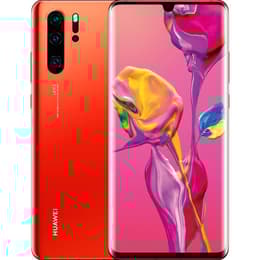


Galaxy S9 Vs Huawei P30 Pro

Galaxy S9
Galaxy S9
Starting at
€98.00
€499.00 new
See options
Huawei P30 Pro
Huawei P30 Pro
Starting at
€180.00
€849.00 new
See options

Ratings

The Samsung Galaxy S9 (2018) and the Huawei P30 Pro (2019) represent flagship smartphones from their respective release years, offering distinct approaches to design, camera technology, and overall user experience. Both devices operate on the Android platform, but they differentiate themselves with their unique hardware configurations and software optimizations.

Scores

Durability

When considering the long-term usability of these devices, their original release dates and subsequent software support play a significant role.

  • Release Timeline and Software Support: The Samsung Galaxy S9 was released in March 2018, while the Huawei P30 Pro followed approximately a year later in March 2019. This difference in release naturally impacts their respective software support lifespans, with the P30 Pro receiving updates for a longer period. The Galaxy S9's official software support concluded in April 2022, having received updates up to Android 10. The Huawei P30 Pro, originally launched with Android 9, has received updates up to Android 10 with EMUI 12 in global markets, extending its functional longevity beyond the S9.
  • Durability and Build Quality: Both devices feature a glass front and back with an aluminium frame and boast an IP68 rating for dust and water resistance, indicating a similar level of protection against elements. The Galaxy S9 specifically features Corning Gorilla Glass 5 for screen protection.
  • Practical Lifespan Considerations: For users evaluating refurbished options, the Huawei P30 Pro's later release date and longer software support suggest a slightly extended practical lifespan in terms of receiving security patches and app compatibility. However, the S9, while past official support, may still be usable for basic tasks.

Year of Release

2018

2019

Compatible with latest Update

No

No

OS

Android

Android

Foldable

No

No

Performance

The core performance of a smartphone dictates its responsiveness and capability to handle various applications, with differences emerging in processing power, memory, and battery endurance.

  • Processor Capabilities and System Responsiveness: The Samsung Galaxy S9 is powered by either a Snapdragon 845 or an Exynos 9810 processor, depending on the region. The Huawei P30 Pro features Huawei's own Kirin 980 chipset. While both processors were capable for their respective release eras, the Kirin 980 in the P30 Pro, being a generation newer, generally offers improved efficiency and performance for demanding applications and multitasking. Users of the P30 Pro often report a snappy, fast, and smooth experience.
  • RAM and Storage Options: The Galaxy S9 typically comes with 4GB of RAM, with some S9+ models offering 6GB, and storage starting at 64GB, expandable via microSD. The P30 Pro provides more robust options, with 6GB or 8GB of RAM and storage configurations starting from 128GB, 256GB, up to 512GB, expandable via Huawei's Nano Memory (NM) cards. Higher RAM in the P30 Pro benefits heavy multitaskers.
  • Battery Behavior in Typical Use: The Galaxy S9 is equipped with a 3000 mAh battery. The Huawei P30 Pro significantly larger 4200 mAh battery delivers excellent endurance, often allowing for a full day of heavy use and potentially up to two days with lighter usage, a notable advantage for users prioritizing battery life.

Memory

4 GB

8 GB

Screen quality

Both smartphones offer premium display experiences, though with key distinctions in resolution and size that affect visual clarity and overall viewing.

  • Display Technology and Resolution: The Samsung Galaxy S9 features a 5.8-inch Super AMOLED display with a Quad HD+ resolution of 2960 x 1440 pixels, resulting in a high pixel density of 570 ppi. The Huawei P30 Pro sports a larger 6.47-inch OLED display with a Full HD+ resolution of 2340 x 1080 pixels, yielding a pixel density of 398 ppi. While the P30 Pro's screen is larger, the S9 offers a noticeably sharper display due to its higher pixel density.
  • Brightness and Viewing Experience: Both devices utilize OLED technology, known for deep blacks and vibrant colors. The Galaxy S9's display supports HDR with a peak brightness of 864 nits, providing clear visibility even in bright outdoor conditions. The P30 Pro's OLED display also supports HDR10, offering good contrast and vivid colors. The larger screen size of the P30 Pro may enhance media consumption for some, while the S9's higher resolution offers finer detail.
  • Refresh Rate and Smoothness: Both devices typically operate at a standard 60Hz refresh rate. The overall smoothness of the user interface on both is generally good for everyday tasks, though the S9's higher resolution provides a crisper visual experience.

Resolution

1440 x 2960

1080 x 2340

Screen type

Super AMOLED

OLED

Audiovisual

The camera systems on the Galaxy S9 and Huawei P30 Pro were highlights at their respective launches, each excelling in different photographic aspects.

  • Camera System Capabilities: The Samsung Galaxy S9 features a single 12-megapixel rear camera with a variable aperture (f/1.5-f/2.4) and optical image stabilization (OIS), designed for strong performance across varied lighting. The Huawei P30 Pro boasts a versatile quad-camera setup, including a 40-megapixel wide-angle lens with OIS, a 20-megapixel ultrawide lens, an 8-megapixel periscope telephoto lens offering 5x optical zoom with OIS, and a Time-of-Flight (ToF) sensor for depth detection.
  • Low-Light and Everyday Photography: The Galaxy S9 was praised for its low-light performance due to its wide variable aperture, producing images with good detail and low noise. However, the P30 Pro's camera system, particularly its RYYB sensor and larger aperture, was considered groundbreaking for its exceptional low-light capabilities, often surpassing rivals. For everyday photography, both capture vibrant and detailed images in good lighting, with the P30 Pro offering greater versatility through its multiple lenses.
  • Video Recording and Zoom: Both phones are capable of 4K video recording, with the S9 offering 4K at up to 60 frames per second. The P30 Pro also provides good video quality with excellent stabilization. A significant differentiator is the P30 Pro's 5x optical zoom and impressive 50x digital zoom capabilities, which were unmatched at its release, providing superior long-range photography options.

Main camera

12 megapixels

40 megapixels

Front camera

8 megapixels

32 megapixels

Miscellaneous

Beyond core performance and visuals, practical features like connectivity, physical attributes, and biometric security contribute to the daily user experience.

  • Connectivity and Ports: Both devices support 4G LTE, Wi-Fi 802.11 a/b/g/n/ac, and Bluetooth 5.0. The Galaxy S9 features a traditional 3.5mm headphone jack and a USB Type-C 3.1 port. The Huawei P30 Pro, however, omits the headphone jack, relying on its USB Type-C port for audio and charging.
  • Biometric Security and Sensors: The Galaxy S9 offers both a rear-mounted fingerprint sensor and an iris scanner for biometric authentication, alongside face recognition. The P30 Pro innovates with an in-display fingerprint sensor and supports face unlock. Both include standard sensors like accelerometers, gyroscopes, and compasses.
  • Physical Design and Handling: The Samsung Galaxy S9 measures 147.7 x 68.7 x 8.5 mm and weighs 163 g, offering a more compact and lighter form factor. The Huawei P30 Pro is a larger and slightly heavier device at 158 x 73.4 x 8.4 mm and 192 g, which might impact one-handed use for some users. Both feature curved displays, contributing to a comfortable grip for their respective sizes.

Weight

163 g

192 g

Width

6,87 cm

7,34 cm

Height

14,77 cm

15,8 cm

Depth

0,85 cm

0,84 cm

Screen size (in)

5.8

6.47

Network

4G

4G

SIM card

Dual Physical SIM

Dual Physical SIM

Carrier compatibility

Unlocked

Unlocked

The Samsung Galaxy S9 and Huawei P30 Pro, though released a year apart, offer distinct strengths that cater to different user priorities. The Galaxy S9, praised for its vibrant and sharp Super AMOLED display and reliable everyday camera performance, still holds appeal for those who prefer a more compact device. Users often commend its overall design and the quality of its audio output. However, its official software support has concluded, which is a key consideration for future-proofing.

The Huawei P30 Pro garnered significant acclaim for its groundbreaking camera system, particularly its exceptional low-light capabilities and unparalleled 5x optical zoom. Its impressive battery life is another frequently highlighted advantage, making it suitable for users who demand extended usage without frequent charging. Some users, however, noted its large size and the lower screen resolution compared to some rivals, though this contributed to its stellar battery endurance. The P30 Pro's extended software support and superior camera versatility often make it a preferred choice for mobile photography enthusiasts.

For individuals prioritizing a highly detailed display and a more compact form factor, a quality-assured refurbished Samsung Galaxy S9 could still serve as a capable device for basic smartphone needs. On the other hand, users focused on cutting-edge mobile photography, exceptional zoom capabilities, and extended battery life will find the Huawei P30 Pro to be a more suitable and sustainable choice, particularly as a refurbished option. Ultimately, the decision depends on whether screen sharpness in a smaller package or camera innovation and battery endurance in a larger device aligns best with individual requirements.