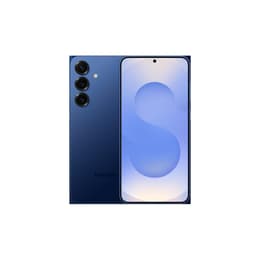



Galaxy S25+ Vs Xiaomi Redmi Note 12 Pro

Galaxy S25+
Galaxy S25+
Starting at

Refurbished price:624.00

Versus €1,401.57 new

See options
Xiaomi Redmi Note 12 Pro
Starting at

Refurbished price:112.00

Versus €399.00 new

See options

Ratings

The Samsung Galaxy S25 Plus, released in early 2025, and the Xiaomi Redmi Note 12 Pro, launched in late 2022, represent distinct offerings in the smartphone market. While both devices operate on the Android platform, the Galaxy S25 Plus is positioned as a premium flagship, incorporating the latest advancements in mobile technology, whereas the Redmi Note 12 Pro serves as a capable mid-range option. Key differentiators lie in their processing power, camera systems, and long-term software support, catering to different user priorities.

Scores

Durability

The expected practical lifespan of a smartphone is influenced by its build quality, software support, and the longevity of its components. These two devices offer different timelines in these aspects.

  • Software Longevity: The Galaxy S25 Plus launched with Android 15 and is backed by Samsung's commitment to 7 years of operating system and security updates, extending its software relevance significantly into the future. The Redmi Note 12 Pro, released with Android 12 and MIUI 13, typically receives fewer major OS updates, generally around two to three, and security updates for a shorter period, which means its software support will conclude sooner.
  • Physical Durability: The Galaxy S25 Plus features an aluminum frame and Corning Gorilla Glass Victus 2 on both the front and back, along with an IP68 rating for substantial dust and water resistance, indicating a robust build. The Redmi Note 12 Pro utilizes Gorilla Glass 5 for screen protection and has an IP53 rating, offering splash and dust resistance, but not full submersion protection.
  • Repairability: While specific repairability scores can vary, flagship devices like the Galaxy S25 Plus often have readily available parts and authorized service networks, potentially simplifying repairs. Mid-range devices like the Redmi Note 12 Pro also have repair options, though component availability and cost might differ over time.

Year of Release

2025

2022

Compatible with latest Update

Yes

No

OS

Android

Android

Foldable

No

No

Performance

Performance is a critical aspect for daily smartphone use, impacting everything from app responsiveness to demanding tasks. The two devices offer different levels of processing capability.

  • Processing Power: The Galaxy S25 Plus is equipped with a current-generation processor, designed for high-performance computing, enabling seamless multitasking, rapid app loading, and smooth execution of graphically intensive games and advanced AI features. This allows for a highly responsive user experience even with demanding applications. The Redmi Note 12 Pro features a mid-range processor, which capably handles everyday tasks, web browsing, social media, and light gaming. While it provides a generally smooth experience for typical usage, it may exhibit slower performance or occasional stutters with very resource-intensive applications or prolonged heavy use.
  • Multitasking and Storage: The Galaxy S25 Plus comes with a substantial amount of RAM as standard, supporting extensive multitasking and keeping numerous applications open in the background without performance degradation. It also offers ample internal storage options. The Redmi Note 12 Pro offers various RAM and storage configurations, which are sufficient for most users' needs, allowing for a reasonable number of apps to run concurrently and providing space for media and files.
  • Battery Behavior: The Galaxy S25 Plus features a battery capacity that, combined with its efficient processor and adaptive display, is designed to provide extended usage throughout a day for many users. The Redmi Note 12 Pro includes a larger battery capacity, which, alongside its less power-hungry components, contributes to a notable battery life, often lasting a full day or more under moderate usage.

Memory (GB)

12 GB

8 GB

Screen quality

The display is the primary interface for smartphone interaction, and both models offer distinct visual experiences.

  • Display Technology and Clarity: The Galaxy S25 Plus features a Dynamic LTPO AMOLED 2X display with a QHD+ resolution, resulting in exceptionally sharp images, deep blacks, and vibrant colors. This technology also allows for a variable refresh rate, optimizing power consumption. The Redmi Note 12 Pro uses an AMOLED display with an FHD+ resolution, providing good clarity and rich colors for its class. It also supports a high refresh rate for smoother visuals.
  • Brightness and Outdoor Visibility: The Galaxy S25 Plus boasts a high peak brightness, making its screen highly legible even in bright outdoor conditions and enhancing HDR content viewing. The Redmi Note 12 Pro offers good brightness levels, suitable for most indoor and outdoor environments, though it may not match the peak brightness of the flagship device in direct sunlight.
  • Refresh Rate and Smoothness: Both devices offer a 120 Hz refresh rate, contributing to smoother scrolling, more fluid animations, and a more responsive feel during interactions. The Galaxy S25 Plus's LTPO technology allows its refresh rate to adapt dynamically, conserving battery life.

Resolution

1440 x 3120 pixels

1080 x 2400

Audiovisual

Camera capabilities are a significant factor for many users, and these phones approach photography from different perspectives.

  • Rear Camera System: The Galaxy S25 Plus features a versatile triple-camera system, including a high-resolution main sensor with optical image stabilization (OIS), an ultra-wide lens, and a telephoto lens with optical zoom. This setup is designed for capturing detailed images across various scenarios, including distant subjects. The Redmi Note 12 Pro also has a triple-camera setup, with a main sensor that includes OIS, an ultra-wide lens, and a macro lens. It performs well in good lighting conditions, capturing clear and colorful photos.
  • Low-Light and Video Performance: The Galaxy S25 Plus benefits from advanced image processing and a powerful chipset, leading to strong low-light performance with reduced noise and improved detail. It supports high-resolution video recording, offering advanced stabilization and features. The Redmi Note 12 Pro's main camera performs commendably in low light for its category, especially with OIS. It can record video at up to 4K resolution, providing good quality for general use.
  • Front Camera and Features: Both devices include a front-facing camera suitable for selfies and video calls. The Galaxy S25 Plus's front camera offers a higher megapixel count and benefits from the device's overall image processing capabilities. The Redmi Note 12 Pro's front camera delivers solid selfies, particularly in well-lit environments.

Front camera

12MP

16 megapixels

Miscellaneous

Beyond core features, several practical elements contribute to the overall user experience and device utility.

  • Connectivity and Ports: The Galaxy S25 Plus supports the latest wireless standards, including 5G and advanced Wi-Fi, ensuring fast and reliable network connections. It features a USB-C port for charging and data transfer. The Redmi Note 12 Pro also offers 5G connectivity and supports Wi-Fi 6, providing modern wireless capabilities. It includes a USB-C port and retains a 3.5mm headphone jack, which some users find convenient.
  • Biometrics and Sensors: The Galaxy S25 Plus incorporates an ultrasonic in-screen fingerprint sensor for secure and convenient unlocking, alongside face recognition. The Redmi Note 12 Pro features a side-mounted fingerprint sensor, which is also a fast and reliable method for authentication, and includes an IR blaster for controlling home electronics.
  • Design and Handling: The Galaxy S25 Plus features a sleek design with an aluminum frame and glass construction, offering a premium in-hand feel. Its dimensions and weight are optimized for comfortable handling. The Redmi Note 12 Pro also presents a modern design with a glass back and a balanced weight, making it comfortable for everyday use.

Weight

190 g

187 g

Screen size (in)

6.7

6.67

Network

5G

5G

SIM card

Physical SIM + eSIM

Dual Physical SIM

Carrier compatibility

Unlocked

Unlocked

Connector

USB-C

USB-C

User feedback for the Galaxy S25 Plus often highlights its exceptional performance, vibrant display, and advanced camera capabilities as strong points. Many users appreciate the extended software support, which contributes to the device's longevity and value over time. Some common criticisms might revolve around its iterative design changes compared to previous generations or specific software nuances. Users generally praise its ability to handle demanding applications and deliver a consistently smooth experience.

For the Xiaomi Redmi Note 12 Pro, users frequently commend its bright AMOLED display, reliable battery life with fast charging, and capable main camera performance in well-lit conditions. It is often seen as a device that offers a balanced set of features for its segment. Criticisms sometimes point to the performance of its secondary cameras in challenging lighting or the comparatively shorter software update cycle.

Users prioritizing cutting-edge performance, a top-tier camera system with advanced features, and long-term software support will find the Galaxy S25 Plus well-suited to their needs. Its robust build and high-resolution display also cater to those seeking a premium experience. Conversely, users who require a dependable smartphone for everyday tasks, appreciate a good display, and value strong battery life without needing the absolute latest in processing power or camera versatility may lean toward the Redmi Note 12 Pro. Both devices, whether new or as a quality-assured refurbished option, offer distinct advantages depending on individual user requirements and usage patterns.


See all articles

Our recent comparisons