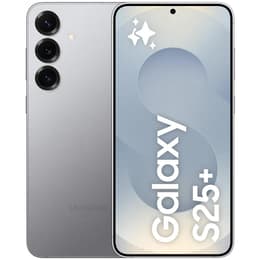



Galaxy S25+ Vs Google Pixel 8 Pro

Galaxy S25+
Galaxy S25+
Starting at

Refurbished price:624.00

Versus €1,401.57 new

See options
Google Pixel 8 Pro
Google Pixel 8 Pro
Starting at

Refurbished price:293.00

Versus €1,099.00 new

See options

Ratings

The Samsung Galaxy S25 Plus, released in February 2025, and the Google Pixel 8 Pro, launched in October 2023, represent distinct approaches to the premium smartphone experience. While both devices operate on the Android platform, they offer different hardware philosophies and software ecosystems. The Galaxy S25 Plus emphasizes a larger display and a versatile camera system, whereas the Pixel 8 Pro focuses on advanced computational photography capabilities and a more integrated Google software experience.

Scores

Durability

When considering the long-term usability of a smartphone, software support and physical resilience are key factors. Both devices offer extensive support, but their release timelines differ.

  • Software Longevity: The Samsung Galaxy S25 Plus, being a newer device, benefits from Samsung's commitment to providing seven years of OS and security updates from its February 2025 release. The Google Pixel 8 Pro also offers an impressive seven years of OS, security updates, and Pixel Feature Drops, ensuring a prolonged period of software relevance from its October 2023 launch.
  • Physical Durability: The Galaxy S25 Plus features Gorilla Glass Victus 2 on its display and back, complemented by flat metal edges, contributing to a robust feel. The Pixel 8 Pro uses Corning Gorilla Glass Victus 2 for both its front and back, with an aluminum frame. User reports for the Pixel 8 Pro indicate that while the build quality is solid, some users have experienced minor cosmetic wear over time.
  • Expected Lifespan: Both devices carry an IP68 rating for dust and water resistance, indicating a high level of protection against environmental elements. Given their extended software support, both phones are designed for a practical lifespan of several years, making them suitable as quality-assured refurbished options.

Year of Release

2025

2023

Compatible with latest Update

Yes

Yes

Foldable

No

No

Performance

Performance is central to the daily user experience, influencing everything from app responsiveness to demanding tasks. These devices offer different underlying architectures.

  • Everyday Responsiveness: The Galaxy S25 Plus, powered by a current-generation processor, delivers a consistently smooth experience for navigating the interface, launching applications, and managing multiple tasks simultaneously. Users report a seamless feel when switching between apps and screens. The Pixel 8 Pro also provides a very quick and smooth experience for day-to-day processes, with users noting rare slowdowns.
  • Demanding Applications and Gaming: For more intensive applications and mobile gaming, the Galaxy S25 Plus handles these tasks efficiently, with users rarely noticing overheating even during prolonged use. The Pixel 8 Pro, while capable, can sometimes get warm, particularly when on 5G or during graphically intensive activities, which can occasionally lead to minor performance throttling.
  • Multitasking and Storage: Both devices come with 12GB of RAM, providing ample capacity for fluid multitasking. The Galaxy S25 Plus offers storage options of 256GB and 512GB, while the Pixel 8 Pro is available in 128GB, 256GB, 512GB, and a 1TB option in some regions.

Memory (GB)

12 GB

12 GB

Screen quality

The display is a primary interface for any smartphone, and both the Galaxy S25 Plus and Pixel 8 Pro offer high-quality viewing experiences with distinct characteristics.

  • Display Technology and Clarity: The Galaxy S25 Plus features a 6.7-inch Dynamic LTPO AMOLED 2X display with a QHD+ resolution (3120x1440 pixels), resulting in sharp and vibrant visuals. The Pixel 8 Pro also sports a 6.7-inch LTPO AMOLED display with a QHD+ resolution (2992x1344 pixels), offering excellent clarity.
  • Brightness Levels: The Galaxy S25 Plus boasts a peak brightness of up to 2600 nits, ensuring excellent visibility even in bright outdoor conditions. The Pixel 8 Pro is advertised with a peak brightness of 2400 nits, with real-world measurements showing strong performance, particularly for HDR content and in bright environments.
  • Refresh Rate and Smoothness: Both phones feature an adaptive refresh rate of up to 120Hz, providing smooth scrolling and fluid animations. The Pixel 8 Pro's display can dynamically adjust its refresh rate down to 1Hz, which can contribute to power efficiency.

Resolution

1440 x 3120 pixels

1344 x 2992

Audiovisual

For many users, the camera system is a crucial aspect of a smartphone, and both devices deliver advanced photographic capabilities with different strengths.

  • Rear Camera System: The Galaxy S25 Plus is equipped with a triple rear camera setup, including a 50 MP wide-angle primary camera, a 12 MP ultra-wide angle camera, and a 10 MP telephoto camera with 3x optical zoom. The Pixel 8 Pro also features a versatile triple camera system, comprising a 50 MP main sensor, a 48 MP ultrawide lens with macro focus, and a 48 MP telephoto lens offering 5x optical zoom.
  • Photography Performance: The Galaxy S25 Plus delivers sharp and vibrant photos, with Samsung typically prioritizing punchy colors and a slightly warmer white balance. While generally good, some users note that its low-light performance and detail can sometimes be less consistent compared to some competitors. The Pixel 8 Pro is widely praised for its exceptional camera, producing very good shots with reliable results and a distinctive color science. Its computational photography excels in various conditions, though some users report delays when taking rapid-fire photos due to processing.
  • Video Recording and Audio: Both devices offer high-quality video recording, with the Galaxy S25 Plus capable of 8K at 30 frames per second. The Pixel 8 Pro's video quality is generally good, especially with features like Video Boost, though some users find stabilization could be improved without cloud processing. Both phones provide clear microphone quality for calls and recording, and offer a good media consumption experience through their speakers.

Front camera

12MP

10.5 megapixels

Miscellaneous

Beyond the core features, several practical elements contribute to the overall user experience and daily convenience of these smartphones.

  • Connectivity: Both the Galaxy S25 Plus and the Pixel 8 Pro support 5G connectivity for fast mobile data. The Galaxy S25 Plus includes Wi-Fi 7 and Bluetooth 5.4, along with Ultra-Wideband (UWB) for enhanced spatial awareness and faster file sharing. The Pixel 8 Pro features Wi-Fi 7 and Bluetooth 5.3.
  • Ports and Biometrics: Both devices utilize a USB Type-C port for charging and data transfer. The Galaxy S25 Plus's USB-C 3.2 port also supports DisplayPort 1.2 and OTG functions. Both phones incorporate in-display fingerprint sensors for secure unlocking. The Pixel 8 Pro also offers Face Unlock with a high level of security.
  • Design and Handling: The Galaxy S25 Plus weighs 190 grams and is 7.3mm thick, with a design that users find comfortable to hold despite its size. The Pixel 8 Pro is slightly heavier at 213 grams and 8.8mm thick, with a design that some users describe as feeling robust.

Weight

190 g

213 g

Screen size (in)

6.7

6.7

Network

5G

5G

SIM card

Physical SIM + eSIM

Physical SIM + eSIM

Carrier compatibility

Unlocked

Unlocked

User feedback for the Samsung Galaxy S25 Plus frequently highlights its exceptionally smooth performance, vibrant and bright display, and generally reliable battery life that often extends beyond a full day of moderate use. Common praise also goes to Samsung's One UI for its extensive customization options and optimized animations. Some users, however, note that while the camera is good, it might not always match the low-light capabilities or consistent detail of some rivals, and the integrated AI features can sometimes feel less organic.

The Google Pixel 8 Pro receives consistent acclaim for its outstanding camera system, particularly its computational photography prowess, and its clean, integrated Android software experience with useful Pixel-exclusive AI features like Call Screening. Conversely, user criticisms often revolve around mixed experiences with battery life, which some find to be merely average, and occasional reports of the device getting warm or exhibiting minor performance stutters during demanding tasks or rapid photo processing.

Users prioritizing a device with the latest hardware, a highly customizable software experience, and a slightly newer release for extended software support may find the Galaxy S25 Plus well-suited to their needs. Those who value a top-tier camera for both photos and videos, a streamlined Android interface with unique AI capabilities, and a strong commitment to long-term software updates might lean toward the Pixel 8 Pro. Both devices offer compelling features, and choosing between them often comes down to individual preferences for software ecosystem, camera philosophy, and performance characteristics. For those seeking a sustainable choice, both models are available as quality-assured refurbished options.


See all articles

Our recent comparisons