

Compare models

Galaxy S25 Vs Xiaomi Redmi Note 13 4G

  • 1-year minimum warranty
  • Free delivery on all orders
  • Free 30-day returns
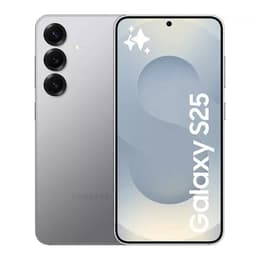
Galaxy S25
Starting at

Refurbished price:€470.00

Versus €910.00 new

See options
Xiaomi Redmi Note 13 4G
Starting at

Refurbished price:€167.00

Versus €340.00 new

See options

Differences at a glance

The Samsung Galaxy S25 (2025) and the Xiaomi Redmi Note 13 4G (2024) serve different segments of the smartphone market, catering to users with distinct feature expectations and daily requirements. While the Galaxy S25 operates within the flagship tier with advanced processing capabilities and premium build materials, the Xiaomi Redmi Note 13 4G focuses on delivering essential everyday functionality at an accessible level. Both devices run on the Android operating system, though they feature different manufacturer interfaces that shape the overall software layout. Understanding how their core specifications compare helps clarify which device aligns with specific user habits.

Available Models

Colour

Storage

Scores

Durability

When examining longevity and hardware durability, the Galaxy S25 and Xiaomi Redmi Note 13 4G offer different expectations regarding software support and long-term usability.

  • Software support timeline: The Galaxy S25 receives multi-year operating system upgrades and security patches reflecting its flagship status, while the Redmi Note 13 4G follows a more modest update schedule standard for its category.
  • Build resilience: The Galaxy S25 incorporates high-grade glass and aluminum materials with advanced water resistance ratings, whereas the Redmi Note 13 4G utilizes plastic components with basic splash resistance protections.
  • Expected lifespan: Hardware capability and sustained manufacturer support position the Galaxy S25 for prolonged heavy usage, while the Redmi Note 13 4G suits users looking for a reliable short-to-medium-term device. Choosing a quality-assured refurbished option provides an eco-friendly alternative that extends the active life of technology while reducing electronic waste.

Year of Release

2025

2024

OS

Android

Android

Foldable

No

No

Performance

Performance capabilities and daily operational speeds vary significantly between these two models based on their internal hardware configurations.

  • Multitasking and processing: The Galaxy S25 handles demanding applications, intensive graphics, and rapid switching between multiple programs smoothly, whereas the Redmi Note 13 4G manages standard daily tasks like web browsing and messaging efficiently without heavy gaming overhead.
  • Storage and memory configurations: The Galaxy S25 provides faster internal memory speeds and higher baseline storage tiers, while the Redmi Note 13 4G offers expandable storage via microSD slots alongside standard internal capacities.
  • Battery behavior: The Galaxy S25 optimizes power consumption through advanced energy management for a full day of mixed use, while the Redmi Note 13 4G relies on a larger physical battery capacity to sustain standard daily operations.

Screen quality

Display characteristics shape the visual experience for media consumption, navigation, and reading on both smartphones.

  • Panel technology: Both devices feature vibrant OLED displays with deep contrast levels, though the Galaxy S25 offers higher peak brightness levels for clear outdoor visibility under direct sunlight.
  • Refresh rate and fluidity: The Galaxy S25 utilizes an adaptive high refresh rate for smooth scrolling and animations, while the Redmi Note 13 4G features a fixed high refresh rate that enhances motion clarity during everyday navigation.
  • Screen dimensions: The Redmi Note 13 4G provides a larger overall viewing area suited for media viewing, whereas the Galaxy S25 offers a more compact form factor that improves one-handed reach.

Resolution

1080x2340

1080 x 2400

Screen type

Dynamic LTPO AMOLED 2X

AMOLED

Audiovisual

Media capture and audio output capabilities differ notably, reflecting the distinct market positioning of each smartphone.

  • Camera versatility: The Galaxy S25 includes a flexible multi-lens array featuring dedicated telephoto zoom capabilities and advanced low-light processing, while the Redmi Note 13 4G focuses primarily on a high-resolution main sensor supported by basic auxiliary lenses.
  • Video recording: The Galaxy S25 supports high-resolution video capture with advanced stabilization features, whereas the Redmi Note 13 4G handles standard-definition recording suitable for casual sharing.
  • Audio output: The Galaxy S25 delivers balanced stereo sound through dual speakers, while the Redmi Note 13 4G retains a traditional headphone jack alongside its single or dual speaker configuration for wired audio accessories.

Miscellaneous

Physical dimensions, connectivity standards, and practical hardware additions complete the day-to-day user experience of each device.

  • Connectivity standards: The Galaxy S25 supports modern 5G networks, advanced Wi-Fi standards, and current Bluetooth protocols, whereas the Redmi Note 13 4G is limited to 4G cellular connectivity alongside standard wireless connections.
  • Biometric security: The Galaxy S25 features responsive under-display fingerprint sensing and secure facial recognition, while the Redmi Note 13 4G utilizes either a side-mounted or under-display fingerprint reader depending on the specific variant.
  • Physical handling: The Galaxy S25 features a compact, lightweight body designed for comfortable pocketability, while the Redmi Note 13 4G presents a larger footprint that accommodates its expansive display panel.

Weight

162 g

189 g

Screen size (in)

6.2

6.67

Network

5G

4G

SIM card

Dual Physical SIM

Dual Physical SIM

Carrier compatibility

Unlocked

Unlocked

What the community thinks

User discussions across community forums highlight distinct patterns of praise and common criticisms for both devices. Owners of the Galaxy S25 frequently commend its smooth system responsiveness, compact handling, and versatile camera system, though some note that heavy usage under demanding conditions can lead to increased power consumption. Conversely, users of the Xiaomi Redmi Note 13 4G often appreciate the reliable display quality, dependable daily battery duration, and the inclusion of expandable storage, while pointing out that processing speeds can stutter during intensive tasks or heavy multitasking sessions.

Users prioritizing high-level processing power, advanced camera flexibility, and long-term software support will find the Galaxy S25 well-suited to their needs. On the other hand, users focusing on essential daily communication, media viewing on a larger screen, and straightforward functionality may lean toward the Xiaomi Redmi Note 13 4G. Opting for a quality-assured refurbished model serves as a sustainable choice that supports environmental conservation without compromising on functional reliability. Evaluating individual workflow requirements remains the most effective method for determining the appropriate device choice.