


Compare models
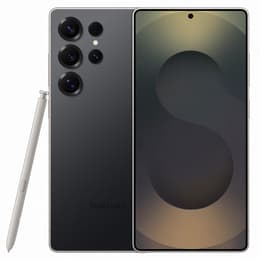
Galaxy S25 Ultra Vs Xiaomi Redmi Note 13 4G
- 1-year minimum warranty
- Free delivery on all orders
- Free 30-day returns
Differences at a glance
The Samsung Galaxy S25 Ultra (2025) and the Xiaomi Redmi Note 13 4G (2024) represent two very different tiers within the global smartphone market. The Galaxy S25 Ultra positions itself as a top-tier flagship device equipped with advanced processing power and versatile imaging tools, while the Xiaomi Redmi Note 13 4G serves as an accessible entry-level device focused on core daily connectivity and essential utility. Both smartphones operate on the Android operating system, though they utilize distinct user interfaces developed by their respective manufacturers. Understanding the practical differences between these models helps users identify which device aligns with their specific everyday needs.
Available Models
Colour
Storage
Scores
Durability
When evaluating the long-term viability of the Samsung Galaxy S25 Ultra and the Xiaomi Redmi Note 13 4G, differences in software support lifelines and hardware durability become apparent for daily users.
- Software Support Duration: The Galaxy S25 Ultra receives extended manufacturer software updates spanning multiple years, ensuring long-term security and feature additions, whereas the Xiaomi Redmi Note 13 4G offers a more standard, shorter update cycle typical of entry-level devices.
- Build Durability: The Galaxy S25 Ultra features premium structural materials and advanced drop resistance, while the Xiaomi Redmi Note 13 4G relies on standard plastic and reinforced glass construction suited for careful everyday handling.
- Practical Lifespan: Users seeking a device that retains peak performance over many years will find the robust hardware configuration of the Galaxy S25 Ultra well-prepared for long-term ownership.
Year of Release
2025
2024
Compatible with latest Update
Yes
Yes
OS
Android
Android
Foldable
No
No
Performance
The internal capabilities of the Samsung Galaxy S25 Ultra and the Xiaomi Redmi Note 13 4G deliver vastly different experiences when managing demanding apps, multitasking, and battery endurance.
- Multitasking and App Responsiveness: The Galaxy S25 Ultra handles intensive gaming, professional applications, and heavy background multitasking smoothly without stutter, whereas the Xiaomi Redmi Note 13 4G manages basic messaging, web browsing, and light media streaming adequately.
- Storage Configurations: The Galaxy S25 Ultra provides expansive internal storage capacities for large media libraries, while the Xiaomi Redmi Note 13 4G offers moderate storage options often supplemented by expandable memory slots.
- Battery Behavior: Both devices manage daily power consumption effectively, though the Galaxy S25 Ultra supports high-efficiency energy management for heavy workloads, and the Xiaomi Redmi Note 13 4G easily lasts through moderate daily use with standard charging routines.
Screen quality
Display performance shapes the media consumption and viewing experience on both the Samsung Galaxy S25 Ultra and the Xiaomi Redmi Note 13 4G through distinct panel technologies.
- Display Technology and Clarity: The Galaxy S25 Ultra utilizes an advanced OLED panel delivering deep contrast ratios and sharp resolution, while the Xiaomi Redmi Note 13 4G features a bright AMOLED screen providing clear visuals for daily reading and video playback.
- Outdoor Visibility: The Galaxy S25 Ultra reaches exceptionally high peak brightness levels for comfortable viewing under direct sunlight, whereas the Xiaomi Redmi Note 13 4G remains legible outdoors under standard daylight conditions.
- Visual Smoothness: Both models incorporate high refresh rate capabilities, ensuring fluid scrolling through menus, web pages, and social media feeds during regular daily interaction.
Resolution
1440x3120
1080 x 2400
Audiovisual
Photography and media recording capabilities highlight a major divergence in hardware versatility between the Samsung Galaxy S25 Ultra and the Xiaomi Redmi Note 13 4G.
- Imaging Versatility: The Galaxy S25 Ultra features a comprehensive multi-lens system including dedicated optical zoom capabilities and ultra-wide sensors, while the Xiaomi Redmi Note 13 4G relies on a primary high-resolution sensor accompanied by basic supporting lenses.
- Low-Light Photography: The Galaxy S25 Ultra captures sharp, detailed images in challenging dark environments using advanced image processing, whereas the Xiaomi Redmi Note 13 4G performs adequately in well-lit settings but shows limitations in very dim conditions.
- Video and Audio Output: The Galaxy S25 Ultra records high-resolution video with advanced stabilization features and stereo sound, complemented by balanced stereo speakers for media playback, while the Xiaomi Redmi Note 13 4G provides standard video recording quality and a single or basic multi-speaker setup.
Front camera
12
16 megapixels
Miscellaneous
Practical daily usability elements, physical dimensions, and connectivity standards vary significantly between the Samsung Galaxy S25 Ultra and the Xiaomi Redmi Note 13 4G.
- Connectivity Standards: The Galaxy S25 Ultra includes modern 5G connectivity, advanced Wi-Fi protocols, and precise positioning sensors, whereas the Xiaomi Redmi Note 13 4G limits cellular connectivity strictly to 4G networks alongside standard wireless options.
- Physical Design and Handling: The Galaxy S25 Ultra has a larger, heavier footprint designed for expansive screen space and integrated stylus input, while the Xiaomi Redmi Note 13 4G offers a lighter, thinner chassis that sits comfortably in smaller hands.
- Biometric Security: Both devices offer secure unlocking methods, utilizing under-display fingerprint sensors and facial recognition to protect user data efficiently during day-to-day operation.
Weight
218 g
175 g
Screen size (in)
6.9
6.67
Network
5G
4G
SIM card
Dual Physical SIM
Dual Physical SIM
Carrier compatibility
Unlocked
Unlocked
Connector
USB-C
USB-C
What the community thinks
The Samsung Galaxy S25 Ultra and the Xiaomi Redmi Note 13 4G cater to distinct user expectations and daily usage patterns without direct overlap in their core target audiences. Community discussions and user feedback indicate that the Galaxy S25 Ultra receives praise for its expansive display, robust processing headroom, and versatile camera array, though some users note its large physical size and heavier weight require an adjustment period. Conversely, users appreciate the Xiaomi Redmi Note 13 4G for its reliable everyday messaging performance, lightweight build, and straightforward interface, while noting occasional slowdowns when handling demanding multitasking scenarios.
Users prioritizing high-performance gaming, advanced photography, and long-term software support may prefer the Samsung Galaxy S25 Ultra. Meanwhile, users focusing on essential daily communication, web browsing, and lightweight portability will find the Xiaomi Redmi Note 13 4G well-suited to their needs. For consumers exploring sustainable technology habits, a quality-assured refurbished option provides an eco-friendly alternative that extends device life cycles while maintaining high performance standards.