

Galaxy S25 Ultra Vs Google Pixel Fold

Galaxy S25 Ultra
Galaxy S25 Ultra
Starting at

Refurbished price:735.00

Versus €1,408.78 new

See options
Google Pixel Fold
Google Pixel Fold
Starting at

Refurbished price:454.00

Versus €1,750.29 new

See options

Ratings

The Samsung Galaxy S25 Ultra, released in February 2025, represents the latest iteration of Samsung's premium smartphone line, offering a traditional high-performance slab design. In contrast, the Google Pixel Fold, launched in June 2023, is Google's first foldable smartphone, providing a unique form factor that transforms from a compact device into a larger tablet-like screen. The primary distinctions between these two devices lie in their fundamental design, display technology, and the overall user experience each form factor provides.

Scores

Durability

When considering the long-term usability of these devices, their release timelines and software support policies are key factors.

  • Release Timeline: The Galaxy S25 Ultra was released in February 2025, making it a significantly newer device compared to the Google Pixel Fold, which launched in June 2023. This difference in age directly impacts the remaining period of official software support.
  • Software Support: Samsung has committed to providing 7 years of operating system and security updates for the Galaxy S25 series, with support expected to continue until 2032. The Google Pixel Fold, on the other hand, was promised 5 years of security updates from its release. This means the Galaxy S25 Ultra will receive updates for a longer duration, potentially extending its practical lifespan for users who prioritize the latest software features and security patches.
  • Durability Features: The Galaxy S25 Ultra features Corning Gorilla Armor 2 on both its front and back, offering enhanced scratch resistance and drop protection, along with an IP68 rating for dust and water resistance. The Pixel Fold utilizes Gorilla Glass Victus for its cover display and back, and an Ultra Thin Glass with a plastic protective layer for its internal folding screen, alongside an IPX8 water resistance rating.

Year of Release

2025

2023

Compatible with latest Update

Yes

Yes

OS

Android

Android

Foldable

No

Yes

Performance

The performance of both devices is influenced by their respective processors, RAM configurations, and storage capabilities, impacting how smoothly they handle daily tasks and demanding applications.

  • Processing Power: The Galaxy S25 Ultra is equipped with the Snapdragon 8 Elite processor, manufactured on a 3 nm process, which provides substantial power for intensive applications, advanced multitasking, and high-fidelity gaming. The Google Pixel Fold is powered by the Google Tensor G2 chip, which is optimized for machine learning and AI tasks, offering a responsive experience for everyday use and Google's specific software features.
  • Memory and Storage: Both devices come with 12GB of RAM as a standard configuration, with some regional variants of the S25 Ultra offering 16GB for higher storage tiers. The Galaxy S25 Ultra offers storage options up to 1TB, utilizing UFS 4.0 for faster data access. The Pixel Fold is available with up to 512GB of storage, using UFS 3.1.
  • Battery Behavior: The Galaxy S25 Ultra houses a 5000 mAh battery, generally providing sufficient power for a full day of moderate to heavy use. The Pixel Fold features a 4821 mAh battery, and while it can last a full day for some users, heavy usage, especially with the larger internal display, may necessitate more frequent charging.

Memory (GB)

12 GB

12 GB

Screen quality

The display experience is a significant differentiator, with the Galaxy S25 Ultra offering a single, expansive screen and the Pixel Fold providing a versatile dual-screen foldable design.

  • Display Technology and Resolution: The Galaxy S25 Ultra features a 6.9-inch Dynamic LTPO AMOLED 2X display with a QHD+ resolution (3120x1440 pixels), delivering sharp images and vibrant colors. The Pixel Fold has a 7.6-inch internal foldable OLED display with a resolution of 2208x1840 pixels and a 5.8-inch OLED cover display with a resolution of 2092x1080 pixels.
  • Brightness and Refresh Rate: The S25 Ultra's display can reach a peak brightness of 2600 nits, ensuring excellent visibility even in bright outdoor conditions, and features an adaptive 120Hz refresh rate for smooth scrolling and responsiveness. The Pixel Fold's internal display offers a peak brightness of 1450 nits, while its cover display reaches 1550 nits, both supporting a 120Hz refresh rate.
  • Viewing Experience: The Galaxy S25 Ultra provides a consistent, large, and bright viewing area, enhanced by an anti-reflective coating. The Pixel Fold offers the flexibility of a traditional smartphone experience on its cover screen and an expanded, tablet-like canvas when unfolded, suitable for multitasking or immersive media consumption.

Resolution

1080 x 2340 pixels

1840 x 2208

Audiovisual

Both devices offer advanced camera systems, but their configurations and strengths cater to slightly different photographic preferences.

  • Rear Camera Systems: The Galaxy S25 Ultra boasts a quad-camera setup, including a 200 MP wide-angle main sensor, a 50 MP ultrawide lens, a 10 MP telephoto lens with 3x optical zoom, and a 50 MP periscope telephoto lens with 5x optical zoom. The Pixel Fold features a triple-camera system with a 48 MP wide-angle main sensor, a 10.8 MP ultrawide lens, and a 10.8 MP telephoto lens with 5x optical zoom.
  • Photography Performance: The S25 Ultra's high-resolution main sensor and versatile telephoto options provide detailed images across various zoom levels and lighting conditions, including 8K video recording capabilities. The Pixel Fold leverages Google's computational photography for strong image processing, particularly in everyday and low-light scenarios, and offers 4K video recording.
  • Front-Facing Cameras: The Galaxy S25 Ultra includes a 12 MP front camera capable of 4K video recording. The Pixel Fold has two front-facing cameras: a 9.5 MP sensor on the cover display and an 8 MP sensor on the internal folding display.

Front camera

8K@24/30fps

8 megapixels

Miscellaneous

Beyond the core features, several practical elements contribute to the overall user experience and differentiate these two devices.

  • Connectivity and Ports: The Galaxy S25 Ultra supports Wi-Fi 7 and Bluetooth 5.4, offering the latest in wireless connectivity, along with a USB-C 3.2 port. The Pixel Fold supports Wi-Fi 6E and Bluetooth 5.2, with a USB-C 3.2 Gen 2 port. Both devices offer 5G connectivity.
  • Biometrics and Sensors: The S25 Ultra features an ultrasonic in-screen fingerprint sensor for secure unlocking. The Pixel Fold uses a side-mounted fingerprint sensor. Both include a range of sensors like accelerometers, gyroscopes, and compasses.
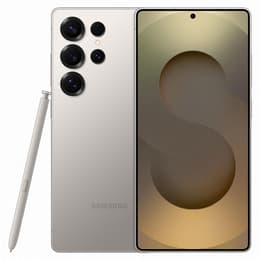
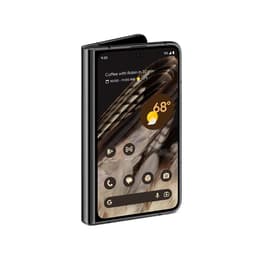
  • Physical Design and Handling: The Galaxy S25 Ultra has a titanium frame and measures 162.8 x 77.6 x 8.2 mm, weighing 218 g. It also includes S Pen support. The Pixel Fold, when folded, measures 139.7 x 79.5 x 12.1 mm and weighs 283 g, offering a more compact form factor that expands to 139.7 x 158.7 x 5.8 mm when unfolded.

Weight

2 g

283 g

Screen size (in)

6.9

7.6

Network

5G

5G

SIM card

Physical SIM + eSIM

Physical SIM + eSIM

Carrier compatibility

Unlocked

Unlocked

Connector

USB-C

USB-C

The Samsung Galaxy S25 Ultra and the Google Pixel Fold cater to distinct user preferences, primarily due to their fundamental design differences. Users often praise the Galaxy S25 Ultra for its consistently high performance, exceptional display brightness and clarity, and a versatile camera system with extensive zoom capabilities. Its long software support commitment is also a significant advantage for those seeking extended device longevity. Some users, however, might find its traditional slab form factor less innovative compared to foldables.

The Google Pixel Fold is frequently lauded for its innovative foldable design, offering the utility of a large screen in a more portable package. Its camera system, powered by Google's image processing, also receives positive remarks for producing quality photos. Criticisms often revolve around its weight, the visible crease on the internal display, and battery life that, for heavy users, may not consistently last a full day without a top-up. Some early adopters also reported concerns regarding the durability of the internal screen.

Users prioritizing a cutting-edge, traditional smartphone experience with top-tier specifications, a robust camera, and extended software support may prefer the Galaxy S25 Ultra. Conversely, users who value the versatility of a large, foldable screen for multitasking and media consumption, coupled with Google's software ecosystem and camera strengths, may find the Pixel Fold well-suited to their needs. Both devices represent premium options in the smartphone market, and for those considering a sustainable choice, quality-assured refurbished options are available for both models, offering an eco-friendly alternative.


See all articles

Our recent comparisons