

Compare models

Galaxy S25 FE Vs iPhone SE (2022)

  • 1-year minimum warranty
  • Free delivery on all orders
  • Free 30-day returns
Galaxy S25 FE
Starting at

Refurbished price:415.00

Versus €750.00 new

See options
iPhone SE (2022)
Starting at

Refurbished price:128.19

Versus €549.00 new

See options

Differences at a glance

The Samsung Galaxy S25 FE (2025) and the Apple iPhone SE (2022) represent two distinct approaches to smartphone design, balancing modern capabilities with accessible everyday utility. While the Galaxy S25 FE runs on Android with a focus on expansive screen space and modern hardware, the iPhone SE operates on iOS within a compact, traditional form factor featuring a physical home button. These two devices cater to contrasting user preferences regarding software ecosystems, physical dimensions, and media consumption capabilities.

Available Models

Colour

Storage (GB)

Scores

Durability

When evaluating hardware longevity and software support, both smartphones offer distinct timelines shaped by their respective release years. Users considering a quality-assured refurbished option will find that both models maintain reliable long-term usability depending on their software requirements.

  • Release timeline and support: The Galaxy S25 FE benefits from a newer 2025 release date, ensuring extended system updates and security patches compared to the iPhone SE, which launched in 2022.
  • Repairability and build: Both devices utilize durable glass and metal configurations, though their repair procedures follow distinct manufacturer guidelines with standard industry repairability metrics.
  • Expected lifespan: The newer software support window on the Samsung device provides an advantage for long-term daily use, whereas the iPhone SE offers a shorter remaining official support lifecycle.

Year of Release

2025

2022

Compatible with latest Update

Yes

Yes

OS

Android

iOS

Foldable

No

No

Performance

Daily operation and multitasking capabilities vary significantly between these devices, influenced by their internal hardware configurations and battery capacities. Both models handle standard communication and web browsing smoothly, but heavier tasks yield different results.

  • Storage and memory: The Galaxy S25 FE typically offers larger baseline storage tiers and higher RAM capacity, facilitating smoother app switching, whereas the iPhone SE provides more modest memory allocations.
  • Battery behavior: The larger battery capacity housed within the Galaxy S25 FE comfortably sustains a full day of mixed usage, while the smaller battery in the iPhone SE often necessitates more frequent recharging during demanding tasks.
  • System responsiveness: Both devices execute everyday tasks without noticeable stutter, though demanding applications and extended gaming sessions run with higher thermal efficiency and speed on the newer Samsung hardware.

Screen quality

Visual output and physical dimensions create a major dividing line between the expansive display of the Samsung model and the compact screen of the Apple device. Display technologies dictate viewing comfort across different indoor and outdoor environments.

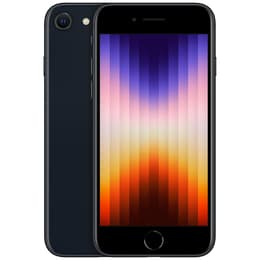
  • Display technology: The Galaxy S25 FE features a vibrant OLED screen with deep contrast levels, whereas the iPhone SE utilizes a traditional IPS LCD panel surrounded by thicker bezels.
  • Brightness and outdoor clarity: Higher peak brightness levels on the Samsung display ensure better readability under direct sunlight compared to the more modest illumination of the iPhone SE screen.
  • Refresh rate and size: A smooth 120Hz refresh rate on the larger Galaxy screen contrasts with the standard 60Hz refresh rate on the compact 4.7-inch iPhone display.

Audiovisual

Multimedia capture and audio output capabilities reflect the generational gap between the multi-lens array on the Samsung device and the single-lens setup on the Apple device. Both systems cover essential photography needs with distinct strengths.

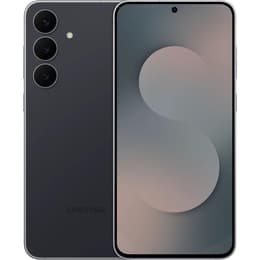
  • Camera systems: The Galaxy S25 FE incorporates a versatile triple-lens rear camera setup including ultra-wide options, while the iPhone SE relies on a single rear sensor backed by computational photography software.
  • Low-light and video: The Samsung model captures clearer details in challenging lighting conditions and supports advanced stabilization features, whereas the iPhone SE delivers reliable daylight snapshots and stable standard video recording.
  • Media and audio: Stereo speakers on the Galaxy S25 FE provide a more immersive audio experience for media consumption, compared to the simpler speaker output on the iPhone SE.

Miscellaneous

Physical handling, connectivity standards, and daily ergonomics define the practical differences in how each device feels and connects in daily use. Each layout targets different user preferences regarding device size and port utility.

  • Connectivity standards: Both smartphones support 5G cellular networks, though the Galaxy S25 FE includes updated Wi-Fi protocols and newer Bluetooth versions for faster accessory pairing.
  • Physical ports and security: The Samsung model utilizes a reversible USB Type-C port and facial recognition, while the iPhone SE features a Lightning connector and a physical Home button housing a fingerprint sensor.
  • Dimensions and weight: The lightweight and pocket-friendly footprint of the iPhone SE contrasts with the larger, heavier physical profile of the Galaxy S25 FE.

Weight

190 g

144 g

Screen size (in)

6.7

4.7

Network

5G

5G

SIM card

Physical SIM + eSIM

Physical SIM + eSIM

Carrier compatibility

Unlocked

Unlocked

Connector

USB-C

Lightning

What the community thinks

User discussions across public forums frequently highlight the compact ergonomics, physical home button, and streamlined iOS interface as primary reasons to choose the iPhone SE (2022). Conversely, users consistently praise the Galaxy S25 FE for its expansive high-refresh-rate display, versatile multi-lens camera system, and robust battery endurance. Frequent criticisms for the Apple device center on its limited battery longevity and dated screen bezels, while the Samsung model receives occasional remarks regarding its larger physical footprint.

Users prioritizing a pocket-friendly size, a physical biometric button, and the iOS ecosystem may prefer the iPhone SE, while users prioritizing media consumption, extended battery life, and modern display technology will lean toward the Galaxy S25 FE. Exploring sustainable choices like a quality-assured refurbished option allows consumers to acquire either device with reliable performance guarantees. Evaluating personal preferences for screen dimensions and operating systems serves as the primary factor in making an informed selection.