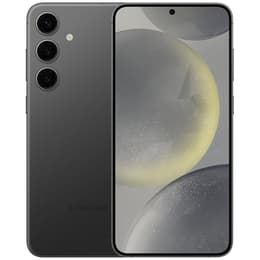


Galaxy S24+ Vs Xiaomi Redmi Note 14 4G

Galaxy S24+
Galaxy S24+
Starting at

Refurbished price:399.00

Versus €1,167.06 new

See options
Xiaomi Redmi Note 14 4G
Starting at

Refurbished price:162.00

Versus €229.99 new

See options

Ratings

The Samsung Galaxy S24 Plus, released in January 2024, and the Xiaomi Redmi Note 14 4G, launched in late 2024 or early 2025, represent distinct offerings in the smartphone market. While both devices operate on the Android platform, they cater to different user expectations through their hardware and software philosophies. The Galaxy S24 Plus emphasizes premium performance, advanced display technology, and extended software support, whereas the Redmi Note 14 4G focuses on delivering a balanced user experience with a strong emphasis on display quality and battery life.

Scores

Durability

The longevity of a smartphone is influenced by its build quality, software support, and the availability of replacement parts. These two devices offer different propositions in terms of their expected practical lifespan.

  • Software Support: The Galaxy S24 Plus stands out with a commitment to seven years of operating system and security updates from its January 2024 release, ensuring long-term software relevance and security. The Redmi Note 14 4G, released around December 2024 or January 2025, is slated to receive four major Android OS upgrades and six years of security updates, which is a significant commitment for its category. [6, 9, 13, 17, 19, 21, 25, 30, 31, 33, 35]
  • Physical Durability: The Galaxy S24 Plus features an Armor Aluminum 2 frame and Gorilla Glass Victus 2 on the front, along with Gorilla Glass Victus+ on the back, providing robust protection against drops and scratches. It also boasts an IP68 rating for dust and water resistance. The Redmi Note 14 4G incorporates Corning Gorilla Glass 5 for screen protection and carries an IP64 rating, indicating resistance to dust and splashes. [7, 8, 9, 22, 24, 29]
  • Repairability: While specific repairability scores can vary by region and independent assessments, devices with more modular designs and readily available parts generally offer a longer practical lifespan. Both manufacturers typically provide repair services, and opting for a quality-assured refurbished option can further extend a device's life cycle.

Year of Release

2024

2025

OS

Android

Android

Foldable

No

No

Performance

Performance is a key differentiator, impacting how smoothly applications run, how quickly tasks are completed, and the overall responsiveness of the device.

  • Processing Power: The Galaxy S24 Plus is equipped with a high-end processor designed for demanding applications, intensive multitasking, and advanced gaming, ensuring a fluid and responsive user experience even with complex tasks. The Redmi Note 14 4G utilizes a mid-range processor that capably handles everyday applications, web browsing, and moderate gaming, providing a smooth experience for general use. [9, 16, 29]
  • Multitasking and Storage: The Galaxy S24 Plus comes with 12GB of RAM and offers storage options of 256GB or 512GB, providing ample space for applications and media, and facilitating seamless transitions between multiple open apps. The Redmi Note 14 4G typically offers 6GB or 8GB of RAM and 128GB or 256GB of internal storage, with the added flexibility of expandable storage via a shared SIM slot, which can be beneficial for users with large media libraries. [1, 5, 7, 9, 16, 29]
  • Battery Behavior: The Galaxy S24 Plus houses a 4900 mAh battery, designed to provide reliable power for a full day of varied usage, with efficient power management from its advanced components. The Redmi Note 14 4G features a larger 5110 mAh or 5500 mAh battery, often resulting in extended usage times, particularly for users who prioritize battery longevity over raw processing power. [1, 5, 7, 9, 16, 21, 24, 29]

Memory (GB)

12 GB

6 GB

Screen quality

The display is the primary interface for interaction, and both devices offer vibrant screens, though with notable differences in their underlying technology and capabilities.

  • Display Technology and Resolution: The Galaxy S24 Plus features a 6.7-inch Dynamic AMOLED 2X display with a QHD+ resolution (3120 x 1440 pixels), delivering exceptionally sharp images and detailed text. The Redmi Note 14 4G comes with a 6.67-inch AMOLED display with a Full HD+ resolution (1080 x 2400 pixels), offering clear and colorful visuals suitable for most content consumption. [1, 7, 9, 21, 26, 29]
  • Brightness and Smoothness: The Galaxy S24 Plus boasts a peak brightness of 2600 nits and an adaptive refresh rate that can scale from 1Hz to 120Hz, ensuring excellent visibility in bright outdoor conditions and incredibly smooth scrolling and animations. The Redmi Note 14 4G offers a peak brightness of up to 2100 nits (or 1800 nits depending on the source) and a 120Hz refresh rate, providing good outdoor legibility and a fluid visual experience. [7, 9, 21, 26, 29]
  • Viewing Experience: The higher resolution and dynamic refresh rate of the Galaxy S24 Plus contribute to a more immersive and detailed viewing experience, particularly for high-resolution media and gaming. The Redmi Note 14 4G's AMOLED panel still provides deep blacks and vibrant colors, making it a strong contender for everyday media consumption.

Resolution

1440 x 3120

1080x2400

Audiovisual

Camera capabilities are a significant factor for many users, and both smartphones offer versatile camera systems designed to capture various moments.

  • Rear Camera System: The Galaxy S24 Plus features a triple-camera setup with a 50 MP main sensor with optical image stabilization (OIS), a 12 MP ultrawide lens, and a 10 MP telephoto lens with 3x optical zoom, providing flexibility for different photographic scenarios. The Redmi Note 14 4G typically includes a 50 MP main sensor with OIS, an 8 MP ultrawide lens, and a 2 MP macro camera, offering a good range for general photography. [5, 7, 9, 11, 16, 25, 28]
  • Photography Performance: The Galaxy S24 Plus is known for its consistent image quality across various lighting conditions, with strong detail retention and color accuracy, further enhanced by advanced image processing. The Redmi Note 14 4G delivers capable performance in good lighting, capturing detailed images, and its OIS on the main sensor helps in reducing blur in photos and videos. [7, 14, 28]
  • Video and Front Camera: The Galaxy S24 Plus supports high-resolution video recording and features a 12 MP front camera for clear selfies and video calls. The Redmi Note 14 4G offers a 20 MP front camera, which can capture detailed self-portraits, and its main rear camera is capable of recording stable videos. [5, 7, 9, 11, 14, 16, 25, 28, 29]

Miscellaneous

Beyond the core specifications, several practical features and design elements contribute to the overall user experience.

  • Connectivity and Ports: The Galaxy S24 Plus supports 5G connectivity and Wi-Fi 6E, offering faster wireless speeds and lower latency, alongside Bluetooth 5.3 and NFC. It features a USB-C port for charging and data transfer. The Redmi Note 14 4G provides 4G LTE connectivity, Wi-Fi 5, Bluetooth 5.3, NFC (region-dependent), and an infrared (IR) blaster, which can be used as a universal remote. It also includes a USB-C port and a 3.5mm headphone jack, a feature less common on premium devices. [8, 9, 16, 29]
  • Biometric Security and Design: Both devices offer secure biometric authentication. The Galaxy S24 Plus features an in-display fingerprint sensor and face recognition. The Redmi Note 14 4G also includes an in-display fingerprint sensor. In terms of design, the Galaxy S24 Plus has a premium build with an aluminum frame and glass back, weighing around 196g. The Redmi Note 14 4G has a design typical for its series, often featuring a plastic frame and glass front, weighing approximately 196.5g. [8, 9, 16, 29]
  • Additional Features: The Galaxy S24 Plus integrates advanced AI features for various tasks, including photo editing and communication. The Redmi Note 14 4G often includes stereo speakers with Dolby Atmos support for an enhanced audio experience. [9, 20, 28, 29]

Weight

197 g

196 g

Screen size (in)

6.7

6.67

Network

5G

4G

SIM card

Dual Physical SIM + eSIM

Physical SIM + eSIM

Carrier compatibility

Unlocked

Unlocked

User feedback for the Galaxy S24 Plus often highlights its exceptional display, robust performance, and the significant commitment to software updates as major strengths. Users appreciate the bright and smooth screen, making it suitable for media consumption and outdoor use. The camera system is generally praised for its versatility and consistent results, though some users note that the hardware is largely carried over from previous generations. Criticisms sometimes point to the battery life, which, while solid, might not always surpass its predecessor for some heavy users, and the regional variation in processors can lead to differing performance expectations. [21, 22, 24, 26, 28]

For the Redmi Note 14 4G, users frequently commend its vibrant AMOLED display, often noting its high refresh rate and brightness as key advantages for its segment. The large battery capacity is a consistent praise point, providing extended usage between charges. The camera system, particularly the main sensor with OIS, is generally well-received for everyday photography. Some common concerns revolve around the performance of its mid-range processor, which, while capable for daily tasks, might not satisfy users seeking high-end gaming or intensive application performance. The software experience, while improving with HyperOS and extended update policy, can sometimes be a point of discussion. [9, 14, 15, 18, 20, 27]

Users prioritizing a premium experience with top-tier performance, a highly advanced display, and the longest possible software support will find the Samsung Galaxy S24 Plus well-suited to their needs. Its robust build and advanced features cater to those who demand flagship capabilities. Conversely, users who prioritize extended battery life, a vibrant display for media, and a capable camera system for general use, while seeking a device that offers good value and a solid software update commitment, may lean toward the Xiaomi Redmi Note 14 4G. Both devices are available as quality-assured refurbished options, providing an eco-friendly alternative for consumers.

See all articles

Our recent comparisons