

Galaxy A15 Vs Galaxy S20 FE

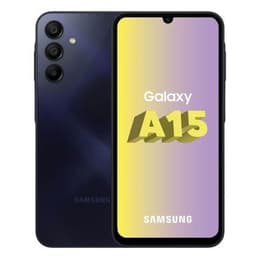
Galaxy A15
Galaxy A15
Starting at

Refurbished price:124.00

Versus €189.00 new

See options
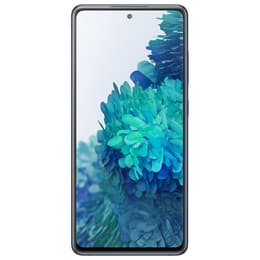
Galaxy S20 FE
Galaxy S20 FE
Starting at

Refurbished price:151.00

Versus €779.00 new

See options

Ratings

The Samsung Galaxy A15, released in December 2023, and the Samsung Galaxy S20 FE (Fan Edition), launched in October 2020, are both Android smartphones from Samsung. While the Galaxy A15 is a more recent entry-level device, the Galaxy S20 FE was positioned as a more accessible version of a flagship phone from a few years prior. They both run on the Android operating system, but differ significantly in their core performance capabilities and long-term software support.

Scores

Durability

The expected practical lifespan of a smartphone is heavily influenced by its release date and the manufacturer's software support policy.

  • Release Timeline: The Galaxy A15 was released in December 2023, making it a much newer device compared to the Galaxy S20 FE, which launched in October 2020. This age difference directly impacts their remaining support cycles.
  • OS Support Duration: The Galaxy A15 is promised four generations of Android OS upgrades, extending its software support until Android 18, and five years of security updates until 2028. In contrast, the Galaxy S20 FE, launched with Android 10, received three major Android OS updates, concluding its OS upgrade cycle around Android 13. Its security updates officially ended around October 2025.
  • Repairability: The Galaxy S20 FE has a moderate repairability score of 7.5 out of 10, indicating that it can be repaired with some effort, though certain components like the battery may require adhesive removal. Information regarding the specific repairability score for the Galaxy A15 is less readily available, but generally, newer budget-friendly devices can present challenges due to construction methods.

Year of Release

2023

2020

Compatible with latest Update

Yes

No

OS

Android

Android

Foldable

No

No

Performance

When evaluating performance, the internal components dictate how smoothly a device handles daily tasks, multitasking, and more demanding applications.

  • Processor Capabilities: The Galaxy A15 is powered by a MediaTek Dimensity 6100+ (5G variant) or Helio G99 (4G variant) processor. While capable of handling everyday tasks and multitasking, users may experience slight delays when opening apps or loading game areas, and night mode photography can take several seconds to process. The Galaxy S20 FE, featuring a Snapdragon 865 (5G variant) or Exynos 990 (4G variant) processor, offers a more robust performance profile, allowing for smooth navigation, responsive app switching, and capable handling of graphically intensive games.
  • Multitasking and Responsiveness: The Galaxy A15 can multitask effectively without frequently reloading apps, but overall system responsiveness might feel less immediate. The Galaxy S20 FE provides a more consistently responsive experience, making it well-suited for users who frequently switch between numerous applications or engage in more demanding activities.
  • Storage and RAM: Both devices typically offer 128GB of internal storage, with the Galaxy A15 also having a 256GB option and expandable storage via microSD up to 1TB. The Galaxy A15 comes with 4GB, 6GB, or 8GB of RAM, while the Galaxy S20 FE typically features 6GB or 8GB of RAM, which contributes to its smoother multitasking capabilities.
  • Battery Behavior: The Galaxy A15 is equipped with a 5000mAh battery, providing impressive longevity, often lasting 1.5 to 2 days on a single charge for average users. The Galaxy S20 FE has a 4500mAh battery, which also delivers excellent battery life, often lasting a full day even with the 120Hz refresh rate enabled.

Memory (GB)

4 GB

6 GB

Screen quality

The display is a primary interaction point, and differences in technology, resolution, and refresh rate significantly impact the visual experience.

  • Display Technology and Clarity: Both the Galaxy A15 and Galaxy S20 FE feature a 6.5-inch Super AMOLED display, known for vibrant colors, deep blacks, and excellent contrast. Both offer a Full HD+ resolution (1080p), ensuring crisp and clear visuals for everyday viewing, browsing, and media consumption.
  • Refresh Rate and Smoothness: The Galaxy A15 features a 90Hz refresh rate, providing smoother scrolling and animations compared to a standard 60Hz display. The Galaxy S20 FE steps this up with a 120Hz refresh rate, offering an even more fluid and responsive visual experience, particularly noticeable during gaming and fast-paced content.
  • Brightness and Outdoor Visibility: The Galaxy A15's display can reach up to 800 nits of brightness, making it adequately visible in sunny conditions. The Galaxy S20 FE also offers a bright display with good outdoor visibility, ensuring content remains clear in various lighting environments.

Resolution

1080 x 2340

1080 x 2400

Screen type

Super AMOLED

Super AMOLED

Audiovisual

The camera systems on both devices offer different capabilities for capturing photos and videos.

  • Rear Camera System: The Galaxy A15 features a triple rear camera setup with a 50-megapixel main sensor, a 5-megapixel ultrawide lens, and a 2-megapixel macro lens. The Galaxy S20 FE also has a versatile triple camera system, including a 12-megapixel wide lens with optical image stabilization (OIS), a 12-megapixel ultrawide lens, and an 8-megapixel telephoto lens with 3x optical zoom and OIS.
  • Photography Performance: The Galaxy A15 delivers decent photo quality for its segment, producing vivid outdoor photos, though its night mode can be slow. The Galaxy S20 FE is praised for its pro-grade camera, offering excellent image quality in both daylight and low-light conditions, and its 3x optical zoom provides greater flexibility for capturing distant subjects.
  • Video Recording and Front Camera: Both devices support 1080p video recording. The Galaxy S20 FE is capable of 4K video recording. For selfies, the Galaxy A15 has a 13-megapixel front camera, while the Galaxy S20 FE features a higher-resolution 32-megapixel front camera.
  • Audio Experience: The Galaxy S20 FE includes stereo speakers, enhancing the media consumption experience. Information on the Galaxy A15's speaker configuration is less detailed, but it generally offers a standard audio output.

Main camera

50 megapixels

12 megapixels

Front camera

13 megapixels

32 megapixels

Miscellaneous

Beyond core performance and display, several practical features contribute to the overall user experience and device utility.

  • Connectivity: The Galaxy A15 is available in both 4G and 5G variants, offering modern cellular connectivity options. The Galaxy S20 FE also comes in 4G and 5G versions, with the 5G model supporting faster network speeds. Both support Wi-Fi and Bluetooth for wireless connections. The Galaxy S20 FE supports Wi-Fi 6 and Bluetooth 5.0, while the Galaxy A15 supports Bluetooth 5.3.
  • Ports and Sensors: The Galaxy A15 retains a 3.5mm headphone jack and uses a USB-C port for charging and data transfer. It features a side-mounted fingerprint sensor for biometric authentication. The Galaxy S20 FE utilizes a USB-C port but lacks a 3.5mm headphone jack. It incorporates an under-display optical fingerprint sensor. Both devices include NFC for contactless payments.
  • Build Materials and Durability: The Galaxy A15 features a glass front with a plastic back and frame, and does not have an official IP rating for water and dust resistance. The Galaxy S20 FE has a plastic back (often referred to as 'glasstic') and a metal frame, offering IP68 water and dust resistance, providing better protection against environmental elements.
  • Dimensions and Handling: The Galaxy A15 weighs approximately 200 grams, with dimensions of 160.1 x 76.8 x 8.4 mm. The Galaxy S20 FE is slightly lighter at around 190 grams and measures 159.8 x 74.5 x 8.4 mm. Both offer a similar footprint and handling experience.

Weight

200 g

190 g

Screen size (in)

6.5

6.5

Network

4G

4G

SIM card

Dual Physical SIM

Dual Physical SIM

Carrier compatibility

Unlocked

Unlocked

The Samsung Galaxy A15 and Galaxy S20 FE cater to different user priorities, reflecting their respective release timelines and market positioning. Users often praise the Galaxy A15 for its exceptional battery life, vibrant Super AMOLED display, and Samsung's commitment to extended software updates, making it a reliable choice for long-term use. However, some users note that its performance can feel less snappy, with occasional stutters and slower camera processing, particularly in demanding scenarios.

Conversely, the Galaxy S20 FE is frequently lauded for its powerful performance, smooth 120Hz display, and versatile camera system with optical zoom, which were considered flagship-level features at its release. Common criticisms include its plastic back, which some found less premium, and the absence of a headphone jack. Its software support has also concluded, meaning it will no longer receive major Android updates or security patches.

Users prioritizing software longevity, a very long-lasting battery, and a more recent device with guaranteed updates will find the Galaxy A15 well-suited to their needs. It is a practical choice for those who value a consistent experience for everyday communication and media consumption over high-end performance. On the other hand, users who prioritize a more powerful processor for demanding applications and gaming, a higher refresh rate display, a more advanced camera with optical zoom, and water resistance may lean toward the Galaxy S20 FE. While its software support has ended, its hardware still offers a capable experience for many tasks.

For those considering either device, exploring quality-assured refurbished options can provide an eco-friendly alternative, extending the life cycle of these products and offering a sustainable choice.


See all articles

Our recent comparisons