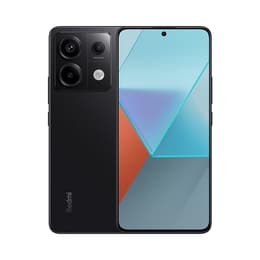


Galaxy S23 Vs Xiaomi Redmi Note 13 Pro

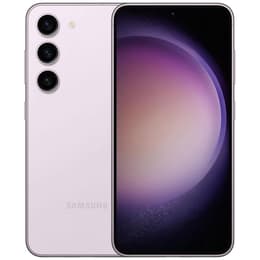
Galaxy S23
Galaxy S23
Starting at

Refurbished price:246.00

Versus €959.00 new

See options
Xiaomi Redmi Note 13 Pro
Starting at

Refurbished price:174.00

Versus €999.00 new

See options

Ratings

The Samsung Galaxy S23, released in February 2023, and the Xiaomi Redmi Note 13 Pro, launched globally in January 2024, are both Android smartphones designed for different user priorities. While the Galaxy S23 offers a compact flagship experience with a focus on refined performance and camera capabilities, the Redmi Note 13 Pro aims to deliver a feature-rich experience with a large display and high-resolution camera. Both devices run on the Android operating system, with distinct user interfaces and software update policies.

Scores

Durability

When considering the long-term usability of these devices, their release timelines and software support policies are key factors.

  • Software Longevity: The Samsung Galaxy S23, released in February 2023, is expected to receive four major Android operating system upgrades, potentially up to Android 17, and five years of security updates, extending its support until at least 2028. The Xiaomi Redmi Note 13 Pro, with its global release in January 2024, is anticipated to receive three major Android updates, up to Android 16, and four years of security updates.
  • Physical Durability: The Galaxy S23 features Gorilla Glass Victus 2 on both its front and back, along with an aluminum frame, contributing to its robust build and IP68 dust and water resistance. The Redmi Note 13 Pro uses Gorilla Glass 5 for its front display and has an IP54 rating for splash and dust resistance.
  • Repairability: The Galaxy S23 series has shown improvements in repairability, with features like battery pull tabs and clearly labeled internal components, making some repairs more straightforward. The Redmi Note 13 Pro's repairability is considered average, with adhesive used for the back cover and battery, though it also includes battery pull tabs.

Year of Release

2023

2023

Compatible with latest Update

Yes

Yes

OS

Android

Android

Foldable

No

No

Performance

The performance of a smartphone impacts how smoothly applications run, how quickly tasks are completed, and the overall responsiveness of the device.

  • Everyday Responsiveness: The Galaxy S23 is equipped with a powerful processor designed for demanding tasks, ensuring smooth navigation, quick app launches, and efficient multitasking. Users generally report a fluid and responsive experience, even with graphically intensive applications and games.
  • Multitasking and Storage: The Galaxy S23 typically comes with 8GB of RAM, and its storage options include 128GB, 256GB, and 512GB. It is worth noting that the 128GB variant uses a slightly older storage technology compared to the faster UFS 4.0 found in the 256GB and 512GB models. The Redmi Note 13 Pro offers configurations with 8GB or 12GB of RAM and 256GB or 512GB of internal storage, which is expandable up to 1TB via a microSD card.
  • Battery Behavior: The Galaxy S23 houses a 3900 mAh battery, which users often find sufficient for a full day of moderate use. The Redmi Note 13 Pro features a larger 5000 mAh battery, frequently providing over a day of usage, and sometimes extending into a second day for lighter users.

Memory (GB)

8 GB

8 GB

Screen quality

The display is a primary interface for smartphone interaction, and its quality significantly influences the viewing experience.

  • Display Technology and Clarity: The Galaxy S23 features a 6.1-inch Dynamic AMOLED 2X display, known for its vibrant colors, deep blacks, and excellent contrast. Its resolution of 2340 x 1080 pixels provides sharp visuals. The Redmi Note 13 Pro boasts a larger 6.67-inch AMOLED display with a resolution of 1220 x 2712 pixels, offering a clear and immersive viewing area.
  • Brightness and Refresh Rate: Both devices offer a smooth 120Hz refresh rate, contributing to fluid scrolling and animations. The Galaxy S23 can reach a peak brightness of 1750 nits, ensuring good visibility in bright outdoor conditions. The Redmi Note 13 Pro surpasses this with a peak brightness of 1800 nits, enhancing outdoor readability even further.
  • Viewing Experience: The Galaxy S23's smaller screen size makes it more suitable for one-handed use and those who prefer a compact device. The Redmi Note 13 Pro's larger display provides an expansive canvas for media consumption and multitasking, appealing to users who prioritize screen real estate.

Resolution

1080 x 2340

1220 x 2712

Screen type

Dynamic AMOLED 2X

AMOLED

Audiovisual

Camera systems are a significant differentiator, influencing the quality of photos and videos captured in various scenarios.

  • Main Camera Capabilities: The Galaxy S23 is equipped with a versatile triple camera system, including a 50 MP main sensor with optical image stabilization (OIS), a 12 MP ultrawide lens, and a 10 MP telephoto lens offering 3x optical zoom with OIS. The Redmi Note 13 Pro features a high-resolution 200 MP main camera with OIS, designed to capture detailed images.
  • Photography Performance: The Galaxy S23 is praised for its consistent image quality across its lenses, performing well in various lighting conditions, including low-light scenarios. The Redmi Note 13 Pro's 200 MP main sensor can produce detailed photos, with users noting vibrant colors. However, its auxiliary cameras (8 MP ultrawide and 2 MP macro) are generally considered less capable.
  • Video Recording and Audio: The Galaxy S23 supports 8K video recording at 30 frames per second, along with robust image stabilization. The Redmi Note 13 Pro records video up to 1080p at 60 frames per second with its main camera, offering good stability thanks to OIS and electronic image stabilization (EIS). Both devices provide adequate microphone quality for calls and recording, and their speaker outputs are suitable for media consumption.

Main camera

50 megapixels

200 megapixels

Front camera

12 megapixels

16 megapixels

Miscellaneous

Beyond core features, several practical elements contribute to the overall user experience and device utility.

  • Connectivity Standards: The Galaxy S23 supports 5G connectivity, Wi-Fi 6E, and Bluetooth 5.3, offering fast and reliable wireless connections. The Redmi Note 13 Pro (4G variant) supports 4G LTE, Wi-Fi 5 (802.11ac), and Bluetooth 5.2. A 5G variant of the Redmi Note 13 Pro exists with different connectivity options.
  • Ports and Biometrics: Both devices feature a USB-C port for charging and data transfer, though the Galaxy S23 uses the faster USB-C 3.2 standard compared to the Redmi Note 13 Pro's USB-C 2.0. The Galaxy S23 relies on an ultrasonic in-display fingerprint sensor and face recognition for security. The Redmi Note 13 Pro also includes an in-screen fingerprint sensor (optical) and AI face unlock.
  • Design and Handling: The Galaxy S23 is a compact and lightweight device, weighing 168g with dimensions that make it comfortable for one-handed use. The Redmi Note 13 Pro is slightly larger and heavier at 188g, offering a more substantial feel in hand. Both phones feature modern designs with minimal bezels.

Weight

167 g

187 g

Screen size (in)

6.1

6.67

Network

5G

5G

SIM card

Physical SIM + eSIM

Dual Physical SIM

Carrier compatibility

Unlocked

Unlocked

User feedback for the Samsung Galaxy S23 often highlights its compact size, premium build quality, and consistent camera performance as strong points. Users appreciate its smooth and responsive operation for daily tasks and gaming. Some criticisms include the battery life, which, while generally sufficient for a day, is not exceptional compared to larger phones, and the slower storage on the 128GB model.

The Xiaomi Redmi Note 13 Pro receives praise for its large, bright AMOLED display, impressive 200 MP main camera, and long-lasting battery life. Users also value its fast charging capabilities and expandable storage. Common criticisms include the performance of its auxiliary cameras (ultrawide and macro), the presence of pre-installed applications, and the slower software update policy compared to some competitors.

For users who prioritize a compact form factor, a refined user experience, and a consistently strong camera system with longer software support, the Samsung Galaxy S23 may be a more suitable choice. Its robust build and faster internal storage (in higher capacities) also contribute to a premium feel. Conversely, individuals who value a larger, brighter display for media consumption, a high-resolution main camera, and extended battery life with fast charging, and who are comfortable with a slightly larger device, might find the Xiaomi Redmi Note 13 Pro better aligns with their needs. Both devices offer compelling features, and considering a quality-assured refurbished option can be an eco-friendly alternative for either model.