

iPhone

Compare models
Differences at a glance
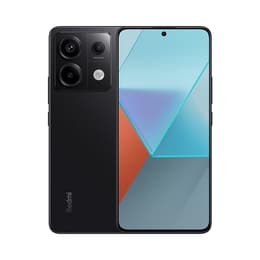
The Samsung Galaxy S22 Plus 5G, released in February 2022, and the Xiaomi Redmi Note 13 Pro 5G, launched globally in January 2024, are both smartphones offering distinct feature sets. While the Galaxy S22 Plus 5G positions itself with a focus on a premium user experience and advanced processing, the Redmi Note 13 Pro 5G emphasizes a high-resolution camera system and a larger battery capacity. Both devices run on the Android operating system, with the Galaxy S22 Plus 5G initially on Android 12 and the Redmi Note 13 Pro 5G launching with Android 13.
Colour
Storage
When considering the longevity of these devices, their release timelines and software support policies are key factors. The Samsung Galaxy S22 Plus 5G, being an earlier release, has already received several major Android updates, with Samsung typically providing up to four generations of OS upgrades and five years of security updates for its flagship devices. The Xiaomi Redmi Note 13 Pro 5G, as a newer model, benefits from a more recent starting point for its software lifecycle, launching with Android 13 and having already received updates to Android 15 with HyperOS 2.
Year of Release
Compatible with latest Update
OS
Foldable
The performance of these two smartphones is influenced by their respective internal components, impacting how smoothly they handle daily tasks and demanding applications. The Galaxy S22 Plus 5G is equipped with an advanced 4nm processing unit, designed for high-end performance and efficient multitasking. The Redmi Note 13 Pro 5G features a 4nm processor that offers capable performance for a wide range of activities.
The visual experience on both devices is delivered through high-quality displays, though with some notable differences in their specifications. Both phones feature large AMOLED panels, known for their vibrant colors and deep blacks.
Resolution
Screen type
Both smartphones offer capable camera systems, but they approach photography with different primary sensor resolutions and feature sets. The Galaxy S22 Plus 5G provides a versatile triple-camera setup, while the Redmi Note 13 Pro 5G highlights its ultra-high-resolution main sensor.
Main camera
Front camera
Beyond core performance and display, several other features contribute to the overall user experience and practical utility of these smartphones. Both devices offer modern connectivity and security features, but with some distinctions in their physical design and additional functionalities.
Weight
Screen size (in)
Network
SIM card
Carrier compatibility
Users frequently praise the Samsung Galaxy S22 Plus 5G for its premium build quality, vibrant and bright display, and consistent camera performance, particularly its dedicated telephoto lens. Its advanced processing unit is also a common highlight for smooth daily operation and gaming. Some users have noted that while its battery life is good, it may not be exceptional compared to some competitors, and the charging speed, despite being 45W, doesn't always translate to significantly faster full charge times in real-world use.
The Xiaomi Redmi Note 13 Pro 5G is often lauded for its impressive 200MP main camera, which captures highly detailed photos, and its bright 1.5K AMOLED display. Its larger battery capacity and fast 67W charging are also frequently mentioned as strong points for users seeking extended usage and quick power-ups. Criticisms sometimes point to its processor, which, while capable, may not match the raw power of higher-end chipsets for the most demanding tasks, and its video recording capabilities are not as advanced as some flagships.
Users prioritizing a premium build, a dedicated optical zoom camera, and top-tier processing power for demanding applications may find the Samsung Galaxy S22 Plus 5G well-suited to their needs. Conversely, those who value an ultra-high-resolution main camera, a very bright and sharp display, and longer battery life with rapid charging might lean towards the Xiaomi Redmi Note 13 Pro 5G. Both devices offer compelling features, and choosing between them often comes down to these specific user priorities. For those considering a more sustainable choice, both models are available as quality-assured refurbished options.