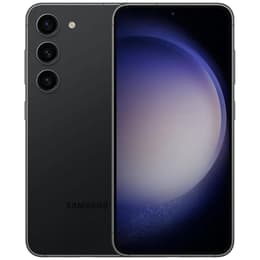


Compare models
Galaxy S23 Vs Galaxy S25 Edge
- 1-year minimum warranty
- Free delivery on all orders
- Free 30-day returns
Differences at a glance
The Samsung Galaxy S23 (2023) and the Samsung Galaxy S25 Edge (2025) represent two distinct approaches to flagship smartphone design, balancing compact everyday usability with ultra-slim innovation. While both devices run on Android with Samsung's custom interface, they differ significantly in form factor, generation, and internal capabilities.
Choosing between these two models involves weighing preferences for physical footprint, display scale, and handling ergonomics against modern generational advancements.
Available Models
Colour
Storage
Scores
Durability
When evaluating structural longevity and software longevity, both smartphones benefit from long-term manufacturer support, though their release years dictate different timelines.
- Release Timeline and Software Support: The Galaxy S23 launched in early 2023, while the Galaxy S25 Edge arrived in mid-2025, giving the newer model a two-year advantage in its overall software update lifecycle.
- Repairability and Build Structure: Both devices utilize robust aluminum and glass construction, though their physical profiles mean repair complexity varies slightly depending on internal component stacking.
- Expected Practical Lifespan: Both models are built to sustain years of daily use, with the Galaxy S25 Edge maintaining a longer window for future operating system patches due to its later debut.
Year of Release
2023
2025
Compatible with latest Update
Yes
Yes
OS
Android
Android
Foldable
No
No
Performance
System responsiveness and daily multitasking capabilities differ due to the generational gap between their internal processing hardware and memory configurations.
- Storage and Memory: The Galaxy S23 typically features starting configurations with standard memory allocations, whereas the Galaxy S25 Edge steps up baseline memory to handle intensive background tasks and modern applications seamlessly.
- Everyday Responsiveness: Both devices load apps quickly and switch between tasks smoothly, though the Galaxy S25 Edge handles heavy multi-app workflows and demanding gaming graphics with extra thermal efficiency.
- Battery Behavior: The Galaxy S23 relies on a modest power cell engineered for a compact frame, whereas the ultra-slim profile of the Galaxy S25 Edge results in a narrower battery capacity that may require more frequent charging during heavy usage days.
Screen quality
Visual immersion and display engineering vary noticeably in physical scale and maximum brightness output between the two models.
- Display Technology: Both models utilize vibrant OLED panels with deep contrast levels and rich colors, though the Galaxy S25 Edge offers a significantly larger viewing area.
- Refresh Rate and Smoothness: Both devices support adaptive high refresh rates up to 120Hz, ensuring fluid scrolling through web pages and smooth animation transitions.
- Outdoor Visibility: The Galaxy S25 Edge features a higher peak brightness threshold, making text and media easier to read under direct sunlight compared to its older counterpart.
Resolution
1080 x 2340
1440 x 3120
Audiovisual
Media consumption, audio output, and photographic hardware present distinct capabilities tailored to different user preferences.
- Camera System Capabilities: The Galaxy S23 provides a versatile triple-lens setup including a dedicated optical zoom lens, whereas the Galaxy S25 Edge prioritizes a high-resolution main sensor configuration within its slim chassis.
- Low-Light and Video Recording: Both phones capture clear details in dim environments and record stabilized high-resolution video, though image processing algorithms benefit from newer generational hardware on the S25 Edge.
- Audio and Media Experience: Stereo speakers on both devices deliver balanced sound for casual video viewing and calls, paired with immersive screen real estate on the larger S25 Edge.
Miscellaneous
Physical dimensions, connectivity standards, and daily handling characteristics highlight the most striking differences in design philosophy.
- Dimensions and Weight: The Galaxy S23 focuses on a pocket-friendly, compact form factor weighing 168 grams, while the Galaxy S25 Edge adopts an exceptionally thin profile measuring just 5.8mm in thickness.
- Connectivity and Ports: Both smartphones support modern 5G networks, fast Wi-Fi standards, and USB-C connectivity for charging and data transfer.
- Security Sensors: In-display fingerprint scanners and secure facial recognition come standard on both devices for quick biometric authentication.
Weight
167 g
163 g
Screen size (in)
6.1
6.7
Network
5G
5G
SIM card
Physical SIM + eSIM
Physical SIM + eSIM
Carrier compatibility
Unlocked
Unlocked
What the community thinks
User feedback from online communities highlights distinct preferences for each device. Owners of the Galaxy S23 frequently praise its pocket-friendly dimensions, reliable daily battery endurance relative to its size, and balanced physical handling. Conversely, users often note that its screen feels relatively compact by modern standards. Meanwhile, adopters of the Galaxy S25 Edge heavily praise its striking ultra-slim profile and expansive display, though frequent criticisms point to the compromises required in battery capacity due to the exceptionally thin enclosure. A quality-assured refurbished option from Back Market can provide a sustainable choice for consumers seeking either device while minimizing environmental impact.
Users prioritizing a compact footprint, easy one-handed operation, and a classic form factor may prefer the Galaxy S23. Meanwhile, users prioritizing a larger viewing workspace, modern processing headroom, and an ultra-slim aesthetic will lean toward the Galaxy S25 Edge. Evaluating these physical and functional differences helps align each device with individual daily habits.









