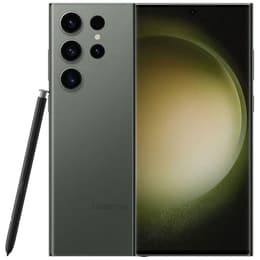
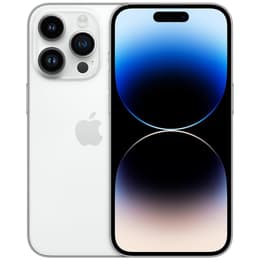

Galaxy S23 Ultra Vs iPhone 14 Pro

Galaxy S23 Ultra
Galaxy S23 Ultra
Starting at

Refurbished price:430.00

Versus €1,599.00 new

See options
iPhone 14 Pro
iPhone 14 Pro
Starting at

Refurbished price:424.00

Versus €1,339.00 new

See options

Ratings

The Samsung Galaxy S23 Ultra, released in February 2023, and the iPhone 14 Pro, launched in September 2022, represent flagship smartphones from their respective manufacturers. While both devices offer advanced mobile experiences, they differ significantly in their operating systems and core design philosophies. The Galaxy S23 Ultra runs on Android with Samsung's One UI, emphasizing customization and an integrated stylus, whereas the iPhone 14 Pro operates on Apple's iOS, known for its streamlined interface and ecosystem integration. These differences cater to distinct user preferences, particularly concerning software environment and hardware features.

Scores

Durability

When considering the practical lifespan of these devices, both offer robust software support and durable builds, though their release timelines place them at slightly different points in their update cycles.

  • Release Timeline and OS Support: The iPhone 14 Pro, released in September 2022, typically receives iOS updates for approximately five to six years from its launch date. The Galaxy S23 Ultra, launched in February 2023, is promised four years of Android operating system updates and five years of security updates, with support expected to continue until at least 2028. This means the iPhone 14 Pro may see its software support conclude slightly earlier than the Galaxy S23 Ultra, depending on Apple's future policies.
  • Physical Durability: Both devices feature premium materials designed for resilience. The iPhone 14 Pro incorporates a Ceramic Shield front cover and a stainless steel frame, contributing to its durability. The Galaxy S23 Ultra is protected by Gorilla Glass Victus 2 on both the front and back, and features an Armor Aluminum frame. Both phones carry an IP68 rating for dust and water resistance, indicating they can withstand submersion in up to 1.5 meters of fresh water for up to 30 minutes.
  • Repairability: While specific repairability scores can vary by region and independent assessments, both manufacturers design their devices with certain repair considerations. Users seeking to extend the life of their device through repairs may find third-party options available for both models.

Year of Release

2023

2022

Compatible with latest Update

Yes

Yes

OS

Android

iOS

Foldable

No

No

Performance

Both the Galaxy S23 Ultra and the iPhone 14 Pro deliver high-level performance suitable for demanding applications and multitasking, though they achieve this through different hardware and software optimizations.

  • Processing Power: The iPhone 14 Pro is equipped with a powerful processor that handles intensive tasks, such as advanced gaming and video editing, with efficiency. The Galaxy S23 Ultra features a specialized version of a current-generation processor, optimized for its ecosystem, which provides smooth performance across various applications and ensures responsive operation even with heavy usage.
  • Multitasking and Responsiveness: The iPhone 14 Pro typically comes with 6GB of RAM, which, combined with iOS's memory management, allows for fluid app switching and background process handling. The Galaxy S23 Ultra offers configurations with either 8GB or 12GB of RAM, providing ample capacity for running numerous applications simultaneously and managing complex workflows without slowdowns.
  • Storage Options: The iPhone 14 Pro is available with storage capacities ranging from 128GB to 1TB, catering to users with varying needs for app installations, media, and documents. The Galaxy S23 Ultra also offers generous storage options, including 256GB, 512GB, and 1TB, providing significant space for high-resolution photos, videos, and large applications.
  • Battery Behavior: The Galaxy S23 Ultra is equipped with a 5000 mAh battery, designed to provide extended usage throughout the day, even for power users. The iPhone 14 Pro, while having a smaller battery capacity, is optimized by its operating system and efficient components to deliver all-day battery life for most users.

Memory (GB)

8 GB

6 GB

Screen quality

The visual experience on both devices is a highlight, with each offering a high-quality display that excels in clarity, color reproduction, and brightness, albeit with differences in size and specific features.

  • Display Technology and Size: The Galaxy S23 Ultra features a large 6.8-inch Dynamic AMOLED 2X display, providing expansive screen real estate for media consumption and productivity. The iPhone 14 Pro has a 6.1-inch Super Retina XDR OLED display, offering a more compact form factor while maintaining excellent visual fidelity.
  • Resolution and Clarity: The Galaxy S23 Ultra boasts a Quad HD+ resolution of 3088 x 1440 pixels, resulting in a sharp and detailed image. The iPhone 14 Pro offers a resolution of 2556 x 1179 pixels, which translates to a high pixel density for clear text and vibrant visuals.
  • Brightness and Refresh Rate: Both displays offer impressive brightness levels, with the iPhone 14 Pro reaching up to 2000 nits peak brightness outdoors, and the Galaxy S23 Ultra achieving 1750 nits peak brightness, ensuring good visibility in bright conditions. Both devices also feature adaptive refresh rates up to 120Hz, providing smooth scrolling and responsive interactions, with the ability to scale down to conserve power.
  • Unique Display Features: The iPhone 14 Pro introduced the Dynamic Island, an interactive area around the front camera cutout that displays alerts and background activities. It also features an Always-On display. The Galaxy S23 Ultra's display is curved on the edges, offering an immersive viewing experience, and integrates the S Pen for precise input.

Resolution

1440 x 3088

1179 x 2556

Screen type

Dynamic AMOLED 2X

LTPO Super Retina XDR OLED

Audiovisual

Both smartphones are equipped with advanced camera systems designed to capture high-quality photos and videos in various conditions, though they approach imaging with different sensor configurations and processing philosophies.

  • Main Camera Capabilities: The Galaxy S23 Ultra features a 200-megapixel main sensor, which uses pixel binning to produce highly detailed 12-megapixel or 50-megapixel images by default, and can capture full 200-megapixel shots for maximum detail. The iPhone 14 Pro introduces a 48-megapixel main camera that also utilizes pixel binning, outputting 12-megapixel photos with enhanced light gathering, and offers a ProRAW mode for full 48-megapixel capture.
  • Versatility in Photography: The Galaxy S23 Ultra stands out with its dual telephoto lenses, offering 3x and 10x optical zoom, and digital zoom capabilities up to 100x, providing extensive reach for distant subjects. The iPhone 14 Pro includes a 3x optical telephoto lens and a 12-megapixel ultrawide camera, alongside its main sensor, offering a comprehensive range for different photographic scenarios. Both devices excel in low-light photography, with the iPhone 14 Pro benefiting from its Photonic Engine and larger sensor, and the S23 Ultra leveraging its large sensor and multi-frame stacking.
  • Video Recording and Features: The Galaxy S23 Ultra supports video recording up to 8K resolution at 30 frames per second, and 4K at 60 frames per second, along with advanced stabilization. The iPhone 14 Pro offers 4K video recording at various frame rates, including 24, 25, 30, or 60 frames per second. It also features Cinematic mode, now supporting 4K HDR at 30 frames per second, and Action mode for enhanced video stabilization, providing smooth footage even during movement.
  • Front Camera: The Galaxy S23 Ultra features a 12-megapixel front camera. The iPhone 14 Pro also has a 12-megapixel front camera, which includes autofocus for sharper selfies and improved video calls.

Main camera

200 megapixels

48 megapixels

Front camera

12 megapixels

12 megapixels

Miscellaneous

Beyond their core functionalities, both the Galaxy S23 Ultra and iPhone 14 Pro offer a range of features that enhance user experience, from connectivity to unique input methods and physical design.

  • Connectivity and Ports: Both smartphones support 5G cellular networks, Wi-Fi 6, and Bluetooth 5.3, ensuring fast and reliable wireless connections. The Galaxy S23 Ultra uses a USB-C port for charging and data transfer, offering broad compatibility. The iPhone 14 Pro utilizes Apple's proprietary Lightning port. The iPhone 14 Pro also includes Emergency SOS via Satellite, allowing users to contact emergency services in areas without cellular or Wi-Fi coverage.
  • Biometric Security and Sensors: The iPhone 14 Pro relies on Face ID for secure facial recognition. The Galaxy S23 Ultra incorporates an ultrasonic in-display fingerprint sensor for biometric authentication. Both devices include a suite of sensors such as accelerometers, gyroscopes, barometers, and proximity sensors for various functionalities. The iPhone 14 Pro also features a LiDAR scanner for improved depth sensing in photography and augmented reality applications.
  • Design and Handling: The Galaxy S23 Ultra has a larger form factor, measuring 163.4 x 78.1 x 8.9 mm and weighing 233-234 grams, which provides a substantial feel and accommodates its large display and integrated S Pen. The iPhone 14 Pro is more compact at 147.5 x 71.5 x 7.85 mm and weighs 206 grams, making it easier for one-handed use for some users.
  • Unique Features: A key differentiator for the Galaxy S23 Ultra is its integrated S Pen, offering precise input for note-taking, drawing, and navigation. The iPhone 14 Pro's Dynamic Island provides an innovative way to interact with notifications and live activities.

Weight

234 g

206 g

Screen size (in)

6.8

6.1

Network

5G

5G

SIM card

Dual Physical SIM + eSIM

Physical SIM + eSIM

Carrier compatibility

Unlocked

Unlocked

Connector

USB-C

Lightning

User feedback for both the Samsung Galaxy S23 Ultra and the iPhone 14 Pro often highlights their respective strengths. For the Galaxy S23 Ultra, common praise points include its versatile camera system, particularly the extensive zoom capabilities and the high-resolution main sensor, as well as the utility of the integrated S Pen for productivity and creative tasks. Users also appreciate its large, vibrant display and long battery life. Some criticisms occasionally point to its size and weight, which can make one-handed use challenging for some, and the complexity of its software interface compared to more streamlined alternatives.

The iPhone 14 Pro is frequently lauded for its powerful performance, the intuitive and fluid iOS experience, and the consistent quality of its camera system, especially its low-light performance and video capabilities. The introduction of the Dynamic Island and the Always-On display were also well-received for enhancing user interaction. Common concerns sometimes revolve around the Lightning port, which some users find less versatile than USB-C, and the relatively smaller screen size compared to larger Android flagships.

Users prioritizing a large display, extensive camera zoom, and the unique functionality of a built-in stylus for productivity and creativity may find the Samsung Galaxy S23 Ultra well-suited to their needs. Conversely, users who value a more compact device, a highly optimized software ecosystem, strong video capabilities, and innovative interface elements like the Dynamic Island may lean toward the iPhone 14 Pro. Both devices offer premium experiences, and the choice often comes down to personal preference for operating system, form factor, and specific feature sets. For those considering either of these advanced smartphones, exploring quality-assured refurbished options can provide an eco-friendly alternative.


See all articles

Our recent comparisons








