

Compare models
Galaxy S23 Ultra Vs iPhone 12 mini
- 1-year minimum warranty
- Free delivery on all orders
- Free 30-day returns
Differences at a glance
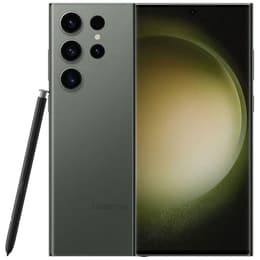
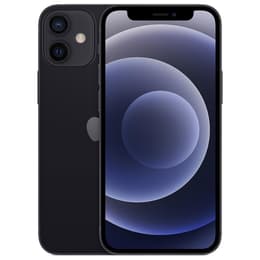
The Samsung Galaxy S23 Ultra, released in February 2023, and the iPhone 12 Mini, launched in November 2020, represent distinct philosophies in smartphone design and functionality. While the Galaxy S23 Ultra offers a large display, advanced camera system, and integrated stylus, the iPhone 12 Mini provides a compact form factor with a focus on single-handed usability. Both devices operate on their respective mature ecosystems, Android for Samsung and iOS for Apple, offering a wide range of applications and services.
Available Models
Colour
Storage (GB)
Scores
Durability
The longevity of a smartphone is influenced by its build quality, software support, and ease of repair. These two devices, despite their different release timelines, offer varying aspects of durability and expected lifespan.
- Release Timeline: The Galaxy S23 Ultra is a more recent device, released in February 2023, giving it a significant advantage in terms of current technology and future software support compared to the iPhone 12 Mini, which was released in November 2020.
- Software Longevity: Samsung has committed to providing four generations of Android OS upgrades and five years of security updates for the Galaxy S23 Ultra, meaning it will receive updates through 2027. The iPhone 12 Mini, having been released earlier, is expected to receive iOS updates for approximately 5-6 years from its launch, placing it closer to the end of its major OS update cycle.
- Physical Durability: The Galaxy S23 Ultra features Gorilla Glass Victus 2 on its front and back, offering enhanced scratch and drop resistance. The iPhone 12 Mini introduced Ceramic Shield on its front display, which Apple stated provides improved drop performance. Both devices carry an IP68 rating for dust and water resistance.
- Repairability: The Galaxy S23 Ultra has been noted for improved repairability, particularly with easier battery replacement due to pull tabs. The iPhone 12 Mini received a repairability score of 6 out of 10 from iFixit, with modular components but a fragile glass back that can be impractical to replace.
Year of Release
2023
2020
Compatible with latest Update
Yes
Yes
OS
Android
iOS
Foldable
No
No
Performance
Performance in smartphones is determined by the internal processing unit, memory, and storage capabilities, impacting how smoothly applications run and how efficiently the device handles multiple tasks.
- Processing Power: The Galaxy S23 Ultra is equipped with a current-generation processor designed for demanding tasks, offering robust performance for intensive applications, advanced gaming, and complex multitasking. The iPhone 12 Mini features a powerful processor from its release year, providing smooth operation for everyday use and capable handling of most applications and games.
- Multitasking and Responsiveness: With its more recent and powerful internal components, the Galaxy S23 Ultra generally offers greater headroom for running numerous applications simultaneously and maintaining high responsiveness, especially with its larger RAM configurations. The iPhone 12 Mini, while efficient, may show limitations in extreme multitasking scenarios compared to the newer device.
- Storage Options: The Galaxy S23 Ultra offers storage configurations up to 1TB, catering to users who require extensive space for media, applications, and large files. The iPhone 12 Mini is available with up to 256GB of internal storage, which is suitable for many users but may be a consideration for those with very large digital libraries.
- Battery Behavior: The Galaxy S23 Ultra houses a larger battery, designed to support its expansive display and powerful components, often providing extended usage times for most users. The iPhone 12 Mini, due to its compact size, has a smaller battery capacity, which for heavy users may necessitate more frequent charging throughout the day.
Screen quality
The display is a primary interface for smartphone interaction, and both devices offer distinct visual experiences tailored to their design philosophies.
- Display Technology and Size: The Galaxy S23 Ultra features a large 6.8-inch Dynamic AMOLED 2X display, providing an expansive canvas with deep blacks and vibrant colors. The iPhone 12 Mini sports a compact 5.4-inch Super Retina XDR OLED display, also known for its excellent color reproduction and contrast, but in a much smaller form factor.
- Resolution and Clarity: The Galaxy S23 Ultra offers a QHD+ resolution (3088 x 1440 pixels), resulting in a very sharp and detailed image. The iPhone 12 Mini has a resolution of 2340 x 1080 pixels, which, given its smaller screen size, also translates to a high pixel density and clear visuals.
- Brightness and Refresh Rate: The Galaxy S23 Ultra can reach a peak brightness of up to 1750 nits, making it highly visible even in bright outdoor conditions, and features an adaptive refresh rate up to 120Hz for smoother scrolling and animations. The iPhone 12 Mini has a peak brightness of 1200 nits for HDR content and a standard 60Hz refresh rate.
- Viewing Experience: The larger screen of the Galaxy S23 Ultra is well-suited for media consumption, gaming, and productivity tasks that benefit from more screen real estate. The iPhone 12 Mini's smaller display prioritizes single-handed use and portability, making it comfortable for quick interactions and fitting into smaller pockets.
Resolution
1440 x 3088
1080 x 2340
Screen type
Dynamic AMOLED 2X
Super Retina XDR OLED
Audiovisual
Camera capabilities are a significant factor for many users, and these devices offer different approaches to mobile photography and videography.
- Rear Camera System: The Galaxy S23 Ultra boasts a versatile quad-camera setup, including a 200MP main sensor, a 12MP ultrawide, and two 10MP telephoto lenses (3x and 10x optical zoom), providing extensive photographic flexibility. The iPhone 12 Mini features a dual 12MP camera system with wide and ultrawide lenses, offering solid performance for everyday photography.
- Low-Light and Everyday Photography: The Galaxy S23 Ultra excels in low-light conditions and offers advanced computational photography features, including improved Nightography. The iPhone 12 Mini also includes Night mode across its cameras, significantly improving low-light performance compared to older iPhone models. Both devices deliver clear and detailed photos in good lighting.
- Video Recording Quality: The Galaxy S23 Ultra supports video recording up to 8K resolution at 30 frames per second, along with various 4K options. The iPhone 12 Mini can record 4K video at up to 60 frames per second and supports HDR video with Dolby Vision. Both offer good video stabilization.
- Front Camera and Audio: Both phones feature 12MP front-facing cameras capable of capturing detailed selfies and supporting video calls. For audio, both provide clear microphone quality for calls and recordings, and their speakers are suitable for media consumption, though the larger form factor of the S23 Ultra may allow for a more robust speaker output.
Main camera
200 megapixels
12 megapixels
Front camera
12 megapixels
12 megapixels
Miscellaneous
Beyond core features, several practical elements contribute to the overall user experience and daily usability of these smartphones.
- Connectivity: Both the Galaxy S23 Ultra and the iPhone 12 Mini support 5G connectivity, enabling faster mobile data speeds where available. They also include modern Wi-Fi standards (Wi-Fi 6 for both) and Bluetooth for wireless accessories.
- Ports and Biometrics: The Galaxy S23 Ultra uses a USB-C port for charging and data transfer, while the iPhone 12 Mini utilizes Apple's Lightning port. Neither device includes a traditional 3.5mm headphone jack. For security, the Galaxy S23 Ultra features an under-display fingerprint sensor and facial recognition, whereas the iPhone 12 Mini relies on Face ID for biometric authentication.
- Dimensions and Handling: The Galaxy S23 Ultra is a large and substantial device, measuring 163.4 x 78.1 x 8.9 mm and weighing 233g, which can be a consideration for one-handed use. The iPhone 12 Mini is significantly smaller and lighter at 131.5 x 64.2 x 7.4 mm and 135g, designed for comfortable single-handed operation and portability.
- Unique Features: A key differentiator for the Galaxy S23 Ultra is its integrated S Pen stylus, offering precise input for note-taking, drawing, and navigation. The iPhone 12 Mini supports MagSafe for magnetic attachment of accessories and wireless charging.
Weight
234 g
135 g
Screen size (in)
6.8
5.4
Network
5G
5G
SIM card
Physical SIM + eSIM
Physical SIM + eSIM
Carrier compatibility
Unlocked
Unlocked
What the community thinks
The Samsung Galaxy S23 Ultra and the iPhone 12 Mini cater to different user preferences, each excelling in its respective design philosophy. User feedback for the Galaxy S23 Ultra often praises its comprehensive camera system, particularly the zoom capabilities and low-light performance, as well as the versatility offered by the S Pen. Its large, vibrant display is frequently highlighted for media consumption and productivity. Some users, however, note its substantial size and weight as a factor requiring adjustment.
The iPhone 12 Mini is consistently lauded for its compact size and comfortable one-handed usability, a rare offering in the current smartphone market. Users appreciate its bright OLED display and capable camera performance for its size. Criticisms often revolve around its smaller battery capacity, which may not last a full day for heavy users, and the limited screen real estate for extensive content viewing or typing.
Users prioritizing an expansive display, advanced camera features with significant zoom, and stylus functionality for creative or productivity tasks may find the Galaxy S23 Ultra well-suited to their needs. Conversely, individuals who value extreme portability, comfortable single-handed operation, and a device that easily fits into smaller pockets may lean toward the iPhone 12 Mini. Both devices offer robust performance within their categories, and choosing between them largely depends on whether a user prioritizes a large, feature-rich experience or a compact, highly portable one. For those considering either device, exploring quality-assured refurbished options can be an eco-friendly alternative.