

Galaxy S23 FE Vs Xiaomi Redmi 14C

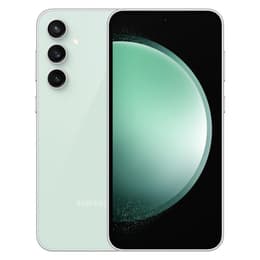
Galaxy S23 FE
Galaxy S23 FE
Starting at

Refurbished price:207.00

Versus €708.98 new

See options
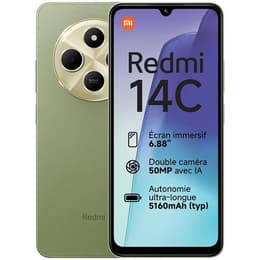
Xiaomi Redmi 14C
Xiaomi Redmi 14C
Starting at

Refurbished price:128.20

Versus €189.00 new

See options

Ratings

The Samsung Galaxy S23 FE, released in October 2023, positions itself as a premium mid-range smartphone, offering a blend of flagship features in a more accessible package. In contrast, the Xiaomi Redmi 14C, launched in August 2024, targets the budget segment, emphasizing core functionalities and a large display. These devices cater to different user expectations, primarily differing in their display technology, camera versatility, and overall processing power, while both run on the Android operating system with their respective custom interfaces.

Scores

Durability

When considering the long-term usability of these devices, several factors come into play, including their release timelines, software support, and physical resilience.

  • Release Timeline: The Galaxy S23 FE, launched in late 2023, benefits from a more recent entry into the market compared to some older models, suggesting a longer period of software updates from Samsung. The Redmi 14C, released in mid-2024, also offers a contemporary starting point for software longevity.
  • Software Longevity: Samsung typically provides several years of Android operating system updates and security patches for its devices, including the FE series. The Redmi 14C runs on Android 14 with Xiaomi's HyperOS, and while Xiaomi offers updates, the duration might differ from Samsung's premium-tier support.
  • Physical Durability: The Galaxy S23 FE features Gorilla Glass 5 protection on its display and back panel, along with an IP68 rating for dust and water resistance, indicating a higher level of protection against environmental elements. The Redmi 14C typically features a glass front and a plastic frame, with some variants offering an IP52 rating for splash and dust resistance, providing a more basic level of protection.

Year of Release

2023

2024

Compatible with latest Update

Yes

Yes

OS

Android

Android

Foldable

No

No

Performance

The performance capabilities of these two smartphones are tailored to different user demands, reflecting their respective market segments.

  • Processing Power: The Galaxy S23 FE is equipped with a processor designed for demanding applications and multitasking, allowing for smooth operation during intensive gaming sessions and heavy app usage. Users can expect a responsive experience even with multiple applications running simultaneously. The Redmi 14C, powered by a processor suitable for everyday tasks, handles social media, web browsing, and casual gaming effectively. Some users might notice minor stutters during heavy multitasking or with graphically intensive games.
  • Storage and RAM: The Galaxy S23 FE comes with 8GB of RAM and storage options of 128GB or 256GB, without expandable storage. The Redmi 14C offers more flexibility with RAM options ranging from 4GB to 8GB, and internal storage of 128GB or 256GB, which can be expanded via a microSD card.
  • Battery Behavior: The Galaxy S23 FE features a 4500mAh battery, generally providing all-day power for typical usage. The Redmi 14C houses a larger 5160mAh battery, which often translates to extended usage times, potentially lasting beyond a full day for many users.

Memory (GB)

8 GB

4 GB

Screen quality

The visual experience offered by these devices differs significantly due to their display technologies and specifications.

  • Display Technology: The Galaxy S23 FE features a 6.4-inch Dynamic AMOLED 2X display, known for its deep blacks, vibrant colors, and excellent contrast. This technology provides a rich viewing experience for media consumption. The Redmi 14C comes with a larger 6.88-inch IPS LCD panel, which offers good color reproduction but does not achieve the same level of contrast or black depth as an AMOLED screen.
  • Resolution and Clarity: The S23 FE boasts a Full HD+ resolution (1080 x 2340 pixels), resulting in sharp and detailed visuals. The Redmi 14C has an HD+ resolution (720 x 1640 pixels), which on its larger screen size, may result in slightly less sharpness compared to the S23 FE.
  • Brightness and Refresh Rate: The Galaxy S23 FE offers a peak brightness of up to 1450 nits, ensuring good visibility even in bright outdoor conditions. Both phones feature a 120Hz refresh rate, providing smooth scrolling and a fluid user interface experience. The Redmi 14C's peak brightness is around 600 nits, which is sufficient for indoor use but may be less visible under direct sunlight.

Resolution

1080 x 2340

720 x 1640

Screen type

Dynamic AMOLED 2X

IPS LCD

Audiovisual

The camera systems on the Galaxy S23 FE and Redmi 14C are designed with different photographic priorities in mind.

  • Rear Camera System: The Galaxy S23 FE features a versatile triple-camera setup, including a 50-megapixel main sensor with optical image stabilization (OIS), a 12-megapixel ultrawide lens, and an 8-megapixel telephoto lens capable of 3x optical zoom. This configuration allows for a wide range of photographic styles, from expansive landscapes to detailed zoomed-in shots. The Redmi 14C typically includes a 50-megapixel main camera, often accompanied by a basic auxiliary lens (such as a 2-megapixel depth sensor). Its focus is primarily on delivering clear everyday photos with its main sensor.
  • Photography Performance: The S23 FE excels in various lighting conditions, offering good detail and color accuracy, with its telephoto lens providing a distinct advantage for distant subjects. Its low-light performance is also generally strong. The Redmi 14C captures appealing pictures in daylight with decent contrast and sharpness. However, its low-light capabilities and overall versatility are more limited due to the simpler camera array.
  • Video and Audio: The Galaxy S23 FE supports high-resolution video recording up to UHD 8K at 24 frames per second, along with advanced features like slow motion. The Redmi 14C records video at 1080p at 30 frames per second, suitable for general use and social media. For audio, the S23 FE offers a good media consumption experience, while the Redmi 14C includes a 3.5mm headphone jack, which is a practical feature for users who prefer wired audio.

Main camera

50 megapixels

50 megapixels

Front camera

10 megapixels

13 megapixels

Miscellaneous

Beyond the core specifications, several practical elements differentiate these two smartphones in daily use.

  • Connectivity: The Galaxy S23 FE supports 5G networks and features advanced Wi-Fi 6E for faster wireless internet speeds, alongside Bluetooth 5.3. The Redmi 14C offers 4G connectivity, with some variants supporting 5G, and includes dual-band Wi-Fi and Bluetooth 5.4.
  • Ports and Sensors: The S23 FE utilizes a USB-C 2.0 port for charging and data transfer and lacks a 3.5mm headphone jack or expandable storage. It features an in-display fingerprint sensor for secure unlocking. The Redmi 14C comes with a USB Type-C port, retains a 3.5mm headphone jack, and offers expandable storage via a microSD card slot. It typically uses a side-mounted fingerprint sensor and supports face unlock.
  • Design and Handling: The Galaxy S23 FE has dimensions of 158 x 76.5 x 8.2 mm and weighs 209 grams, offering a balanced feel in hand. The Redmi 14C is a larger device at 171.9 x 77.8 x 8.2 mm and weighs between 204-211 grams, which might appeal to users who prefer a more expansive screen.

Weight

209 g

207 g

Screen size (in)

6.4

6.88

Network

5G

4G

SIM card

Physical SIM

Dual Physical SIM

Carrier compatibility

Unlocked

Unlocked

User feedback for the Samsung Galaxy S23 FE often highlights its reliable camera system, particularly its ability to capture clear photos even in challenging lighting, and its vibrant display. Many appreciate its overall performance for daily tasks and gaming, noting its smooth operation. Some common criticisms include its weight and occasional reports of the device warming up during intensive use. The design, while generally well-received, has been described by some as having sharp edges that can be uncomfortable without a case.

For the Xiaomi Redmi 14C, users frequently praise its long battery life, large screen, and dependable performance for essential smartphone functions. Its inclusion of a 3.5mm headphone jack and expandable storage are also often cited as positive aspects. Criticisms sometimes point to the display's lower resolution compared to more premium devices, and some users note that while it handles basic tasks well, it may not be as fluid with heavy multitasking or demanding applications. The camera, while decent in good lighting, is not considered a strong point for advanced photography.

Users prioritizing a high-quality display, a versatile camera system with telephoto capabilities, and robust overall performance for demanding applications may find the Samsung Galaxy S23 FE well-suited to their needs. Conversely, users who value extended battery life, a larger screen for media consumption, expandable storage, and the convenience of a headphone jack for everyday use may lean toward the Xiaomi Redmi 14C. Both devices offer distinct advantages, and choosing between them depends on individual priorities for daily smartphone use. For those seeking an eco-friendly alternative, quality-assured refurbished options for both models can provide a sustainable choice.


See all articles

Our recent comparisons