

Galaxy A55 Vs iPhone 13 Pro

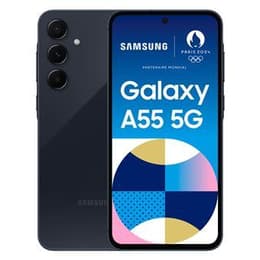
Galaxy A55
Galaxy A55
Starting at

Refurbished price:230.00

Versus €513.35 new

See options
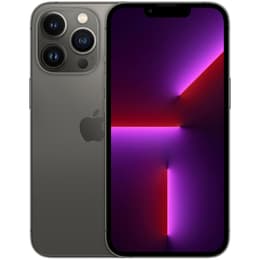
iPhone 13 Pro
iPhone 13 Pro
Starting at

Refurbished price:313.00

Versus €1,149.00 new

See options

Ratings

The Samsung Galaxy A55 (2024) and the iPhone 13 Pro (2021) represent distinct offerings in the smartphone market, separated by a few years in their release. While the Galaxy A55 operates on the Android platform, the iPhone 13 Pro runs on iOS, providing fundamentally different user experiences. This comparison will highlight the practical differences in their features and capabilities, helping users understand which device aligns better with their daily needs.

Scores

Durability

The longevity of a smartphone is influenced by its release timeline, software support, and ease of repair. These factors contribute to how long a device remains functional and secure for its users.

  • Release Timeline: The iPhone 13 Pro was released in September 2021, while the Samsung Galaxy A55 launched in March 2024. This difference means the iPhone 13 Pro has already received several years of software updates, whereas the Galaxy A55 is a more recent device.
  • Software Longevity: The Galaxy A55 is promised four major Android OS upgrades and five years of security patches from its release [1, 16, 19, 22, 23]. The iPhone 13 Pro, despite its earlier release, is expected to receive iOS updates for approximately six to seven years from its launch, potentially extending its software support until around 2028 [31, 35, 36, 39, 40].
  • Repairability: The Samsung Galaxy A55 has a high repairability score of 8.5 out of 10, indicating that it is relatively straightforward to disassemble and repair, with components like the battery featuring a pull tab for easier replacement [2, 3, 4, 5, 7]. In contrast, the iPhone 13 Pro received a repairability score of 5 out of 10, with third-party repairs often complicated by software pairing and the difficulty of replacing certain components, such as the rear glass [6, 12, 20, 37].

Year of Release

2024

2021

Compatible with latest Update

Yes

Yes

OS

Android

iOS

Foldable

No

No

Performance

Performance in a smartphone translates to how smoothly applications run, the speed of multitasking, and the overall responsiveness of the system. Both devices offer capable performance for their respective categories.

  • Processing Power: The iPhone 13 Pro features a powerful processor designed for demanding tasks, ensuring smooth operation for complex applications and graphics-intensive games [29]. Users can expect consistent responsiveness and efficient handling of multiple apps simultaneously.
  • Everyday Responsiveness: The Galaxy A55's processor provides decent performance for most daily activities, including web browsing, social media, and moderate gaming [25]. While it handles multitasking smoothly, some very demanding games might experience occasional stutters, though performance often improves with software updates [25].
  • Storage and Multitasking: The iPhone 13 Pro comes with 6GB of RAM and storage options up to 1TB, which is not expandable [13, 17, 29]. The Galaxy A55 offers 6GB or 8GB of RAM and up to 256GB of internal storage, with the added flexibility of expandable storage via a microSD card [8, 9, 11].

Memory (GB)

8 GB

6 GB

Screen quality

The display is a primary interface for smartphone interaction, and differences in technology, resolution, and brightness significantly impact the viewing experience.

  • Display Technology and Clarity: Both devices feature vibrant OLED displays. The iPhone 13 Pro has a 6.1-inch Super Retina XDR OLED display with a resolution of 2532x1170 pixels, resulting in a high pixel density of 460 pixels per inch (ppi) [13, 27]. The Galaxy A55 sports a larger 6.6-inch Super AMOLED display with a resolution of 1080x2340 pixels, offering a pixel density of approximately 396 ppi [8, 9, 11].
  • Refresh Rate and Smoothness: Both phones offer a 120Hz refresh rate, which contributes to smoother scrolling and more fluid animations [8, 18, 27]. The iPhone 13 Pro's ProMotion technology dynamically adjusts the refresh rate based on content, optimizing battery usage [18, 37].
  • Brightness and Outdoor Visibility: The iPhone 13 Pro's display can reach up to 1000 nits of typical brightness and 1200 nits peak brightness, providing excellent visibility even in bright outdoor conditions [18]. The Galaxy A55 also offers good outdoor visibility with a peak brightness of 1000 nits [33].

Resolution

1080 x 2340

1170 x 2532

Screen type

Super AMOLED

Super Retina XDR OLED

Audiovisual

Camera capabilities are a key consideration for many users, encompassing photo and video quality across various conditions, as well as specialized features.

  • Rear Camera Systems: The iPhone 13 Pro features a versatile triple 12-megapixel camera system, including a main sensor with optical image stabilization (OIS), an ultrawide lens, and a telephoto lens with 3x optical zoom [13, 17, 27]. The Galaxy A55 comes with a triple rear camera setup consisting of a 50-megapixel main sensor with OIS, a 12-megapixel ultrawide lens, and a 5-megapixel macro lens [9, 11, 33].
  • Photography Performance: The iPhone 13 Pro is known for its excellent overall picture quality, strong low-light performance, and a dedicated macro photography mode [27, 29, 32, 34]. The Galaxy A55 delivers good photos in bright lighting conditions, with decent low-light performance, and its macro lens allows for detailed close-up shots [25, 26, 28, 33].
  • Video Recording and Front Camera: Both devices support 4K video recording at 30 frames per second (fps), with the iPhone 13 Pro also offering 4K at 24 and 60 fps, along with advanced features like Cinematic Mode and ProRes video recording [17, 27, 29, 32]. For selfies, the iPhone 13 Pro has a 12-megapixel front camera, while the Galaxy A55 features a higher-resolution 32-megapixel front camera [9, 11, 17].

Main camera

50 megapixels

12 megapixels

Front camera

32 megapixels

12 megapixels

Miscellaneous

Beyond core features, several practical elements contribute to the overall user experience, from physical design to connectivity options.

  • Build Materials and Durability: The iPhone 13 Pro features a stainless steel frame and a matte glass back, protected by a Ceramic Shield front cover, offering a premium feel and enhanced durability [13, 14, 27]. It also has an IP68 rating for dust and water resistance [27]. The Galaxy A55 utilizes an aluminum frame and a glass back, with Gorilla Glass Victus+ on the front, and carries an IP67 rating for dust and water resistance [2, 4, 9, 11, 25, 33].
  • Connectivity and Ports: Both devices support 5G connectivity and Wi-Fi 6 [9, 13, 27]. The Galaxy A55 uses a USB Type-C 2.0 port for charging and data transfer [9, 11], while the iPhone 13 Pro uses Apple's proprietary Lightning port [13, 27].
  • Dimensions and Handling: The iPhone 13 Pro is more compact and lighter, weighing 204 grams with dimensions of 146.7 x 71.5 x 7.65 mm [13, 14, 27, 29]. The Galaxy A55 is larger and slightly heavier at 213 grams, with dimensions of 161.1 x 77.4 x 8.2 mm [9, 11, 25].

Weight

213 g

203 g

Screen size (in)

6.6

6.1

Network

5G

5G

SIM card

Physical SIM

Physical SIM + eSIM

Carrier compatibility

Unlocked

Unlocked

Connector

USB-C

Lightning

User feedback for the Samsung Galaxy A55 often highlights its excellent battery life, vibrant display, and solid build quality, with many appreciating its premium feel for its segment [25, 28, 33]. Some users note that while its performance is good for daily use, it might not match flagship devices for intensive gaming or photography [25, 28]. The camera is generally considered acceptable for everyday photos, though some mention the selfie camera can have a yellowish tone [28].

The iPhone 13 Pro receives consistent praise for its powerful performance, exceptional camera system with advanced features like Cinematic Mode and macro photography, and its significantly improved battery life compared to previous iPhone models [27, 29, 30, 32, 34]. Users also appreciate its smooth 120Hz ProMotion display [27, 29]. Criticisms sometimes point to its proprietary Lightning port and the challenges associated with third-party repairs [20, 27, 37].

Users prioritizing a newer device with a larger display, expandable storage, and a strong emphasis on repairability may find the Samsung Galaxy A55 well-suited to their needs. Its long-lasting battery and robust software support policy make it a practical choice for extended use. Conversely, users who prioritize top-tier processing power, a highly refined camera system with advanced video capabilities, and a more compact form factor will likely lean towards the iPhone 13 Pro. Its extended software support, despite its earlier release, also offers a compelling argument for long-term usability.

For those considering either device, exploring quality-assured refurbished options can be an eco-friendly alternative, providing access to these capable smartphones while contributing to a more sustainable choice.


See all articles

Our recent comparisons