

Google Pixel Fold Vs iPhone 17 Pro

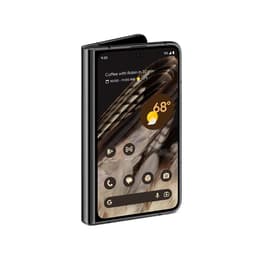
Google Pixel Fold
Google Pixel Fold
Starting at

Refurbished price:454.00

Versus €1,750.29 new

See options
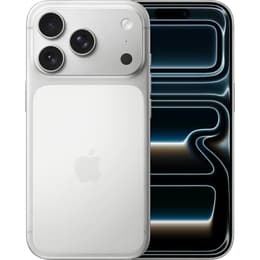
iPhone 17 Pro
iPhone 17 Pro
Starting at

Refurbished price:1,064.00

Versus €1,339.00 new

See options

Ratings

The Google Pixel Fold, released in mid-2023, represents Google's entry into the foldable smartphone market, offering a unique form factor that transforms from a traditional smartphone into a larger tablet-like display. In contrast, the iPhone 17 Pro, launched in late 2025, is Apple's latest flagship smartphone, focusing on cutting-edge performance, advanced camera capabilities, and a refined user experience within a conventional slab design. These devices cater to different user preferences, with the Pixel Fold emphasizing screen versatility and the iPhone 17 Pro prioritizing raw power and a premium, non-folding experience.

Scores

Durability

When considering the practical lifespan of these devices, several factors come into play, including their release timelines, software support, and physical construction.

  • Release Timeline and Software Support: The Google Pixel Fold, released in June 2023, launched with Android 13 and is expected to receive at least five years of security updates. The iPhone 17 Pro, released in September 2025, runs on iOS 26 and benefits from Apple's typically longer software support cycle, often extending to six or more years of major iOS updates. This difference means the iPhone 17 Pro will likely receive software features and security patches for a longer duration.
  • Physical Durability: The Pixel Fold features an outer display protected by Corning Gorilla Glass Victus, while its inner foldable screen is made of plastic, which is susceptible to scratches from everyday objects like fingernails. The iPhone 17 Pro incorporates Ceramic Shield 2 for its display, which is designed to be highly scratch-resistant, offering three times better resistance than the original Ceramic Shield. The iPhone 17 Pro's unibody aluminum chassis, while lighter, has shown some susceptibility to cosmetic wear around the camera plateau compared to previous titanium models.
  • Repairability and Longevity: Foldable devices, by nature, introduce additional mechanical components like hinges, which can be points of concern for long-term durability. User reports for the Pixel Fold have noted instances of inner screen issues and concerns regarding its overall resilience in bend tests. The iPhone 17 Pro, with its traditional form factor, generally presents a more straightforward repair profile, though specific repairability scores would depend on internal design.

Year of Release

2023

2025

Compatible with latest Update

Yes

Yes

OS

Android

iOS

Foldable

Yes

No

Performance

The performance of a smartphone is crucial for handling daily tasks, demanding applications, and multitasking. Both devices offer robust capabilities, but with different underlying architectures.

  • Processing Power: The Google Pixel Fold is powered by an octa-core Google Tensor G2 processor, paired with 12GB of RAM. This configuration handles most applications smoothly, but some users have noted that it may struggle with more demanding tasks or intensive gaming over prolonged periods. The iPhone 17 Pro features Apple's A19 Pro chip, which includes a 6-core CPU, a 6-core GPU, and a 16-core Neural Engine, along with 12GB of RAM. This chip is built on an advanced 3nm process and is designed for sustained high performance, offering significant gains in both single-core and multi-core operations, even outperforming some desktop processors in certain benchmarks.
  • Multitasking and Responsiveness: With 12GB of RAM, both devices are capable of managing multiple applications simultaneously without significant slowdowns. However, the iPhone 17 Pro's more powerful processor and optimized iOS ecosystem contribute to a consistently fluid and responsive user experience, particularly when switching between heavy applications or engaging in graphically intensive activities. The iPhone 17 Pro also incorporates a vapor chamber cooling system to maintain peak performance during extended use.
  • Storage Options: The Pixel Fold is available with 256GB or 512GB of internal storage. The iPhone 17 Pro offers a wider range of storage configurations, starting at 256GB and extending up to 1TB, with the Pro Max variant offering up to 2TB. This provides more flexibility for users with extensive storage needs for media, applications, and large files.

Memory (GB)

12 GB

12 GB

Screen quality

The display is a primary interaction point, and both devices offer high-quality viewing experiences, albeit with distinct form factors.

  • Display Technology and Size: The Google Pixel Fold features a unique dual-screen setup. Its main internal display is a 7.6-inch foldable OLED panel with a 2208x1840 resolution, offering a 120Hz refresh rate. The external cover display is a 5.8-inch OLED with a 2092x1080 resolution, also supporting a 120Hz refresh rate. The iPhone 17 Pro features a single 6.3-inch OLED display with a 120Hz ProMotion refresh rate.
  • Brightness and Clarity: The Pixel Fold's main display reaches up to 1450 nits peak brightness for HDR content, while its cover display can achieve up to 1550 nits peak brightness. The iPhone 17 Pro's display offers a higher peak brightness of 3000 nits outdoors, providing enhanced visibility in bright sunlight. Both devices deliver vibrant colors and deep blacks characteristic of OLED technology.
  • User Experience and Features: The Pixel Fold's large internal screen is well-suited for media consumption, reading, and multitasking with two apps side-by-side. Its wider cover screen aspect ratio makes it more comfortable for single-handed use when folded compared to some other foldables. The iPhone 17 Pro's display includes an anti-reflective coating and Ceramic Shield 2 for improved scratch resistance, enhancing its durability and outdoor usability. It also features an Always-On display.

Resolution

1840 x 2208

2622x1206

Screen type

Foldable OLED

Super Retina XDR

Audiovisual

Both the Google Pixel Fold and the iPhone 17 Pro offer advanced camera systems, leveraging computational photography to deliver high-quality images and videos.

  • Rear Camera System: The Google Pixel Fold is equipped with a triple-camera system comprising a 48MP main sensor, a 10.8MP ultrawide lens, and a 10.8MP telephoto lens with 5x optical zoom and 20x Super Res Zoom. It is praised for its image quality, benefiting from Google's computational photography, including features like Night Sight and Real Tone. The iPhone 17 Pro features a triple 48MP camera system, including a main, ultrawide, and telephoto lens. Its telephoto lens offers 4x and 8x optical zoom, with up to 40x digital zoom.
  • Photography and Video Features: The Pixel Fold allows for a 'Rear Camera Selfie' feature, utilizing the higher-quality rear cameras with the cover screen as a viewfinder. The iPhone 17 Pro supports 4K video recording across all three rear cameras and includes advanced features like ProRes RAW and Log 2 video recording, catering to professional videographers. Its Photonic Engine uses machine learning for improved noise reduction, color accuracy, and detail.
  • Front-Facing Cameras: The Pixel Fold has a 9.5MP front camera and an 8MP inner camera for selfies and video calls. The iPhone 17 Pro features an upgraded 24MP front-facing camera, offering higher resolution for selfies and video calls.

Main camera

48 megapixels

48 megapixels

Front camera

8 megapixels

18 megapixels

Miscellaneous

Beyond core features, several practical elements contribute to the overall user experience and device utility.

  • Connectivity: The Google Pixel Fold supports Wi-Fi 802.11 ax and Bluetooth v5.2. The iPhone 17 Pro features more advanced connectivity options, including Wi-Fi 7 (802.11be) and Bluetooth 6, along with a second-generation Ultra Wideband chip for enhanced spatial awareness and device finding. Both devices support 5G cellular networks.
  • Ports and Charging: The Pixel Fold utilizes a USB Type-C port for charging and data transfer. The iPhone 17 Pro also features a USB-C port, which supports faster USB 3 transfer speeds (up to 10Gb/s), DisplayPort for external monitors, and faster charging capabilities. Neither device includes a traditional headphone jack.
  • Biometric Security and Build: Both devices offer secure biometric authentication. The Pixel Fold uses a side-mounted fingerprint sensor. The iPhone 17 Pro relies on Face ID for secure facial recognition. In terms of build, the Pixel Fold weighs 283 grams, while the iPhone 17 Pro weighs 206 grams. The Pixel Fold's design allows it to fold flat, which can help prevent debris from entering the hinge mechanism. The iPhone 17 Pro's unibody aluminum frame is complemented by Ceramic Shield 2 on the display for enhanced durability.

Weight

283 g

206 g

Screen size (in)

7.6

6.3

Network

5G

5G

SIM card

Physical SIM + eSIM

Physical SIM + eSIM

Carrier compatibility

Unlocked

Unlocked

Connector

USB-C

USB-C

The Google Pixel Fold and the iPhone 17 Pro cater to distinct user needs, each excelling in different areas. The Pixel Fold is often praised by users for its innovative foldable design, offering the versatility of a large tablet-like screen for media consumption and multitasking, which many find transformative for daily use. Its camera system, benefiting from Google's computational photography, also receives positive feedback. However, common concerns include the durability of the inner plastic screen, which is prone to scratches, and the performance of its processor for highly demanding applications. Some users also note that not all applications are fully optimized for the foldable screen aspect ratio.

The iPhone 17 Pro, on the other hand, is lauded for its exceptional processing power, delivering a consistently smooth and responsive experience even with intensive tasks and gaming. Its advanced camera system, with high-resolution sensors and professional video capabilities, is a significant draw for photography and videography enthusiasts. The display's high brightness and anti-reflective coating enhance outdoor visibility. While its unibody aluminum frame offers a premium feel, some users have expressed concerns about its scratch resistance compared to previous titanium models, particularly around the camera module.

Users prioritizing a versatile, large-screen experience for productivity and media consumption, and who are comfortable with the unique characteristics of a foldable device, may find the Google Pixel Fold well-suited to their needs. Conversely, users who demand uncompromising performance, a top-tier camera system, and a highly durable, conventional smartphone form factor will likely lean towards the iPhone 17 Pro. Both devices represent significant engineering achievements in their respective categories, and for those seeking quality-assured refurbished options, both models may become available, offering a sustainable choice for informed consumers.


See all articles

Our recent comparisons