

Galaxy S22+ 5G Vs iPhone 13

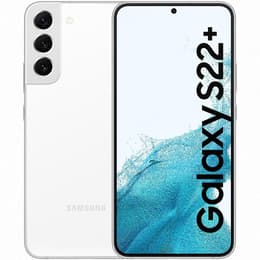
Galaxy S22+ 5G
Galaxy S22+ 5G
Starting at

Refurbished price:194.00

Versus €1,174.01 new

See options
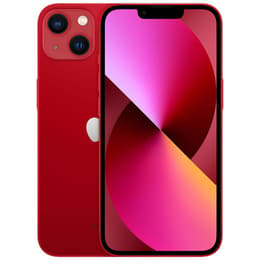
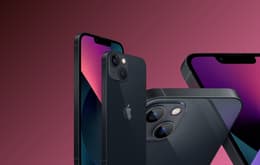
iPhone 13
iPhone 13
Starting at

Refurbished price:247.00

Versus €769.00 new

See options

Ratings

The Samsung Galaxy S22 Plus 5G, released in February 2022, and the Apple iPhone 13, launched in September 2021, are both prominent smartphones from their respective manufacturers. While the Galaxy S22 Plus operates on Android, offering a customizable experience, the iPhone 13 runs on Apple's iOS, known for its integrated ecosystem. Key differentiators include their display technologies, camera systems, and overall design philosophies, catering to distinct user preferences.

Scores

Durability

When considering the longevity of these devices, both offer robust build quality and extended software support, though their timelines differ slightly.

  • Release Timeline and Age: The iPhone 13 was released in September 2021, making it slightly older than the Galaxy S22 Plus 5G, which debuted in February 2022. This difference in release dates impacts their remaining software support cycles.
  • OS Support Duration: Apple typically provides major iOS updates for 5 to 6 years from a device's release, meaning the iPhone 13 is expected to receive updates until around 2027 or 2028. Samsung, for the Galaxy S22 Plus, committed to four major Android OS updates and five years of security updates, extending its support through 2027 for security patches and up to Android 16 for OS updates.
  • Durability Features: Both devices feature IP68 ratings for dust and water resistance, indicating protection against immersion. The iPhone 13 incorporates a Ceramic Shield front cover for enhanced drop performance, while the Galaxy S22 Plus utilizes Gorilla Glass Victus+ on both its front and back.

Year of Release

2022

2021

Compatible with latest Update

Yes

Yes

OS

Android

iOS

Foldable

No

No

Performance

Both smartphones deliver capable performance for daily tasks and demanding applications, though they approach it with different hardware architectures.

  • Processor Capabilities: The iPhone 13 handles demanding apps and multitasking smoothly, providing a responsive user experience for gaming and content creation. The Galaxy S22 Plus also offers strong performance, allowing for fluid navigation, efficient app switching, and capable handling of graphically intensive games.
  • Battery Behavior: The iPhone 13 generally offers a full day of use for most users, with some reporting over 10 hours of continuous web surfing. The Galaxy S22 Plus, with its larger battery, provides comparable endurance, typically lasting around 9 to 10 hours in similar usage tests.
  • Storage and RAM: The iPhone 13 is available with 128GB, 256GB, or 512GB of internal storage, paired with 4GB of RAM. The Galaxy S22 Plus comes with 128GB or 256GB storage options and 8GB of RAM, which aids in maintaining multiple applications in memory for quick access.

Memory (GB)

8 GB

4 GB

Screen quality

The visual experience on both devices is vibrant and clear, but they offer distinct characteristics in terms of display technology and refresh rates.

  • Display Technology and Size: The iPhone 13 features a 6.1-inch Super Retina XDR OLED display, known for its deep blacks and accurate color reproduction. The Galaxy S22 Plus sports a larger 6.6-inch Dynamic AMOLED 2X display, which also delivers rich colors and excellent contrast.
  • Brightness and Clarity: The iPhone 13 achieves a peak brightness of 1200 nits for HDR content, with typical brightness around 800 nits, ensuring good visibility in various lighting conditions. The Galaxy S22 Plus offers a higher peak brightness of 1750 nits, making it particularly well-suited for outdoor use and direct sunlight. Both displays offer sharp resolutions, with the iPhone 13 at 2532 x 1170 pixels and the Galaxy S22 Plus at 1080 x 2340 pixels.
  • Refresh Rate: A notable difference is the refresh rate; the iPhone 13 has a standard 60Hz refresh rate. The Galaxy S22 Plus features an adaptive refresh rate that can scale from 48Hz to 120Hz, providing smoother scrolling and more fluid animations, especially noticeable in compatible content and games.

Resolution

1080 x 2340

1170 x 2532

Screen type

Dynamic AMOLED 2X

Super Retina XDR OLED

Audiovisual

Both smartphones offer advanced camera systems capable of capturing high-quality photos and videos, with specific strengths in different areas.

  • Rear Camera Systems: The iPhone 13 features a dual 12MP camera system, including a wide lens with sensor-shift optical image stabilization (OIS) and an ultrawide lens. It excels in capturing detailed images with natural colors and improved low-light performance compared to its predecessor. The Galaxy S22 Plus boasts a versatile triple-camera setup, comprising a 50MP wide lens with OIS, a 12MP ultrawide lens, and a 10MP telephoto lens with 3x optical zoom and OIS. This provides greater flexibility for different photographic scenarios, including distant subjects.
  • Video Recording Quality: Both devices offer excellent video recording capabilities. The iPhone 13 introduces Cinematic mode, which allows for dynamic depth-of-field effects in videos, and records up to 4K at 60fps. The Galaxy S22 Plus can record video up to 8K at 24fps, in addition to 4K at 30/60fps, offering higher resolution video capture.
  • Audio and Speakers: Both phones are equipped with stereo speakers, providing an immersive audio experience for media consumption. Neither device includes a traditional 3.5mm headphone jack, relying on wireless audio solutions or USB-C/Lightning adapters.

Main camera

50 megapixels

12 megapixels

Front camera

10 megapixels

12 megapixels

Miscellaneous

Beyond core features, several practical elements contribute to the overall user experience and differentiate these two devices.

  • Connectivity and Ports: Both smartphones support 5G connectivity for faster mobile data speeds. The Galaxy S22 Plus features Wi-Fi 6E and Bluetooth 5.2, along with a USB-C port. The iPhone 13 supports Wi-Fi 6 and Bluetooth 5.0, utilizing Apple's proprietary Lightning port.
  • Biometric Security: The iPhone 13 relies on Face ID for secure facial recognition. The Galaxy S22 Plus incorporates an in-display fingerprint sensor for biometric authentication.
  • Physical Characteristics: The iPhone 13 is more compact and lighter, measuring 146.7 x 71.5 x 7.65 mm and weighing 174g. The Galaxy S22 Plus is a larger device at 157.4 x 75.8 x 7.6 mm and weighs 195g or 196g. These differences impact one-handed usability and pocketability.

Weight

195 g

173 g

Screen size (in)

6.6

6.1

Network

5G

5G

SIM card

Physical SIM + eSIM

Physical SIM + eSIM

Carrier compatibility

Unlocked

Unlocked

Connector

USB-C

Lightning

Users often praise the iPhone 13 for its consistent performance, reliable camera, and excellent battery life, particularly for its size. Common criticisms sometimes point to its 60Hz display, which some users find less fluid compared to higher refresh rate screens on competing devices. The Galaxy S22 Plus is frequently lauded for its vibrant, high-refresh-rate display and versatile camera system, including its telephoto lens. Some users have noted that its battery life, while good, might not always match the very best in its class under heavy usage, and the regional processor variations can lead to differing performance expectations.

Users prioritizing a compact device with a highly integrated software experience and strong video capabilities may find the iPhone 13 well-suited to their needs. Those who prefer a larger, more customizable Android experience with a high-refresh-rate display and a dedicated telephoto camera might lean toward the Galaxy S22 Plus. Both devices offer robust performance and durability, making them solid choices. For those seeking an eco-friendly alternative, both models are available as quality-assured refurbished options, providing a sustainable choice for consumers.

See all articles

Our recent comparisons