

Compare models
Galaxy S22 Ultra 5G Vs Galaxy S25 FE
- 1-year minimum warranty
- Free delivery on all orders
- Free 30-day returns
Differences at a glance
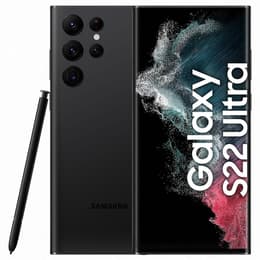
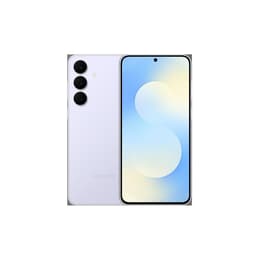
The Samsung Galaxy S22 Ultra 5G (2022) and the Samsung Galaxy S25 FE (2025) represent two distinct approaches to premium mobile technology, balancing legacy flagship design with contemporary mid-cycle innovation. While the Galaxy S22 Ultra 5G established a large-format productivity standard with integrated stylus support and a versatile quad-camera array, the Galaxy S25 FE focuses on refined everyday utility and streamlined processing capabilities. Both devices operate on the Android platform with Samsung's customized interface, offering distinct hardware configurations tailored to divergent user preferences in screen layout and daily interaction.
Available Models
Colour
Storage (GB)
Scores
Durability
When evaluating structural longevity and software longevity, both smartphones approach long-term usability through different release timelines and support windows.
- Software Support Window: The Galaxy S25 FE benefits from a later release year, securing extended operating system updates and security patches further into the future compared to its counterpart.
- Repairability and Build Structure: Both models utilize robust glass and metal construction, though replacement parts and repair services for the older Galaxy S22 Ultra 5G are widely established across independent and authorized service networks.
- Practical Lifespan: Users selecting a quality-assured refurbished option can expect several years of reliable daily performance from either device, depending on future software requirements.
Year of Release
2022
2025
Compatible with latest Update
Yes
Yes
OS
Android
Android
Foldable
No
No
Performance
System responsiveness and daily multitasking capabilities differ due to generational processor advancements and memory configurations.
- Multitasking and App Switching: The current-generation processor inside the Galaxy S25 FE handles heavy applications and rapid context switching with enhanced thermal efficiency, while the Galaxy S22 Ultra 5G maintains dependable speed for demanding workloads and intensive gaming sessions.
- Battery Behavior: Battery endurance varies based on display size and power optimization, with both devices comfortably managing standard daily usage involving web browsing, messaging, and media streaming before requiring a recharge.
- Storage Variations: Both models are available in multiple internal storage configurations to accommodate large media libraries and application data without external expansion.
Screen quality
Display performance remains a primary differentiator, influencing everything from media consumption to outdoor readability.
- Panel Technology and Resolution: The Galaxy S22 Ultra 5G features a large curved edge display with high pixel density and deep contrast levels, whereas the Galaxy S25 FE utilizes a flat panel configuration emphasizing consistent brightness and uniform color reproduction.
- Outdoor Legibility: Both screens reach high peak brightness levels, ensuring that text and images remain clearly visible under direct sunlight during outdoor navigation or reading.
- Refresh Rate Dynamics: Adaptive refresh rate technology ensures smooth scrolling through documents and fluid motion during gaming or animations on both devices.
Resolution
1440 x 3088
1080x2340
Screen type
Dynamic AMOLED 2X
Dynamic LTPO AMOLED 2X
Audiovisual
Multimedia capture and audio output capabilities cater to different content creation and consumption habits.
- Photographic Versatility: The Galaxy S22 Ultra 5G incorporates a dedicated multi-lens system featuring advanced telephoto zoom capabilities for distant subjects, while the Galaxy S25 FE relies on a streamlined sensor arrangement optimized for sharp everyday snapshots and reliable low-light performance.
- Video and Audio Output: Both devices support high-resolution video recording with stabilization features, paired with stereo speakers that deliver clear audio for hands-free calls and media playback.
- Microphone Clarity: Integrated multi-microphone arrays isolate voice input effectively during video calls and voice memos in bustling environments.
Miscellaneous
Physical dimensions, connectivity standards, and practical hardware additions shape the day-to-day handling experience.
- Form Factor and Handling: The Galaxy S22 Ultra 5G offers a larger footprint with an integrated stylus silo for note-taking, whereas the Galaxy S25 FE provides a more compact, lightweight profile that rests easily in smaller hands or pockets.
- Connectivity and Ports: Both models support current 5G cellular bands, fast Wi-Fi standards, and Bluetooth connectivity, utilizing reversible USB-C ports for charging and data transfer.
- Security Sensors: Quick biometric authentication is handled via responsive under-display fingerprint sensors and secure facial recognition technology across both smartphones.
Weight
167 g
190 g
Screen size (in)
6.8
6.7
Network
5G
5G
SIM card
Dual Physical SIM + eSIM
Physical SIM + eSIM
Carrier compatibility
Unlocked
Unlocked
Connector
USB-C
USB-C
What the community thinks
User community discussions highlight distinct preferences for each device based on everyday workflow requirements. Owners of the Galaxy S22 Ultra 5G frequently praise its expansive display estate, integrated productivity tools, and versatile long-range zoom capabilities, though some note its larger physical footprint can feel heavy during extended one-handed use. Conversely, users of the Galaxy S25 FE appreciate its balanced handling, modern processor efficiency, and reliable daily battery performance, while occasionally missing specialized ultra-long-range camera lenses.
Users prioritizing productivity tools, maximum screen space, and advanced zoom photography may prefer the Galaxy S22 Ultra 5G, while users prioritizing a lighter physical profile and updated processing architecture may lean toward the Galaxy S25 FE as an eco-friendly alternative. Evaluating these core differences ensures a choice that aligns with individual daily routines and long-term usage expectations.