

Compare models
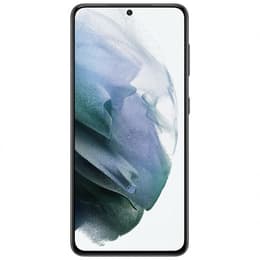
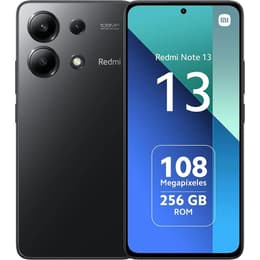
Galaxy S21 5G Vs Xiaomi Redmi Note 13 4G
- 1-year minimum warranty
- Free delivery on all orders
- Free 30-day returns
Differences at a glance
The Samsung Galaxy S21 5G (2021) and the Xiaomi Redmi Note 13 4G (2024) represent different approaches to mobile technology, balancing former flagship status against modern mid-range capabilities. While the Galaxy S21 5G focuses on premium build quality and advanced processing power, the Xiaomi Redmi Note 13 4G delivers contemporary features tailored to everyday tasks. Operating on Android-based software environments with distinct manufacturer interfaces, these devices offer varied experiences for users seeking dependable daily functionality.
Available Models
Colour
Storage (GB)
Scores
Durability
When examining software longevity and build durability, both devices handle multi-year usage differently based on their release schedules and hardware positioning.
- Software support timelines: The Galaxy S21 5G launched earlier, meaning its scheduled software update window concludes sooner than the newer Xiaomi Redmi Note 13 4G, which benefits from an extended release timeline.
- Build materials and physical resilience: The Galaxy S21 5G utilizes high-grade metal and reinforced polymer alongside official water resistance ratings, whereas the Xiaomi Redmi Note 13 4G relies on plastic construction with basic splash resistance.
- Expected practical lifespan: Both smartphones maintain adequate hardware capability for routine tasks over several years, though opting for a quality-assured refurbished option provides a sustainable choice that extends device utility.
Year of Release
2021
2024
Compatible with latest Update
Yes
Yes
OS
Android
Android
Foldable
No
No
Performance
Underneath the surface, these smartphones utilize different hardware configurations that dictate how they handle multitasking, app execution, and power management.
- Everyday responsiveness and multitasking: The Galaxy S21 5G handles demanding applications, graphic-heavy games, and rapid switching between multiple background tasks smoothly, while the Xiaomi Redmi Note 13 4G manages standard communication, web browsing, and casual apps reliably.
- Storage capacity and memory: Both models offer practical internal storage configurations to accommodate personal files, though variations in random access memory impact how many heavy apps remain active simultaneously.
- Battery behavior and daily endurance: The Galaxy S21 5G features a moderately sized battery paired with efficient power management, whereas the Xiaomi Redmi Note 13 4G incorporates a larger capacity cell designed to comfortably sustain standard usage through a full day.
Screen quality
Display technology varies significantly between these two models, influencing outdoor visibility, media consumption, and visual smoothness.
- Panel technology and visual clarity: Both smartphones utilize vibrant display panels that deliver sharp text and deep contrast, though the Galaxy S21 5G offers higher pixel density for finer detail reproduction.
- Brightness levels and outdoor legibility: The Xiaomi Redmi Note 13 4G achieves high peak brightness levels that maintain screen visibility under direct sunlight, matching the capable outdoor viewing performance of the Galaxy S21 5G.
- Refresh rate and interface smoothness: Both devices support high refresh rate capabilities, ensuring that scrolling through web pages and navigating system menus appears fluid and responsive.
Resolution
1080 x 2400
1080 x 2400
Screen type
Dynamic AMOLED 2X
AMOLED
Audiovisual
Photography and media capabilities differ based on sensor configuration, image processing software, and integrated speaker setups.
- Camera system versatility: The Galaxy S21 5G includes a dedicated telephoto lens for optical zoom alongside standard and ultra-wide sensors, whereas the Xiaomi Redmi Note 13 4G focuses on a high-resolution main sensor paired with basic secondary lenses.
- Low-light and video performance: The Galaxy S21 5G captures detailed low-light images and supports high-resolution video recording formats, while the Xiaomi Redmi Note 13 4G performs adequately in well-lit environments for casual everyday snapshots.
- Audio output and media consumption: Both devices feature stereo speaker configurations that provide clear sound for hands-free calls and casual video watching, though audio depth varies.
Main camera
12 megapixels
108 megapixels
Front camera
10 megapixels
16 megapixels
Miscellaneous
Practical daily usability elements, physical dimensions, and connectivity standards shape how each device fits into regular routines.
- Connectivity and network standards: The Galaxy S21 5G supports high-speed cellular networks alongside modern Wi-Fi protocols, whereas the Xiaomi Redmi Note 13 4G focuses strictly on fourth-generation mobile connectivity alongside standard wireless pairing.
- Physical dimensions and handling: The Galaxy S21 5G offers a compact, easily manageable form factor with a balanced weight distribution, while the Xiaomi Redmi Note 13 4G features a larger footprint that accommodates its expansive display.
- Authentication and physical ports: Both models integrate secure biometric unlock sensors, such as under-display fingerprint readers and facial recognition, utilizing reversible connection ports for charging and data transfer.
Weight
169 g
175 g
Screen size (in)
6.2
6.67
Network
5G
4G
SIM card
Dual Physical SIM + eSIM
Dual Physical SIM
Carrier compatibility
Unlocked
Unlocked
Connector
USB-C
USB-C
What the community thinks
Community discussions and user feedback indicate that the Samsung Galaxy S21 5G receives consistent praise for its compact handling, robust processing power, and versatile camera suite, though some users note that its battery life requires careful management during heavy usage. Conversely, owners of the Xiaomi Redmi Note 13 4G frequently highlight its reliable daily battery endurance, bright display panel, and modern software presentation, while pointing out limitations in demanding graphical performance and low-light photography.
Users prioritizing raw processing capability, advanced camera flexibility, and premium build materials will find the Galaxy S21 5G well-suited to their needs. Meanwhile, users prioritizing extended battery longevity, a larger screen workspace, and a more recent software release window may lean toward the Xiaomi Redmi Note 13 4G. Exploring a quality-assured refurbished option for either model offers an eco-friendly alternative that supports sustainable technology habits without compromising on core functionality. Selecting the right device depends entirely on which specific daily requirements match your personal usage patterns.