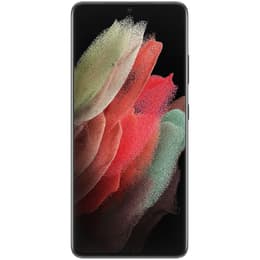
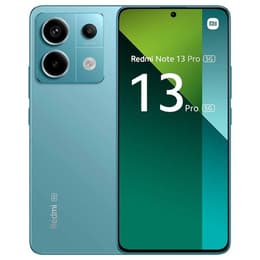


Galaxy S21 Ultra 5G Vs Xiaomi Redmi Note 13 Pro

Galaxy S21 Ultra 5G
Galaxy S21 Ultra 5G
Starting at

Refurbished price:229.00

Versus €1,297.00 new

See options
Xiaomi Redmi Note 13 Pro
Starting at

Refurbished price:179.00

Versus €349.00 new

See options

Ratings

The Samsung Galaxy S21 Ultra 5G, released in January 2021, and the Xiaomi Redmi Note 13 Pro 5G, launched globally in January 2024, represent different approaches to smartphone design and functionality. While both devices offer robust feature sets, they cater to varying user priorities. The Galaxy S21 Ultra 5G, a former flagship, emphasizes premium features and advanced camera capabilities, whereas the Redmi Note 13 Pro 5G focuses on delivering a strong all-around experience with a more recent software commitment.

Scores

Durability

When considering the long-term usability of these devices, their respective release timelines and software support policies are key factors. The Galaxy S21 Ultra 5G, being an older device, has received several major Android updates since its launch, with its software support nearing its conclusion. The Redmi Note 13 Pro 5G, as a newer model, benefits from a more extended update commitment.

  • Software Longevity: The Galaxy S21 Ultra 5G launched with Android 11 and has been updated to Android 15, indicating it is nearing the end of its major OS update cycle. The Redmi Note 13 Pro 5G, launched with Android 13, is promised three major Android OS updates, extending its support to Android 16, along with four years of security updates until January 2028.
  • Physical Durability: The Galaxy S21 Ultra 5G features IP68 dust and water resistance, capable of submersion in up to 1.5 meters of water for 30 minutes, and is protected by Gorilla Glass Victus on both its front and back. The Redmi Note 13 Pro 5G offers IP54 dust and splash resistance and features Gorilla Glass Victus on its display.
  • Expected Practical Lifespan: Users of the Galaxy S21 Ultra 5G often report satisfaction with its long-term performance and battery health, even after several years of use. The Redmi Note 13 Pro 5G, with its newer components and extended software support, is positioned for a practical lifespan that aligns with current mid-range device expectations.

Year of Release

2021

2023

Compatible with latest Update

Yes

Yes

OS

Android

Android

Foldable

No

No

Performance

The performance of a smartphone is crucial for daily tasks, from app navigation to demanding applications. Both devices offer capable performance, though they achieve it through different hardware generations.

  • Processing Power: The Galaxy S21 Ultra 5G is equipped with a flagship-tier processor from its release year, enabling smooth handling of demanding applications, complex multitasking, and graphic-intensive gaming. The Redmi Note 13 Pro 5G features a current-generation mid-range processor that provides responsive performance for everyday use and casual gaming.
  • Multitasking and Responsiveness: The Galaxy S21 Ultra 5G typically comes with higher RAM configurations, contributing to its ability to keep many applications open simultaneously without significant slowdowns. The Redmi Note 13 Pro 5G, while offering ample RAM, is optimized for efficient performance across common user scenarios.
  • Real-world Usage: Users of the Galaxy S21 Ultra 5G often highlight its consistent speed and ability to manage heavy workloads effectively. The Redmi Note 13 Pro 5G is noted by users for its smooth operation and responsiveness in daily tasks, though some report it may not be ideal for hardcore gaming.

Memory (GB)

12 GB

8 GB

Screen quality

The display is a primary interface for smartphone interaction, and both devices offer high-quality viewing experiences with distinct characteristics.

  • Display Technology and Resolution: The Galaxy S21 Ultra 5G features a 6.8-inch Dynamic AMOLED 2X display with a QHD+ resolution (3200x1440 pixels), providing exceptional clarity and detail. The Redmi Note 13 Pro 5G sports a 6.67-inch AMOLED display with a 1.5K resolution (2712x1220 pixels), offering a sharp and vibrant visual experience.
  • Brightness and Smoothness: Both phones feature a 120Hz adaptive refresh rate for fluid scrolling and animations. The Galaxy S21 Ultra 5G can reach a peak brightness of 1500 nits, ensuring good visibility in bright outdoor conditions. The Redmi Note 13 Pro 5G surpasses this with a peak brightness of 1800 nits, enhancing outdoor legibility.
  • Viewing Experience: The Galaxy S21 Ultra 5G's display is praised for its vivid colors and deep blacks, contributing to an immersive viewing experience. The Redmi Note 13 Pro 5G's display is also noted for its vibrant colors, high contrast, and overall visual appeal, with users appreciating its clarity and smoothness.

Resolution

1440 x 3200

1220 x 2712

Screen type

Dynamic AMOLED 2X

AMOLED

Audiovisual

Camera capabilities are a significant consideration for many smartphone users, and both the Galaxy S21 Ultra 5G and Redmi Note 13 Pro 5G offer advanced photographic systems with different strengths.

  • Rear Camera System: The Galaxy S21 Ultra 5G boasts a versatile quad-camera setup, including a 108MP main sensor, a 12MP ultrawide lens, and two 10MP telephoto lenses offering 3x and 10x optical zoom, respectively. This configuration provides extensive flexibility for various photographic scenarios, from wide landscapes to distant subjects. The Redmi Note 13 Pro 5G features a triple-camera system with a high-resolution 200MP main sensor with optical image stabilization (OIS), an 8MP ultrawide lens, and a 2MP macro lens.
  • Photography Performance: The Galaxy S21 Ultra 5G is known for its detailed images, impressive dynamic range, and reliable autofocus, particularly with its advanced zoom capabilities. The Redmi Note 13 Pro 5G's 200MP main camera excels in capturing highly detailed photos in good lighting conditions, with users noting good color reproduction. However, its secondary lenses are generally considered less capable than the main sensor.
  • Video and Selfies: The Galaxy S21 Ultra 5G supports video recording up to 8K at 30fps and 4K at 60fps, and features a 40MP front camera for high-resolution selfies. The Redmi Note 13 Pro 5G can record 4K video at 30fps with its main camera and has a 16MP front camera, which performs well in adequate lighting.

Main camera

108 megapixels

200 megapixels

Front camera

40 megapixels

16 megapixels

Miscellaneous

Beyond core performance, several practical features contribute to the overall user experience of a smartphone.

  • Connectivity and Ports: Both devices support 5G connectivity and modern Wi-Fi standards. The Galaxy S21 Ultra 5G includes Wi-Fi 6E and Ultra Wideband (UWB) support, offering advanced wireless capabilities. The Redmi Note 13 Pro 5G supports Wi-Fi 802.11ac and Bluetooth 5.2. The Redmi Note 13 Pro 5G retains a 3.5mm headphone jack, which is absent on the Galaxy S21 Ultra 5G.
  • Biometric Security: Both phones feature in-screen fingerprint sensors for secure unlocking. The Galaxy S21 Ultra 5G utilizes an ultrasonic fingerprint sensor, while the Redmi Note 13 Pro 5G uses an optical sensor.
  • Design and Handling: The Galaxy S21 Ultra 5G has a substantial build with a glass front and back and an aluminum frame, weighing around 227-229 grams. The Redmi Note 13 Pro 5G is lighter at 187 grams and features a glass front with a plastic back, offering a different in-hand feel. The Galaxy S21 Ultra 5G also supports the S Pen, though it is sold separately.

Weight

227 g

187 g

Screen size (in)

6.8

6.67

Network

5G

5G

SIM card

Physical SIM + eSIM

Dual Physical SIM

Carrier compatibility

Unlocked

Unlocked

The Samsung Galaxy S21 Ultra 5G and the Xiaomi Redmi Note 13 Pro 5G each present a compelling package, tailored to different user expectations and priorities. The Galaxy S21 Ultra 5G, a former flagship, is frequently praised by users for its exceptional display quality, robust performance for demanding tasks, and a highly versatile camera system, particularly its advanced zoom capabilities. Common criticisms sometimes point to its larger size and weight, and the absence of a charger in the box.

Conversely, the Redmi Note 13 Pro 5G receives commendation for its bright and smooth display, reliable everyday performance, and impressive battery life with very fast charging. Users appreciate its high-resolution main camera, though some note that the secondary cameras are less impactful and the software experience can sometimes feel cluttered.

Users who prioritize a premium build, a highly versatile camera system with optical zoom, and a top-tier display resolution for media consumption might find the Galaxy S21 Ultra 5G well-suited to their needs. Its established ecosystem and S Pen support could also be a deciding factor for some. On the other hand, individuals seeking a device with a more recent software commitment, exceptionally fast charging, and a bright display for outdoor use, coupled with a strong main camera for detailed photos, may lean towards the Redmi Note 13 Pro 5G. Both devices offer a quality-assured refurbished option, providing an eco-friendly alternative for consumers.


See all articles

Our recent comparisons







