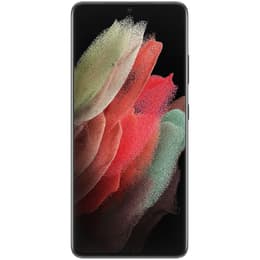
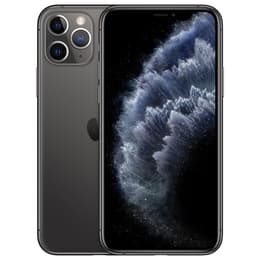


Galaxy S21 Ultra 5G Vs iPhone 11 Pro

Galaxy S21 Ultra 5G
Galaxy S21 Ultra 5G
Starting at

Refurbished price:228.00

Versus €1,297.00 new

See options
iPhone 11 Pro
iPhone 11 Pro
Starting at

Refurbished price:182.00

Versus €809.00 new

See options

Ratings

The Samsung Galaxy S21 Ultra 5G, released in January 2021, and the iPhone 11 Pro, launched in September 2019, represent different generations and operating systems in the smartphone landscape. While both devices offered premium experiences at their respective launches, they cater to distinct user preferences through their core specifications and feature sets. The Galaxy S21 Ultra 5G operates on the Android platform, offering a highly customizable experience, whereas the iPhone 11 Pro runs on Apple's iOS, known for its integrated ecosystem and streamlined interface.

Scores

Durability

When considering the long-term usability of these devices, their release timelines and software support cycles are key factors.

  • Release Timeline: The iPhone 11 Pro, released in September 2019, is an older device compared to the Galaxy S21 Ultra 5G, which launched in January 2021. This two-year difference in release impacts their remaining software support.
  • Software Longevity: The iPhone 11 Pro is expected to receive major iOS updates until late 2026, likely concluding with iOS 26, with security updates potentially extending beyond that. The Galaxy S21 Ultra 5G received its final major Android OS update (Android 15) in early 2025, and its regular security updates were terminated in February 2026, though critical patches may still be issued.
  • Practical Lifespan: Users can expect the iPhone 11 Pro to remain functional and secure for a considerable period, benefiting from Apple's extended software support. The Galaxy S21 Ultra 5G, while still capable, has reached the end of its guaranteed software and security update cycle, which may influence its practical lifespan for users prioritizing the latest software features and security.

Year of Release

2021

2019

Compatible with latest Update

Yes

Yes

OS

Android

iOS

Foldable

No

No

Performance

The performance of a smartphone is crucial for daily tasks, app usage, and multitasking. Both devices offer capable performance, but their underlying hardware reflects their different release dates.

  • Processing Power: The Galaxy S21 Ultra 5G, with its newer generation processor, handles demanding applications and intensive multitasking with notable responsiveness. The iPhone 11 Pro, while still providing a smooth user experience for everyday applications, may show its age with more graphically intensive tasks or future software updates.
  • Multitasking and Storage: The Galaxy S21 Ultra 5G typically comes with more RAM, which can contribute to smoother transitions between multiple open applications and better retention of app states. Both devices offer various internal storage options, allowing users to choose based on their content storage needs.
  • Battery Behavior: The Galaxy S21 Ultra 5G features a larger battery capacity, often providing all-day power even with moderate to heavy usage, though enabling its highest display settings can increase power consumption. The iPhone 11 Pro, despite a smaller battery, was noted for its efficient power management at its release, often lasting a full day for many users.

Memory (GB)

12 GB

4 GB

Screen quality

The display is a primary interface for smartphone interaction, and both models offer high-quality viewing experiences with distinct characteristics.

  • Display Technology and Size: The Galaxy S21 Ultra 5G features a larger 6.8-inch Dynamic AMOLED 2X display, providing expansive screen real estate. The iPhone 11 Pro has a 5.8-inch Super Retina XDR OLED display, offering a more compact form factor. Both utilize OLED technology, known for deep blacks and vibrant colors.
  • Resolution and Refresh Rate: The Galaxy S21 Ultra 5G boasts a higher QHD+ resolution (3200 x 1440 pixels) and an adaptive refresh rate up to 120Hz, resulting in sharper images and smoother scrolling. The iPhone 11 Pro offers a Full HD+ resolution (2436 x 1125 pixels) with a standard 60Hz refresh rate, which provides a clear and fluid experience for most content.
  • Brightness: The Galaxy S21 Ultra 5G can reach a peak brightness of 1500 nits, offering excellent visibility in bright outdoor conditions. The iPhone 11 Pro also provides strong outdoor visibility with a peak brightness of 1200 nits.

Resolution

1440 x 3200

1125 x 2436

Screen type

Dynamic AMOLED 2X

Super Retina XDR OLED

Audiovisual

Both smartphones offer advanced camera systems designed to capture high-quality photos and videos, though with different approaches and capabilities.

  • Camera System Versatility: The Galaxy S21 Ultra 5G features a quad-camera setup, including a high-resolution 108MP main sensor, a 12MP ultrawide lens, and two 10MP telephoto lenses offering 3x and 10x optical zoom for extensive zoom capabilities. The iPhone 11 Pro comes with a triple 12MP camera system, comprising a main wide, an ultrawide, and a telephoto lens with 2x optical zoom.
  • Photography Performance: The Galaxy S21 Ultra 5G is praised for its detailed images, impressive dynamic range, and particularly its versatile zoom. The iPhone 11 Pro introduced a notable Night mode, significantly improving low-light photography, and delivers consistent image quality across its lenses.
  • Video Recording and Front Camera: Both devices are capable of recording high-quality video, with the Galaxy S21 Ultra 5G offering up to 8K resolution and the iPhone 11 Pro supporting 4K. The Galaxy S21 Ultra 5G includes a 40MP front camera, while the iPhone 11 Pro has a 12MP front camera, both capable of capturing detailed selfies and supporting video calls.

Main camera

108 megapixels

12 megapixels

Front camera

40 megapixels

12 megapixels

Miscellaneous

Beyond core performance and display, several other features contribute to the overall user experience and device utility.

  • Connectivity and Ports: The Galaxy S21 Ultra 5G supports 5G connectivity and Wi-Fi 6E, offering faster network speeds where available. The iPhone 11 Pro supports 4G LTE and Wi-Fi 6. The Galaxy S21 Ultra 5G uses a USB-C port, while the iPhone 11 Pro utilizes Apple's proprietary Lightning port.
  • Biometric Security: The Galaxy S21 Ultra 5G features an in-display ultrasonic fingerprint sensor and face recognition. The iPhone 11 Pro relies on Face ID for secure facial recognition.
  • Design and Additional Features: The Galaxy S21 Ultra 5G is compatible with the S Pen, offering additional functionality for note-taking and drawing, though the pen is sold separately. Both devices feature IP68 water and dust resistance, providing protection against splashes and submersion. The Galaxy S21 Ultra 5G is a larger and heavier device compared to the more compact iPhone 11 Pro.

Weight

227 g

188 g

Screen size (in)

6.8

5.8

Network

5G

4G

SIM card

Physical SIM + eSIM

Physical SIM + eSIM

Carrier compatibility

Unlocked

Unlocked

Connector

USB-C

Lightning

User feedback for the Galaxy S21 Ultra 5G often praises its versatile camera system, particularly its zoom capabilities, and its vibrant, high-refresh-rate display. Some users have noted that while the battery life is generally good, heavy usage with the highest display settings can lead to faster drainage. The device's size has also been a point of discussion, with some finding it substantial to handle.

The iPhone 11 Pro is frequently commended for its robust build quality, consistent camera performance, and the introduction of Night mode, which significantly improved low-light photography. Users also appreciated its battery life for its generation and the overall smooth iOS experience. Some common criticisms included the lack of a higher refresh rate display and the continued use of the Lightning port.

Users prioritizing a larger, high-resolution, and high-refresh-rate display, along with extensive camera zoom capabilities and 5G connectivity, may find the Galaxy S21 Ultra 5G well-suited to their needs. Its Android operating system also offers greater customization. Conversely, users who prefer a more compact device, a streamlined operating system, and a consistent, reliable camera experience with strong low-light performance might lean towards the iPhone 11 Pro. Both devices, especially as quality-assured refurbished options, offer a sustainable choice for consumers looking for advanced smartphone technology.


See all articles

Our recent comparisons





