

Compare models

Galaxy A13 Vs Galaxy S25 Edge

  • 1-year minimum warranty
  • Free delivery on all orders
  • Free 30-day returns
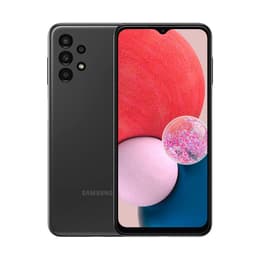
Galaxy A13
Starting at

Refurbished price:€109.00

Versus €249.00 new

See options
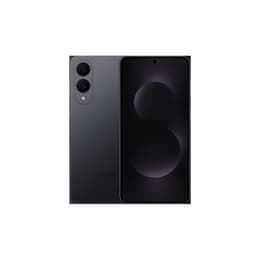
Galaxy S25 Edge
Starting at

Refurbished price:€488.00

Versus €1,275.21 new

See options

Differences at a glance

The Samsung Galaxy A13 (2022) and the Samsung Galaxy S25 Edge (2025) represent two completely different tiers and eras of Samsung's smartphone ecosystem. While both devices run the Android operating system, they cater to vastly different expectations regarding hardware sophistication, processing capability, and design philosophy.

Available Models

Colour

Storage

Scores

Durability

When evaluating hardware longevity and software support, these two models occupy opposite ends of the timeline spectrum, reflecting their generational gap.

  • Release timeline and support: The Galaxy A13 launched earlier and approaches the later stages of its standard software support cycle, whereas the Galaxy S25 Edge benefits from an extensive multi-year update commitment extending deep into the future.
  • Build durability: The Galaxy S25 Edge utilizes advanced reinforced glass and a titanium chassis structure, while the Galaxy A13 employs a standard plastic and glass-front build.
  • Expected lifespan: The newer model provides longer-term security readiness, while the older model suits short-term or temporary usage needs.

Year of Release

2022

2025

Compatible with latest Update

No

Yes

OS

Android

Android

Foldable

No

No

Performance

Daily responsiveness and multitasking capabilities differ significantly between the entry-level architecture of the older model and the high-end hardware found in the contemporary device.

  • Multitasking capacity: The Galaxy S25 Edge handles demanding applications and intensive background tasks fluidly with ample memory headroom, whereas the Galaxy A13 manages basic day-to-day apps at a more measured pace.
  • Storage configurations: The Galaxy S25 Edge starts with larger baseline internal storage capacities, while the Galaxy A13 relies on smaller initial storage tiers often supplemented by external memory cards.
  • Battery behavior: The Galaxy A13 relies on a large capacity power cell suited for lighter daily tasks, while the Galaxy S25 Edge balances a slim profile with power-efficient processing for typical daily routines.

Screen quality

Visual output and screen technology reflect the stark contrast between standard display panels and high-refresh-rate premium viewing surfaces.

  • Display technology: The Galaxy S25 Edge features a vibrant AMOLED panel with deep contrast levels, while the Galaxy A13 uses a standard PLS TFT display.
  • Resolution and clarity: The Galaxy S25 Edge delivers a sharper, high-resolution viewing area well-suited for detailed media consumption, compared to the standard definition clarity of the Galaxy A13.
  • Outdoor usability: Higher peak brightness capabilities on the Galaxy S25 Edge ensure better legibility under direct sunlight compared to the older entry-level display.

Resolution

1080 x 2408

1440 x 3120

Audiovisual

Optics and media capture hardware vary extensively, shaping how each device handles photography, video recording, and audio playback.

  • Camera versatility: The Galaxy S25 Edge incorporates a high-resolution main sensor designed for crisp detail capture in varied lighting, whereas the Galaxy A13 offers a multi-lens layout aimed at basic casual snapshots.
  • Video and low-light: Advanced image processing on the Galaxy S25 Edge yields clearer low-light results and steadier video output than the more basic processing found on the Galaxy A13.
  • Media consumption: Speaker output and audio clarity on the newer flagship-tier device provide a more immersive soundscape for streaming videos and music.

Miscellaneous

Physical dimensions, connectivity standards, and everyday usability features highlight further structural divergences between the two smartphones.

  • Connectivity standards: The Galaxy S25 Edge supports modern high-speed cellular networks and advanced wireless protocols, whereas the Galaxy A13 focuses on standard LTE connectivity depending on the specific regional variant.
  • Design profile: The Galaxy S25 Edge features an ultra-thin, lightweight form factor, while the Galaxy A13 has a thicker, heavier plastic footprint.
  • Authentication: Both models incorporate secure biometric unlocking methods, utilizing side-mounted fingerprint recognition or facial matching features.

Weight

195 g

163 g

Screen size (in)

6.6

6.7

Network

4G

5G

SIM card

Dual Physical SIM

Physical SIM + eSIM

Carrier compatibility

Unlocked

Unlocked

What the community thinks

Choosing between the Galaxy A13 and the Galaxy S25 Edge depends entirely on individual user priorities and daily technical demands. Users prioritizing maximum processing muscle, high-resolution visual output, extensive software longevity, and advanced photography will find the Galaxy S25 Edge well-suited to their needs. Conversely, users seeking a straightforward, utilitarian device for basic messaging, calling, and light daily tasks may lean toward the simpler configuration of the Galaxy A13. Choosing a quality-assured refurbished option for either model provides an eco-friendly alternative that supports sustainable technology habits without compromising on performance expectations.








