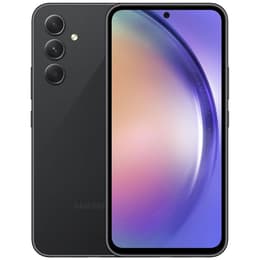



Galaxy A54 Vs Xiaomi Redmi Note 13

Galaxy A54
Galaxy A54
Starting at

Refurbished price:178.00

Versus €527.33 new

See options
Xiaomi Redmi Note 13
Starting at

Refurbished price:137.00

Versus €340.00 new

See options

Ratings

The Samsung Galaxy A54 and the Xiaomi Redmi Note 13 are both smartphones released in recent years, offering distinct experiences within the competitive market. The Galaxy A54, launched in March 2023, emphasizes a balanced feature set with robust software support, while the Redmi Note 13, introduced in January 2024, focuses on a large display and a high-megapixel main camera. Both devices operate on the Android platform, with Samsung's One UI and Xiaomi's MIUI offering different user interfaces and ecosystems.

Scores

Durability

When considering the long-term usability of these devices, several factors come into play, including their release timelines, software support, and physical durability.

  • Release Timeline: The Samsung Galaxy A54 was released in March 2023, making it slightly older than the Xiaomi Redmi Note 13, which debuted in January 2024. This difference means the Redmi Note 13 will likely receive software updates for a slightly longer period from its launch date.
  • OS Support: The Galaxy A54 launched with Android 13 and is promised four major OS upgrades and five years of security updates, extending its software longevity significantly, potentially up to Android 17. The Redmi Note 13 also launched with Android 13 (with MIUI 14), but Xiaomi's long-term OS update policy is less explicitly defined, though it mentions MIUI optimization for minimal software aging after 48 months.
  • Physical Durability: The Galaxy A54 features Corning Gorilla Glass 5 on both its front and back, coupled with an IP67 rating for dust and water resistance. The Redmi Note 13 offers Corning Gorilla Glass 3 protection on its display and an IP54 rating, indicating splash and dust resistance. The A54 generally presents a more robust build for everyday encounters with elements.
  • Repairability: The Galaxy A54 has received repairability scores ranging from 6.25/10 to 8.4 (under French environmental legislation), indicating it is considered fairly repairable. Specific repairability scores for the Redmi Note 13 are not as widely published, but mid-range devices can vary in ease of repair.

Year of Release

2023

2024

Compatible with latest Update

Yes

Yes

OS

Android

Android

Foldable

No

No

Performance

The performance of a smartphone is crucial for daily operations, from launching applications to managing multiple tasks. Both devices offer capable hardware for general use, but their underlying processors provide different experiences.

  • Processor Capabilities: The Galaxy A54 is powered by an Exynos 1380 processor, which generally handles everyday tasks smoothly. User feedback suggests it is suitable for routine activities and some light gaming, though some users have noted occasional UI stutters. The Redmi Note 13 (4G model) uses a Snapdragon 685 processor, while the 5G variant uses a MediaTek Dimensity 6080. The Snapdragon 685 is considered less powerful than the Exynos 1380, and some users report noticeable lag with demanding applications on the Redmi Note 13.
  • Multitasking and Responsiveness: The Galaxy A54, with its processor, offers a responsive experience for switching between apps and general navigation. While the Redmi Note 13 can handle multiple apps, its performance may be less fluid during intensive multitasking or when running graphically demanding games.
  • Battery Behavior: Both phones are equipped with 5000 mAh batteries. The Galaxy A54 typically provides around 1.5 days or 39 hours of moderate to heavy usage, with some tests showing over 10 hours of continuous web browsing. The Redmi Note 13, particularly the 4G model, has shown slightly better endurance in some tests, reaching up to 51 hours on a single charge, suggesting efficient power management.
  • Storage and RAM: Both devices offer various configurations for storage and RAM, impacting how many applications can run simultaneously and how much data can be stored. The Galaxy A54 supports microSD card expansion up to 1TB.

Memory (GB)

8 GB

8 GB

Screen quality

The display is a primary interface for smartphone interaction, and both the Galaxy A54 and Redmi Note 13 feature vibrant screens with high refresh rates.

  • Display Technology and Clarity: Both smartphones utilize AMOLED display technology, known for deep blacks and vibrant colors. The Galaxy A54 features a 6.4-inch Super AMOLED display with a resolution of 1080 x 2340 pixels (FHD+). The Redmi Note 13 has a slightly larger 6.67-inch AMOLED display, also with a 1080x2400 pixel (FHD+) resolution.
  • Brightness Levels: The Redmi Note 13 boasts a higher peak brightness of 1800 nits, which can be beneficial for outdoor visibility. The Galaxy A54 offers up to 1000 nits in High Brightness Mode (HBM), providing good visibility in various lighting conditions.
  • Refresh Rate and Smoothness: Both devices feature a 120Hz refresh rate, contributing to smoother scrolling and a more fluid visual experience during general use and gaming.
  • Screen Protection: The Galaxy A54's display is protected by Corning Gorilla Glass 5, while the Redmi Note 13 uses Corning Gorilla Glass 3.

Resolution

1080 x 2340

1080 x 2400

Screen type

Super AMOLED

AMOLED

Audiovisual

The camera systems on both the Galaxy A54 and Redmi Note 13 aim to capture quality images and videos, though they approach this with different sensor configurations and processing.

  • Rear Camera System: The Galaxy A54 features a triple rear camera setup: a 50 MP main sensor with optical image stabilization (OIS), a 12 MP ultrawide lens, and a 5 MP macro lens. The Redmi Note 13 also has a triple rear camera system, consisting of a 108 MP main sensor, an 8 MP ultrawide, and a 2 MP macro lens.
  • Photography Performance: The Galaxy A54's main camera is praised for taking good pictures in bright daylight with natural colors and decent edge detection in portrait mode. Its ultrawide camera is also considered competent. The Redmi Note 13's 108 MP main camera can produce good daytime photos, but its ultrawide and macro lenses are generally less impressive.
  • Video Recording Quality: The Galaxy A54 can record 4K video at 30 frames per second (fps) and 1080p at 30 or 60 fps. Users note that stabilization is more effective at 1080p 30fps. The Redmi Note 13 is typically limited to 1080p video recording, and its video stabilization is a common point of criticism, often resulting in jerky footage.
  • Front Camera: The Galaxy A54 includes a 32 MP front-facing camera, while the Redmi Note 13 (4G model) has a 16 MP front camera. Both are capable of capturing clear selfies in good lighting.

Main camera

50 megapixels

108 megapixels

Front camera

32 megapixels

16 megapixels

Miscellaneous

Beyond core features, several practical elements contribute to the overall user experience and differentiate these two smartphones.

  • Connectivity: Both devices support modern connectivity standards. The Galaxy A54 offers 5G capabilities, along with Wi-Fi and Bluetooth. The Redmi Note 13 is available in both 4G and 5G variants, and also includes Wi-Fi and Bluetooth.
  • Ports and Sensors: The Galaxy A54 features a USB-C port for charging and data transfer but lacks a 3.5mm headphone jack. The Redmi Note 13 includes a USB-C port, a 3.5mm headphone jack, and an IR blaster, which allows it to control compatible home appliances. Both phones incorporate in-display fingerprint sensors for secure unlocking.
  • Build Materials and Dimensions: The Galaxy A54 has a glass back and front (Gorilla Glass 5), giving it a more premium feel, and measures 158.2 x 76.7 x 8.2 mm, weighing 202g. The Redmi Note 13 features a glass front (Gorilla Glass 3) and a plastic back and frame, with dimensions of 162.24 x 75.55 x 7.97 mm and a weight of 188.5g.
  • Water and Dust Resistance: The Galaxy A54 carries an IP67 rating, providing significant protection against dust and immersion in water. The Redmi Note 13 has an IP54 rating, offering protection against splashes and dust.

Weight

202 g

175 g

Screen size (in)

6.4

6.67

Network

5G

5G

SIM card

Physical SIM + eSIM

Dual Physical SIM

Carrier compatibility

Unlocked

Unlocked

User sentiment for the Samsung Galaxy A54 often highlights its vibrant display, reliable main camera performance in good lighting, and Samsung's commitment to long-term software updates. Some users appreciate its overall balanced package and the more premium feel of its glass construction. Criticisms sometimes point to occasional UI stutters, especially with heavier use, and its performance not always matching competitors in its segment, particularly for intensive gaming. The lack of a headphone jack and the slower charging speed compared to some rivals are also noted.

The Xiaomi Redmi Note 13 is frequently praised for its large, bright AMOLED display and the inclusion of a 3.5mm headphone jack and IR blaster. Its main camera is generally considered competent for daytime photography. However, common concerns include its less powerful processor, which can lead to a less fluid experience with demanding applications, and its significantly weaker video recording capabilities, often lacking effective stabilization. The plastic build and lower IP rating are also points of comparison.

Users prioritizing extended software support, a more robust build with better water resistance, and a generally more consistent camera experience for both photos and video may find the Samsung Galaxy A54 well-suited to their needs. Conversely, users who value a larger, brighter display, the convenience of a headphone jack and IR blaster, and potentially longer battery life in some scenarios, might lean toward the Xiaomi Redmi Note 13. Both devices offer a full day of battery life for typical usage, and choosing between them often comes down to these specific feature preferences. For those considering an eco-friendly alternative, quality-assured refurbished options for both models are available, providing a sustainable choice for acquiring these devices.


See all articles

Our recent comparisons







