

Galaxy S20 FE Vs Xiaomi 14

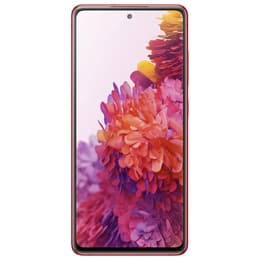
Galaxy S20 FE
Galaxy S20 FE
Starting at

Refurbished price:151.00

Versus €779.00 new

See options
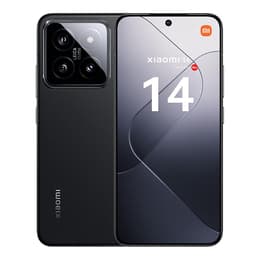
Xiaomi 14
Xiaomi 14
Starting at

Refurbished price:384.00

Versus €1,099.00 new

See options

Ratings

The Samsung Galaxy S20 FE (Fan Edition), released in October 2020, was designed to offer a selection of flagship features at a more accessible point. In contrast, the Xiaomi 14, launched globally in February 2024, represents a modern flagship device with a focus on advanced camera technology and a compact form factor. These two Android smartphones cater to different user expectations, primarily due to their significant age difference and the technological advancements introduced in the newer model.

Scores

Durability

The lifespan of a smartphone is influenced by its build quality, software support, and the availability of replacement parts. The substantial gap in their release dates means the Xiaomi 14 benefits from a longer expected support window.

  • Software Updates: The Galaxy S20 FE, launched with Android 10, received three major Android OS updates, with its software support officially ending around October 2025. The Xiaomi 14, launching with Android 14, is expected to receive four major Android OS updates and five to six years of security updates, extending its functional life significantly further into the future.
  • Repairability: The Galaxy S20 FE has a repairability score of 7.5 out of 10, indicating it can be repaired with some effort, with accessible battery and screen components despite adhesive use. The Xiaomi 14 scores slightly higher at 8.0 out of 10, also noting accessible battery and screen components, though plastic covers need removal to access cables.
  • Practical Lifespan: Users of the Galaxy S20 FE may find its software experience becoming outdated as new Android versions are no longer supported, potentially impacting app compatibility and security over time. The Xiaomi 14, being a much newer device, offers a longer period of up-to-date software and security, making it a more future-proof option for users seeking extended longevity.

Year of Release

2020

2023

Compatible with latest Update

No

Yes

OS

Android

Android

Foldable

No

No

Performance

Performance differences between these two devices are notable, primarily due to the generational leap in processor technology and RAM configurations.

  • Processing Power: The Galaxy S20 FE is powered by a processor that was current-generation at its 2020 release, offering smooth performance for everyday tasks and moderate gaming. The Xiaomi 14 features a significantly newer, top-tier processor, providing a substantial boost in speed and efficiency for demanding applications, intensive multitasking, and advanced gaming.
  • Multitasking and Storage: The Galaxy S20 FE typically comes with 6GB or 8GB of RAM, which is sufficient for most multitasking needs, and offers expandable storage via a microSD card. The Xiaomi 14 generally starts with 12GB of RAM, allowing for more seamless switching between numerous applications and handling heavier workloads, though it lacks a microSD card slot for expandable storage.
  • Battery Behavior: The Galaxy S20 FE's 4500 mAh battery generally provides a full day of use for many users, though heavy usage, especially with the 120Hz display enabled, can lead to more frequent charging. The Xiaomi 14, with a 4610 mAh battery, combined with a more power-efficient processor and display technology, often delivers consistent all-day battery life, even with intensive use.

Memory (GB)

6 GB

16 GB

Screen quality

Both devices offer vibrant displays, but the Xiaomi 14 incorporates newer display technologies that enhance the visual experience.

  • Display Technology and Clarity: The Galaxy S20 FE features a 6.5-inch Super AMOLED display with a 1080 x 2400 pixel resolution, providing rich colors and deep blacks. The Xiaomi 14 has a slightly smaller 6.36-inch LTPO AMOLED display with a higher 1200 x 2670 pixel resolution, resulting in sharper images and text.
  • Brightness and Refresh Rate: Both phones offer a 120Hz refresh rate for smooth scrolling and responsiveness. However, the Xiaomi 14's display can reach a peak brightness of up to 3000 nits, making it significantly brighter and more legible in direct sunlight compared to the Galaxy S20 FE.
  • Viewing Experience: The Galaxy S20 FE's display is flat and offers a good media consumption experience. The Xiaomi 14's LTPO technology allows for an adaptive refresh rate, optimizing power consumption while maintaining smooth visuals, and its higher pixel density contributes to a more refined viewing experience.

Resolution

1080 x 2400

1200 x 2670

Screen type

Super AMOLED

LTPO OLED

Audiovisual

The camera systems on both smartphones are capable, but the Xiaomi 14 benefits from more recent advancements in sensor technology and computational photography.

  • Rear Camera System: The Galaxy S20 FE features a versatile triple-camera setup with a 12MP main, 12MP ultrawide, and an 8MP telephoto lens with 3x optical zoom. The Xiaomi 14 also boasts a triple 50MP camera system, co-engineered with Leica, including a main, ultrawide, and a telephoto lens with 3.2x optical zoom, offering higher resolution and potentially more detailed images.
  • Photography Performance: The Galaxy S20 FE delivers good photo quality in various conditions, with its main and ultrawide cameras performing well. The Xiaomi 14, with its larger sensors and Leica tuning, generally offers improved low-light performance, better dynamic range, and more nuanced color reproduction.
  • Video Recording and Features: Both devices are capable of recording 4K video. The Galaxy S20 FE supports 4K at 60fps. The Xiaomi 14 can record up to 8K at 24fps and 4K at 60fps, with its front camera also capable of 4K 60fps video, providing more advanced video capabilities.

Main camera

12 megapixels

50 megapixels

Front camera

32 megapixels

32 megapixels

Miscellaneous

Beyond the core features, several practical elements differentiate the user experience of these two devices.

  • Connectivity and Ports: Both phones support 5G connectivity. The Galaxy S20 FE includes a USB-C port and supports Wi-Fi 6 and Bluetooth 5.0. The Xiaomi 14 also features a USB-C port, but supports newer Wi-Fi 7 and Bluetooth 5.4 standards, offering potentially faster and more stable wireless connections.
  • Biometric Security: The Galaxy S20 FE uses an optical under-display fingerprint sensor. The Xiaomi 14 also features an optical under-display fingerprint sensor, which users report as being very fast. Both offer face recognition for unlocking.
  • Build Materials and Handling: The Galaxy S20 FE has a plastic back and an aluminum frame, with Gorilla Glass 3 on the front. The Xiaomi 14 features a glass front (Gorilla Glass Victus) and a glass or silicone polymer back with an aluminum frame, giving it a more premium feel and enhanced durability. The Xiaomi 14 is also more compact and slightly heavier than the S20 FE.

Weight

190 g

188 g

Screen size (in)

6.5

6.36

Network

4G

5G

SIM card

Dual Physical SIM

Dual Physical SIM

Carrier compatibility

Unlocked

Unlocked

User sentiment for the Samsung Galaxy S20 FE often highlights its balanced feature set for its time, particularly praising its display, camera capabilities, and overall performance. Common criticisms included its plastic back, which some found less premium, and some reports of inconsistent battery life for heavy users. The Xiaomi 14, being a newer flagship, receives praise for its powerful processor, advanced camera system, and bright, high-resolution display. Some users have noted that its HyperOS software experience can be different from stock Android, and occasional software bugs have been reported, though many find the overall experience smooth.

Users prioritizing a compact device with cutting-edge performance, a highly capable camera system, and a longer software support window may find the Xiaomi 14 well-suited to their needs. Its newer hardware and extended update policy offer a more future-proof experience. Conversely, users who value a slightly larger display, expandable storage, and a more established software ecosystem might still consider the Galaxy S20 FE, especially if their usage patterns are less demanding. For those looking for an eco-friendly and quality-assured option, both models are available as refurbished devices, providing a sustainable choice for different budgets and performance requirements.

See all articles

Our recent comparisons