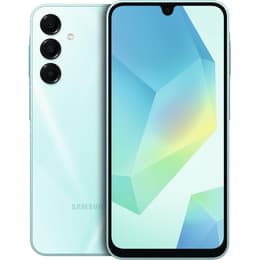
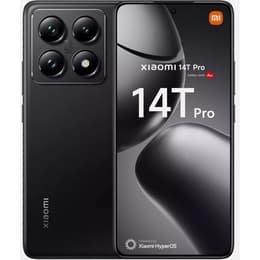


Galaxy A16 Vs Xiaomi 14T Pro

Galaxy A16
Galaxy A16
Starting at

Refurbished price:134.00

Versus €250.00 new

See options
Xiaomi 14T Pro
Xiaomi 14T Pro
Starting at

Refurbished price:395.00

Versus €1,500.00 new

See options

Ratings

The Samsung Galaxy A16 and the Xiaomi 14T Pro represent distinct offerings in the smartphone market, released in late 2024. The Galaxy A16 targets users seeking essential smartphone functionality with a focus on display quality and battery longevity, while the Xiaomi 14T Pro aims for a more performance-oriented experience with advanced camera capabilities and rapid charging. Both devices operate on the Android platform, but cater to different user priorities through their hardware and software optimizations.

Scores

Durability

The expected practical lifespan of a smartphone is significantly influenced by its release timeline and the manufacturer's commitment to software updates. These two devices offer differing long-term support.

  • Release Timeline: The Samsung Galaxy A16 was announced in October 2024 and released later that month in Europe, with a US release in January 2025. The Xiaomi 14T Pro was announced and globally released in September 2024.
  • Software Longevity: Samsung has committed to providing six years of OS upgrades and security updates for the Galaxy A16, with support expected to cease in October 2030. The Xiaomi 14T Pro typically receives 3-4 years of OS updates and 5 years of security updates.
  • Repairability: Both devices feature common smartphone construction with glass fronts and plastic or glass backs, suggesting standard repair processes. The Galaxy A16 has a plastic back and frame, while the Xiaomi 14T Pro features an aluminum frame and glass back, which may influence repair costs for external damage.

Year of Release

2024

2024

OS

Android

Android

Foldable

No

No

Performance

Performance differences between the Galaxy A16 and the Xiaomi 14T Pro are notable, impacting how smoothly demanding applications run and how efficiently the devices handle multitasking.

  • Processing Power: The Galaxy A16 is equipped with a processor designed for everyday tasks, providing smooth navigation for general use and lighter applications. The Xiaomi 14T Pro, featuring a flagship-level processor, delivers significantly more power, resulting in very smooth performance for heavy multitasking, graphic-intensive gaming, and demanding applications.
  • Multitasking and Responsiveness: Users of the Galaxy A16 may experience occasional stutters when switching rapidly between multiple demanding apps or during intensive gaming sessions. The Xiaomi 14T Pro maintains high responsiveness even under heavy load, allowing for seamless transitions and quick app loading.
  • Storage and RAM: The Galaxy A16 offers RAM options up to 8GB and storage up to 256GB (UFS 2.2). The Xiaomi 14T Pro comes with higher RAM configurations, typically 12GB or 16GB (LPDDR5X), and faster UFS 4.0 storage options up to 1TB, contributing to its superior speed and efficiency.

Memory (GB)

4 GB

12 GB

Screen quality

The visual experience on both devices is shaped by their display technologies, resolution, and brightness capabilities, catering to different viewing preferences.

  • Display Technology and Clarity: Both phones feature Super AMOLED displays, known for deep blacks and vibrant colors. The Galaxy A16 has a 6.7-inch FHD+ (1080x2340 pixels) screen. The Xiaomi 14T Pro offers a 6.67-inch AMOLED display with a higher 1.5K resolution (1220 x 2712 pixels), providing a sharper image.
  • Brightness and Refresh Rate: The Galaxy A16's display offers a 90Hz refresh rate for smoother scrolling and an enhanced brightness of up to 800 nits for good outdoor visibility. The Xiaomi 14T Pro boasts a 144Hz refresh rate for exceptionally fluid visuals and a significantly higher peak brightness of up to 4000 nits, ensuring excellent readability even in direct sunlight.
  • Viewing Experience: Users prioritizing a very smooth and bright display for media consumption and gaming will find the Xiaomi 14T Pro's screen more immersive. The Galaxy A16 provides a clear and vibrant viewing experience suitable for general daily use.

Resolution

1080x2340

1220 x 2712

Screen type

Super AMOLED

AMOLED

Audiovisual

The camera systems on the Galaxy A16 and Xiaomi 14T Pro are designed with different photographic strengths, influencing the quality of images and videos captured in various scenarios.

  • Rear Camera Capabilities: The Galaxy A16 features a triple rear camera setup with a 50MP main sensor, a 5MP ultrawide, and a 2MP macro lens. Its main camera performs well in daylight, but the ultrawide and macro lenses are less capable, especially in challenging lighting. The Xiaomi 14T Pro offers a Leica-tuned triple camera system, including a 50MP main sensor with optical image stabilization (OIS), a 50MP telephoto lens with 2.6x optical zoom, and a 12MP ultrawide lens. This setup provides more versatility and higher quality across different focal lengths.
  • Low-Light and Video Performance: The Galaxy A16's low-light photo quality can be soft and blurry, and video recording is limited to 1080p at 30 frames per second. The Xiaomi 14T Pro excels in low-light conditions, producing images with good detail and natural color reproduction. It supports video recording up to 8K at 30 frames per second with the rear camera and 4K at 30 frames per second with the front camera.
  • Front Camera and Audio: The Galaxy A16 has a 13MP front camera suitable for video calls and casual selfies. The Xiaomi 14T Pro features a 32MP front camera, delivering higher-resolution selfies, though its ultrawide and selfie cameras may lack autofocus. The Xiaomi 14T Pro also includes stereo speakers for a more immersive media consumption experience, while the Galaxy A16 has a single firing speaker.

Miscellaneous

Beyond core performance and display, several practical elements differentiate these two smartphones, affecting daily usability and overall user experience.

  • Connectivity and Ports: Both devices support 5G connectivity (for the 5G variant of A16), Wi-Fi, Bluetooth, and NFC. The Galaxy A16 features Wi-Fi 802.11ac and Bluetooth 5.3, along with a 3.5mm headphone jack and USB Type-C. The Xiaomi 14T Pro offers newer standards like Wi-Fi 6/7 and Bluetooth 5.4, and a USB Type-C port, but typically omits the headphone jack.
  • Build Materials and Durability: The Galaxy A16 utilizes a plastic back and frame with a glass front, offering IP54 dust and splash resistance for the 5G model. The Xiaomi 14T Pro presents a more premium build with an aluminum frame and a glass back (Gorilla Glass 5 front, Panda X Glass back), boasting IP68 dust and water resistance for enhanced durability.
  • Biometrics and Handling: The Galaxy A16 incorporates a side-mounted fingerprint sensor. The Xiaomi 14T Pro typically features an in-display fingerprint sensor. Both devices have similar dimensions, with the Galaxy A16 measuring 164.4 x 77.9 x 7.9 mm and weighing 200g, and the Xiaomi 14T Pro at 162.2 x 75.7 x 8.49 mm and 206g (glass version), impacting their feel in hand.

Weight

200 g

209 g

Screen size (in)

6.7

6.67

Network

4G

5G

SIM card

Physical SIM

Dual Physical SIM

Carrier compatibility

Unlocked

Unlocked

User feedback indicates that the Samsung Galaxy A16 is praised for its vibrant Super AMOLED display and impressive battery life, often lasting up to two days for light users. Many appreciate its modern aesthetic, which gives it a more premium appearance than its segment suggests. However, common criticisms include its sluggish performance for demanding tasks and disappointing camera quality, particularly the ultrawide and macro lenses. Users also note the absence of a charger in the box.

The Xiaomi 14T Pro receives acclaim for its powerful flagship-level performance, smooth gaming capabilities, and exceptionally fast wired and wireless charging. Its 1.5K AMOLED display with a 144Hz refresh rate and high peak brightness is frequently highlighted as a major strength. The Leica-tuned camera system is also well-regarded for its versatility and image quality. Some users have reported that the device can overheat during intensive use, and the rear panel is prone to fingerprints. The availability of the device can also be a concern in some regions.

Users prioritizing extended software support, a large, vibrant display, and exceptional battery life for general daily use may find the Samsung Galaxy A16 well-suited to their needs. Conversely, those who require robust performance for gaming and heavy multitasking, a superior camera system, and ultra-fast charging will likely lean towards the Xiaomi 14T Pro. Both devices offer compelling features, and considering a quality-assured refurbished option can provide an eco-friendly alternative for either choice.


See all articles

Our recent comparisons