

Galaxy S10+ Vs Galaxy S21 5G

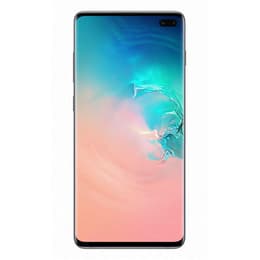
Galaxy S10+
Galaxy S10+
Starting at

Refurbished price:135.00

Versus €1,009.00 new

See options
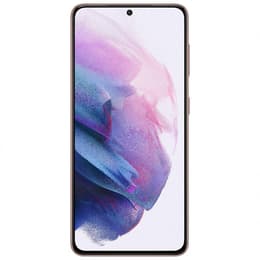
Galaxy S21 5G
Galaxy S21 5G
Starting at

Refurbished price:171.00

Versus €859.00 new

See options

Ratings

The Samsung Galaxy S10 Plus, released in March 2019, and the Samsung Galaxy S21 5G, launched in January 2021, represent different generations of Samsung's flagship smartphone line. While both devices operate on the Android platform, the S21 5G introduces advancements in processing power, display technology, and network connectivity. Key distinctions between these models include the S21 5G's higher refresh rate display and 5G capabilities, contrasting with the S10 Plus's higher screen resolution and traditional hardware features like a headphone jack and expandable storage.

Scores

Durability

When considering the long-term usability of these devices, their release timelines and subsequent software support are significant factors.

  • Release Timeline and OS Support: The Galaxy S10 Plus, released in March 2019, concluded its major Android operating system updates with Android 12 and ceased receiving regular security patches around March 2023. In contrast, the Galaxy S21 5G, launched in January 2021, benefited from Samsung's extended support policy, receiving four major Android updates up to Android 15 (One UI 7) by May 2025, with security updates continuing until November 2025, and overall support ending around February 2026.
  • Repairability: The Galaxy S10 Plus received a repairability score of 3 out of 10 from iFixit, indicating difficulty due to extensive adhesive, a soldered charging port, and a fingerprint sensor fused into the display. The Galaxy S21 5G, however, achieved a higher repairability score of 7.5 out of 10, noted for being easier to disassemble and having a larger, more responsive fingerprint scanner, though its battery remains secured with strong adhesive.
  • Practical Lifespan: Users prioritizing the latest software features and security updates will find the Galaxy S21 5G offers a longer practical lifespan due to its more recent release and extended support window. The S10 Plus, while still functional, will no longer receive official software enhancements or regular security patches.

Year of Release

2019

2021

Compatible with latest Update

No

Yes

OS

Android

Android

Foldable

No

No

Performance

The performance capabilities of these two smartphones reflect the advancements in mobile technology over their respective release periods.

  • System Responsiveness: The Galaxy S21 5G provides a noticeably smoother experience for daily tasks, app loading, and navigating the interface. This is attributed to its more efficient processor, which handles modern software demands with greater ease and less heat generation compared to the S10 Plus.
  • Multitasking and Demanding Applications: For users who frequently engage in demanding applications or extensive multitasking, the S21 5G offers a more fluid experience. Its internal hardware is better equipped to manage these tasks, ensuring applications run smoothly. The S10 Plus remains capable for most everyday tasks, but may show signs of slower performance with more intensive use.
  • Storage Flexibility: The Galaxy S10 Plus offers the advantage of expandable storage via a microSD card slot, providing flexibility for users to increase their storage capacity. The Galaxy S21 5G, in contrast, relies solely on its internal storage options, which range from 128GB to 256GB, without the possibility of external expansion.
  • Battery Behavior: While both devices feature similar battery capacities (4100 mAh for S10 Plus, 4000 mAh for S21 5G), the S21 5G generally offers more consistent all-day battery performance due to its more power-efficient processor and advanced power management. Some S10 Plus users have reported issues with battery drain and overheating.

Memory (GB)

8 GB

8 GB

Screen quality

The display experience on these devices presents a trade-off between resolution and fluidity.

  • Display Technology and Resolution: The Galaxy S10 Plus features a 6.4-inch QHD+ Dynamic AMOLED display with a resolution of 3040 x 1440 pixels, offering a high level of detail and clarity. The Galaxy S21 5G has a slightly smaller 6.2-inch FHD+ Dynamic AMOLED 2X display with a resolution of 1080 x 2400 pixels. While the S10 Plus has a higher pixel density, the S21 5G's display is designed for a different visual experience.
  • Refresh Rate and Smoothness: A significant difference lies in the refresh rate. The S10 Plus operates at a standard 60Hz, while the S21 5G features an adaptive 120Hz refresh rate. This higher refresh rate on the S21 5G results in noticeably smoother scrolling, animations, and overall interface navigation.
  • Brightness and Outdoor Visibility: The Galaxy S21 5G's screen is capable of reaching higher peak brightness levels, which enhances readability and usability in direct sunlight compared to the S10 Plus.

Resolution

1440 x 3040

1080 x 2400

Screen type

Dynamic AMOLED

Dynamic AMOLED 2X

Audiovisual

Both smartphones offer versatile camera systems, but the S21 5G incorporates newer hardware and software enhancements for photography and video.

  • Rear Camera System: Both devices feature triple-lens rear camera setups. The S21 5G includes a 64-megapixel telephoto sensor, which allows for greater detail when zooming or cropping images, and supports 8K video recording. The S10 Plus has a 12-megapixel main camera, a 16-megapixel ultrawide, and a 12-megapixel telephoto lens.
  • Photography Performance: The S21 5G generally shows improvements in low-light conditions and tends to produce images with less over-sharpening artifacts compared to the S10 Plus. The S10 Plus's photos are often described as closer to reality with deeper shadows, which can be adjusted with post-processing.
  • Front-Facing Camera: The S10 Plus features a dual front-facing camera setup, including a dedicated depth sensor for more natural background blur in selfies. The S21 5G achieves similar background blur effects through software processing with its single front camera.

Main camera

12 megapixels

12 megapixels

Front camera

10 megapixels

10 megapixels

Miscellaneous

Beyond core performance and display, several practical elements differentiate these two devices in daily use.

  • Connectivity: The Galaxy S21 5G is designed for modern mobile networks, offering 5G connectivity for faster download speeds and improved performance in congested areas. The Galaxy S10 Plus is limited to 4G LTE networks.
  • Ports and Sensors: The S10 Plus includes a 3.5mm headphone jack, a feature absent on the S21 5G, which relies solely on its USB-C port for wired audio and charging. Both devices feature in-display ultrasonic fingerprint sensors, but the S21 5G's sensor is larger and generally more responsive, leading to fewer failed unlock attempts.
  • Build Materials and Handling: The S10 Plus features a traditional glass-and-metal construction with Gorilla Glass 6 on the front and Gorilla Glass 5 on the back. The S21 5G utilizes Gorilla Glass Victus on the front and a reinforced polycarbonate back, which is designed to be more resistant to cracks from accidental drops. The S21 5G is also slightly lighter and more compact than the S10 Plus.

Weight

175 g

169 g

Width

7,41 cm

7,12 cm

Height

15.76 cm

15,17 cm

Depth

0,78 cm

0,79 cm

Screen size (in)

6.4

6.2

Network

4G

5G

SIM card

Physical SIM

Dual Physical SIM + eSIM

Carrier compatibility

Unlocked

Unlocked

Connector

USB-C + Jack 3.5mm

USB-C

The choice between the Samsung Galaxy S10 Plus and the Galaxy S21 5G largely depends on individual priorities and usage patterns. User discussions often highlight the S10 Plus's enduring appeal for its inclusion of a 3.5mm headphone jack and expandable storage, features that were removed in later generations. Its higher-resolution display is also a point of praise for those who prioritize absolute sharpness. However, common criticisms for the S10 Plus revolve around its aging battery life and the eventual slowdown in software responsiveness as it no longer receives updates.

Conversely, the Galaxy S21 5G is frequently lauded for its 120Hz adaptive refresh rate, which provides a significantly smoother and more modern user experience. Its 5G capabilities ensure compatibility with current network standards, and its improved processor delivers snappier performance for demanding applications and gaming. Users appreciate the S21 5G for its overall speed and enhanced camera features, particularly for video recording and zoom capabilities.

Users who prioritize modern performance, a fluid display, and long-term software support will find the Galaxy S21 5G well-suited to their needs. This device is ideal for those who consume a lot of media, play mobile games, or require fast connectivity. On the other hand, individuals who value traditional smartphone features like a headphone jack and the flexibility of expandable storage, and who do not require the absolute latest in software or performance, might still find the Galaxy S10 Plus a capable device for everyday use. Both models are available as quality-assured refurbished options, providing an eco-friendly alternative for consumers.


See all articles

Our recent comparisons