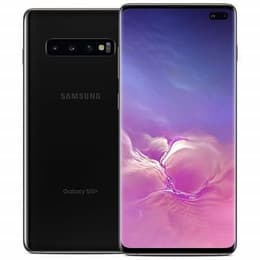
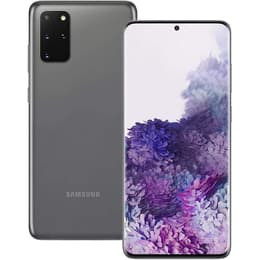


Galaxy S10+ Vs Galaxy S20+ 5G

Galaxy S10+
Galaxy S10+
Starting at

Refurbished price:143.00

Versus €1,009.00 new

See options
Galaxy S20+ 5G
Galaxy S20+ 5G
Starting at

Refurbished price:191.00

Versus €590.00 new

See options

Ratings

The Samsung Galaxy S10 Plus, released in March 2019, and the Samsung Galaxy S20 Plus 5G, launched in March 2020, represent two consecutive generations of Samsung's premium smartphone offerings. While both devices share a similar design philosophy and run on the Android operating system with Samsung's One UI, the S20 Plus 5G introduced significant advancements in display technology, camera capabilities, and network connectivity.

Scores

Durability

When considering the long-term usability of these devices, their release timelines and software support are key factors. Both models have received several major Android updates, but their differing launch dates impact their remaining support window.

  • Software Longevity: The Galaxy S10 Plus launched with Android 9 and received its final major operating system update to Android 12. The Galaxy S20 Plus 5G, released a year later, started with Android 10 and concluded its major OS updates with Android 13. This means the S20 Plus 5G benefits from an additional year of major software support, potentially offering a slightly longer period of access to the latest Android features and security enhancements.
  • Repairability: Both the Galaxy S10 Plus and the broader S10 series received a low repairability score of 3 out of 10 from iFixit, indicating that repairs can be challenging due to the extensive use of adhesive and components like the charging port being soldered to the motherboard. While a specific score for the S20 Plus 5G was not widely published, Samsung's design approach across its flagship lines often maintains similar repair challenges.
  • Practical Lifespan: Users can expect both devices to remain functional for everyday tasks beyond their official software update cycles, especially with continued security patches. However, the S20 Plus 5G's newer hardware and extended software support offer a slightly longer practical lifespan for those who prioritize the latest features and security.

Year of Release

2019

2020

Compatible with latest Update

No

No

OS

Android

Android

Foldable

No

No

Performance

The performance of a smartphone is crucial for daily responsiveness and handling demanding applications. Both the Galaxy S10 Plus and S20 Plus 5G were equipped with powerful components for their respective release years, offering capable experiences.

  • Everyday Responsiveness: The Galaxy S10 Plus provides a smooth experience for general use, app launching, and multitasking. Users have noted its performance as adequate for most tasks, though some perceived it as slightly less snappy compared to certain competitors at its launch. The Galaxy S20 Plus 5G, with its newer generation internal components, offers a noticeable step up in processing power, resulting in faster app loading times and a more fluid overall user interface, particularly when handling graphically intensive applications or complex multitasking scenarios.
  • Battery Behavior: The Galaxy S10 Plus features a 4100 mAh battery, providing sufficient power for a full day of moderate use. The Galaxy S20 Plus 5G comes with a larger 4500 mAh battery, which, combined with software optimizations, generally translates to extended usage times, often lasting more than 24 hours for many users before requiring a recharge. Both support wireless charging and fast wired charging.
  • Storage and Multitasking: Both devices offer various storage configurations, typically starting at 128GB, and support expandable storage via a microSD card. The S20 Plus 5G generally comes with a higher base RAM configuration (12GB compared to 8GB on many S10 Plus variants), which can contribute to smoother transitions between numerous open applications and a more robust experience for heavy multitaskers.

Memory (GB)

8 GB

8 GB

Screen quality

The display is a primary interaction point, and both Galaxy models feature high-quality screens, though the S20 Plus 5G introduces a key enhancement.

  • Display Technology and Clarity: The Galaxy S10 Plus features a 6.4-inch Dynamic AMOLED display with a resolution of 1440 x 3040 pixels, offering vibrant colors and deep blacks. The Galaxy S20 Plus 5G upgrades to a 6.7-inch Dynamic AMOLED 2X display with a resolution of 1440 x 3200 pixels, providing a slightly larger viewing area and comparable clarity.
  • Refresh Rate: A significant difference lies in the refresh rate. The S10 Plus has a standard 60Hz refresh rate. The S20 Plus 5G introduced a 120Hz refresh rate option, which makes scrolling, animations, and gaming appear noticeably smoother and more fluid.
  • Brightness and Outdoor Visibility: Both displays offer excellent brightness levels, making them suitable for outdoor use. The Dynamic AMOLED technology ensures good visibility even in bright conditions, with the S20 Plus 5G's Dynamic AMOLED 2X panel potentially offering marginal improvements in peak brightness and color accuracy.

Resolution

1440 x 3040

1440 x 3200

Screen type

Dynamic AMOLED

Dynamic AMOLED 2X

Audiovisual

Both smartphones offer versatile camera systems capable of capturing high-quality images and videos, with the S20 Plus 5G bringing notable advancements in sensor technology.

  • Rear Camera System: The Galaxy S10 Plus features a triple-camera setup on the rear, consisting of a 12MP wide-angle lens, a 12MP telephoto lens with 2x optical zoom, and a 16MP ultra-wide-angle lens. It is capable of 4K video recording at 60fps. The Galaxy S20 Plus 5G steps up with a quad-camera array, including a 12MP wide-angle lens, a 64MP telephoto lens (enabling higher-resolution zoom), a 12MP ultra-wide-angle lens, and a DepthVision (ToF) sensor for enhanced depth perception. This configuration allows for more detailed zoom capabilities and improved portrait mode effects.
  • Low-Light and Video Performance: The S10 Plus delivers solid low-light performance, though it can be inconsistent in challenging conditions. The S20 Plus 5G generally offers improved low-light photography due to newer sensor technology and processing, and it supports 8K video recording at 24fps, a feature not present on the S10 Plus.
  • Front Camera: The S10 Plus has a dual front camera (10MP wide and 8MP depth sensor) for improved selfies and portrait effects. The S20 Plus 5G features a single 10MP front camera, which still delivers clear selfies.

Main camera

12 megapixels

12 megapixels

Front camera

10 megapixels

10 megapixels

Miscellaneous

Beyond core features, several other aspects contribute to the overall user experience and differentiate these two Galaxy models.

  • Connectivity: A primary distinction is network support. The Galaxy S10 Plus is limited to 4G LTE networks. The Galaxy S20 Plus 5G, as its name suggests, offers 5G connectivity, providing access to faster mobile data speeds where available. Both support modern Wi-Fi standards (Wi-Fi 6 for S20 Plus 5G) and Bluetooth 5.0.
  • Ports and Sensors: The S10 Plus retains a 3.5mm headphone jack, a feature absent on the S20 Plus 5G, which relies solely on its USB-C port for wired audio and charging. Both devices feature in-display fingerprint sensors for biometric authentication.
  • Design and Build: Both phones feature a premium build with glass front and back (Gorilla Glass 6 on S10 Plus, Gorilla Glass 6 or higher on S20 Plus 5G) and an aluminum frame, offering IP68 water and dust resistance. The S20 Plus 5G is slightly larger and heavier than the S10 Plus, reflecting its bigger screen and battery.

Weight

175 g

188 g

Screen size (in)

6.4

6.7

Network

4G

5G

SIM card

Physical SIM

Physical SIM + eSIM

Carrier compatibility

Unlocked

Unlocked

Connector

USB-C + Jack 3.5mm

USB-C

The Samsung Galaxy S10 Plus and Galaxy S20 Plus 5G both offer robust smartphone experiences, but cater to slightly different priorities due to their generational differences. User sentiment often praises the S10 Plus for its comprehensive feature set at the time of its release, including the presence of a headphone jack, which was a valued inclusion for many. Some users, however, noted that its performance, while good, wasn't always perceived as the absolute fastest.

The Galaxy S20 Plus 5G, on the other hand, is frequently lauded for its smoother 120Hz display and the introduction of 5G connectivity, marking it as a more future-proof device for those seeking the latest network speeds. Its improved camera system and larger battery capacity also received positive feedback. Criticisms for the S20 Plus 5G often revolved around the removal of the headphone jack, a common trend in newer flagships.

Users prioritizing a device with a traditional headphone jack and a still-capable performance for everyday tasks may find the Galaxy S10 Plus suitable. It remains a solid option for general communication, media consumption, and casual photography. Conversely, users who value the latest in display smoothness, faster mobile data speeds, enhanced camera zoom capabilities, and a slightly longer software support window will likely lean towards the Galaxy S20 Plus 5G. This device is well-suited for mobile gamers, avid photographers, and those who frequently stream or download large files over cellular networks.

For those considering either model, exploring quality-assured refurbished options can provide an eco-friendly alternative to purchasing new, allowing access to these advanced features while supporting sustainable consumption.


See all articles

Our recent comparisons