

Galaxy S20 Vs Galaxy S21 5G

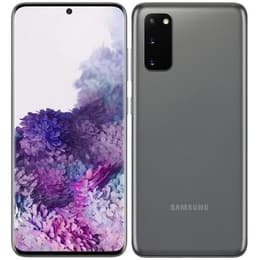
Galaxy S20
Galaxy S20
Starting at

Refurbished price:193.00

Versus €909.00 new

See options
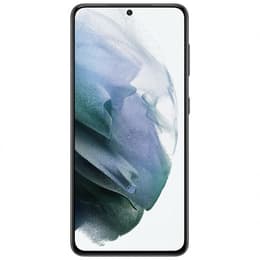
Galaxy S21 5G
Galaxy S21 5G
Starting at

Refurbished price:161.00

Versus €1,026.00 new

See options

Ratings

The Samsung Galaxy S20, released in March 2020, and the Samsung Galaxy S21 5G, launched in January 2021, represent consecutive generations of Samsung's compact flagship smartphones. While both devices offer a premium Android experience, the Galaxy S21 5G introduces a newer processor, an adaptive refresh rate display, and an extended software support timeline, alongside some design changes. Both run on the Android operating system with Samsung's One UI overlay, providing a consistent software experience.

Scores

Durability

When considering the long-term usability of these devices, their release timelines and software support policies are key factors.

  • Release Timeline: The Galaxy S20 was released in March 2020, while the Galaxy S21 5G followed in January 2021. This nearly one-year difference impacts their respective software support lifecycles.
  • Software Longevity: The Galaxy S20 launched with Android 10 and was eligible for three major Android OS updates, concluding with Android 13, and received security updates for four years, ending around 2024. The Galaxy S21 5G, launching with Android 11, benefits from Samsung's policy of providing four major OS updates, extending its support to Android 15, and five years of security updates, expected to last until 2026.
  • Repairability: The Galaxy S20 (base model) generally received a repairability score of around 7 out of 10, with some challenges noted due to adhesive use for the back cover and battery. The Galaxy S21 5G improved slightly, with a repairability score of approximately 7.5 out of 10, partly due to its plastic back making it easier to open, though battery removal can still be challenging due to strong adhesive.

Year of Release

2020

2021

Compatible with latest Update

No

Yes

OS

Android

Android

Foldable

No

No

Performance

Both the Galaxy S20 and Galaxy S21 5G offer robust performance for daily tasks, but the newer model features an updated internal architecture.

  • Processing Power: The Galaxy S20 is equipped with a capable processor that handles demanding applications and multitasking smoothly, providing a responsive user experience. The Galaxy S21 5G features a next-generation processor, offering enhanced efficiency and slightly faster performance for intensive tasks like high-fidelity gaming and complex video editing.
  • Multitasking and Storage: The Galaxy S20 was available with 8GB or 12GB of RAM, while the Galaxy S21 5G typically comes with 8GB of RAM. Both configurations are sufficient for fluid multitasking and app management. The Galaxy S20 offers 128GB of internal storage and includes a microSD card slot for expandable storage, a feature absent in the Galaxy S21 5G, which offers 128GB or 256GB of internal storage.
  • Battery Behavior: Both devices house a 4000 mAh battery. The Galaxy S20's battery life can be significantly impacted when its 120Hz display refresh rate is continuously active. The Galaxy S21 5G, with its adaptive refresh rate display, can optimize power consumption, leading to generally more consistent battery performance throughout a typical day, even with the 120Hz mode enabled.

Memory (GB)

8 GB

8 GB

Screen quality

The display experience on both smartphones is vibrant and fluid, though there are distinctions in resolution and refresh rate implementation.

  • Display Technology and Size: Both the Galaxy S20 and Galaxy S21 5G feature a 6.2-inch Dynamic AMOLED 2X display, known for deep blacks and vibrant colors.
  • Resolution and Refresh Rate: The Galaxy S20 boasts a higher native resolution of 1440 x 3200 pixels (WQHD+), but its 120Hz refresh rate is only available when the display resolution is set to 1080p (FHD+). The Galaxy S21 5G features a 1080 x 2400 pixel (FHD+) resolution display with an adaptive 120Hz refresh rate, which can dynamically adjust from 48Hz to 120Hz based on content, balancing smoothness and power efficiency.
  • Brightness and Clarity: Both displays offer excellent brightness levels suitable for outdoor visibility and provide clear, sharp visuals for everyday viewing. The S21 5G's adaptive refresh rate contributes to a consistently smooth visual experience without requiring a resolution compromise.

Resolution

1440 x 3200

1080 x 2400

Screen type

Dynamic AMOLED 2X

Dynamic AMOLED 2X

Audiovisual

Both the Galaxy S20 and Galaxy S21 5G offer versatile camera systems capable of capturing high-quality photos and videos.

  • Rear Camera System: Both devices feature a triple-camera setup on the rear, typically comprising a 12-megapixel main sensor, a 64-megapixel telephoto lens with 3x hybrid optical zoom, and a 12-megapixel ultrawide lens.
  • Photography Performance: The Galaxy S20 delivers strong photographic results with good detail and color reproduction. The Galaxy S21 5G maintains a similar hardware configuration but benefits from software enhancements that can improve image processing, particularly in areas like low-light performance and portrait mode.
  • Video and Audio: Both phones are capable of recording video at high resolutions, including 8K. Microphone quality for calls and video recording is generally clear on both. Speaker output provides a decent media consumption experience, though some S20 users have noted that the speakers could be improved.

Main camera

12 megapixels

12 megapixels

Front camera

10 megapixels

10 megapixels

Miscellaneous

Beyond core features, several practical elements differentiate the user experience of these two Galaxy smartphones.

  • Connectivity and Ports: Both devices support 5G connectivity and Wi-Fi 6. The base Galaxy S20 primarily supports sub-6GHz 5G, while the Galaxy S21 5G offers broader 5G support, including mmWave in some regions. Both utilize a USB-C port for charging and data transfer and lack a traditional 3.5mm headphone jack.
  • Biometric Security: Both phones feature an ultrasonic in-display fingerprint sensor for secure unlocking. Some users of the Galaxy S20 reported the fingerprint sensor could be slow or inconsistent. The Galaxy S21 5G features a larger and generally more responsive fingerprint scanner.
  • Build Materials and Handling: The Galaxy S20 features a glass back (Gorilla Glass 6), contributing to a premium feel. The Galaxy S21 5G opts for a plastic back, which some users find less premium but can offer increased durability against drops. Both are IP68 rated for dust and water resistance. The Galaxy S20 weighs 163 grams, while the Galaxy S21 5G is slightly heavier at 169 grams, with minimal differences in overall dimensions.

Weight

163 g

171 g

Screen size (in)

6.2

6.2

Network

4G

5G

SIM card

Dual Physical SIM

Physical SIM + eSIM

Carrier compatibility

Unlocked

Unlocked

Connector

USB-C

USB-C

User sentiment for the Galaxy S20 often highlights its excellent display and strong overall performance, with many appreciating its compact size. Common criticisms include its battery life when the 120Hz refresh rate is enabled at lower resolution, and some users found the in-display fingerprint sensor to be less responsive than desired.

The Galaxy S21 5G is frequently praised for its solid camera capabilities, powerful internal components, and generally reliable battery life, especially with its adaptive refresh rate. The improved repairability and the extended software support timeline are also noted as advantages. Some users expressed disappointment over the removal of the microSD card slot and the shift to a plastic back, though the latter can offer practical durability benefits.

Users prioritizing a higher native display resolution and expandable storage may find the Galaxy S20 more aligned with their needs. Conversely, those who value a longer software support period, a more consistently smooth display experience with adaptive refresh, and potentially improved durability from a plastic back might lean towards the Galaxy S21 5G. Both devices offer a capable smartphone experience, and choosing between them often comes down to these specific preferences. For those seeking an eco-friendly alternative, both models are available as quality-assured refurbished options, providing a sustainable choice for consumers.


See all articles

Our recent comparisons