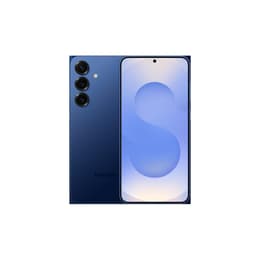
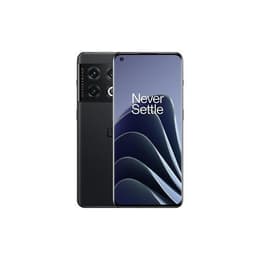


Galaxy S25+ Vs OnePlus 10 Pro

Galaxy S25+
Galaxy S25+
Starting at

Refurbished price:624.00

Versus €1,401.57 new

See options
OnePlus 10 Pro
OnePlus 10 Pro
Starting at

Refurbished price:228.00

Versus €999.00 new

See options

Ratings

The Samsung Galaxy S25 Plus, released in February 2025, and the OnePlus 10 Pro, launched globally in March 2022, represent different generations of high-end Android smartphones. While both devices offer premium features, the Galaxy S25 Plus introduces a more recent processor, extended software support, and enhanced display technology, setting it apart from its predecessor in the market.

Scores

Durability

The practical lifespan of a smartphone is influenced by its release timeline, software support, and physical resilience.

  • Release Timeline and Software Support: The Galaxy S25 Plus, released in February 2025, benefits from Samsung's commitment to providing seven years of operating system and security updates, with support expected to continue until 2032. In contrast, the OnePlus 10 Pro, launched in March 2022, typically receives three major Android OS updates and four years of security updates, meaning its software support cycle is nearing its conclusion.
  • Software Longevity: Users prioritizing long-term software updates and access to the latest Android features will find the Galaxy S25 Plus offers a significantly longer period of support. The OnePlus 10 Pro, while still functional, will receive fewer future software enhancements.
  • Repairability and Durability: The Galaxy S25 Plus features an IP68 rating for dust and water resistance and has been noted for its relatively straightforward repairability, with some assessments giving it a high score for ease of repair. The OnePlus 10 Pro's durability has been a point of discussion, with some tests indicating structural weaknesses, though its display is protected by Gorilla Glass Victus. Its repairability has been rated as average, with some components being accessible but adhesive use making certain repairs more challenging.

Year of Release

2025

2022

Compatible with latest Update

Yes

Yes

OS

Android

Android

Foldable

No

No

Performance

Performance differences between these two devices are largely driven by their respective processor generations and system optimizations.

  • Processor Capabilities: The Galaxy S25 Plus is equipped with the Snapdragon 8 Elite chipset, manufactured on a 3nm process. This newer processor offers substantial improvements in CPU performance, graphics rendering, and power efficiency, leading to smoother operation for demanding applications and multitasking. The OnePlus 10 Pro utilizes the Snapdragon 8 Gen 1 Mobile Platform, a capable processor from 2022, which handles everyday tasks and gaming effectively.
  • System Responsiveness and Multitasking: The more advanced chipset in the Galaxy S25 Plus provides greater headroom for future software and applications, ensuring sustained responsiveness over time. Users engaging in intensive gaming or running multiple complex applications simultaneously may notice a more fluid experience on the S25 Plus. Both devices offer ample RAM options, with the S25 Plus typically featuring 12GB and the 10 Pro offering 8GB or 12GB, supporting efficient multitasking.
  • Battery Behavior: The Galaxy S25 Plus houses a 4900 mAh battery, while the OnePlus 10 Pro features a 5000 mAh battery. The newer, more power-efficient processor in the S25 Plus may contribute to optimized battery usage, potentially offering comparable or improved real-world battery life despite a slightly smaller capacity.

Memory (GB)

12 GB

8 GB

Screen quality

Both smartphones feature high-quality displays, but there are distinctions in their technology and capabilities.

  • Display Technology and Clarity: The Galaxy S25 Plus features a 6.7-inch Dynamic LTPO AMOLED 2X display with a resolution of 3120x1440 pixels, resulting in a sharp visual experience. The OnePlus 10 Pro also has a 6.7-inch QHD+ Fluid AMOLED display with LTPO 2.0 technology and a resolution of 3216x1440 pixels, offering comparable clarity.
  • Brightness and Refresh Rate: The S25 Plus boasts a peak brightness of up to 2600 nits, providing excellent visibility even in bright outdoor conditions. The OnePlus 10 Pro reaches a peak brightness of 1300 nits. Both devices feature adaptive 120 Hz refresh rates, dynamically adjusting from 1 Hz to 120 Hz to optimize power efficiency while maintaining smooth scrolling and animations.
  • Color and Viewing Experience: The Galaxy S25 Plus supports HDR10+ for enhanced contrast and color. The OnePlus 10 Pro includes Dual Color Calibration, aiming for accurate colors at different brightness levels, and supports 10-bit color depth for a wide range of hues.

Resolution

1440 x 3120 pixels

1440 x 3216

Audiovisual

Both devices offer versatile camera systems, but with different strengths and processing approaches.

  • Rear Camera Systems: The Galaxy S25 Plus features a triple rear camera setup, including a 50 MP main wide-angle sensor with optical image stabilization (OIS), a 12 MP ultra-wide camera with a 120-degree field of view, and a 10 MP telephoto lens offering 3x optical zoom with OIS. The OnePlus 10 Pro also has a triple rear camera system, co-developed with Hasselblad, comprising a 48 MP main sensor with OIS, a 50 MP ultra-wide camera with a wider 150-degree field of view, and an 8 MP telephoto lens with 3.3x optical zoom.
  • Photography Performance: The S25 Plus benefits from Samsung's 'Pro Visual Engine,' an AI imaging system designed for enhanced scene optimization, noise reduction, and improved low-light performance. The OnePlus 10 Pro emphasizes natural color calibration through its Hasselblad partnership and offers features like 10-bit color capture across all rear lenses for richer tones.
  • Video Recording and Front Camera: Both smartphones are capable of recording video at up to 8K resolution, with the S25 Plus supporting 8K at 30 frames per second. The S25 Plus has a 12 MP front-facing camera, while the OnePlus 10 Pro features a 32 MP front camera.

Front camera

12MP

32 megapixels

Miscellaneous

Beyond core features, several practical elements contribute to the overall user experience of these smartphones.

  • Connectivity Standards: The Galaxy S25 Plus supports newer connectivity standards, including Wi-Fi 7 and Bluetooth 5.4, offering potentially faster and more stable wireless connections. The OnePlus 10 Pro supports Wi-Fi 6 and Bluetooth 5.2. Both devices include 5G cellular connectivity and NFC for mobile payments.
  • Ports and Biometrics: Both phones utilize a USB Type-C port for charging and data transfer. The S25 Plus uses USB Type-C 3.2, while the 10 Pro uses USB 3.1 GEN1. For security, both devices feature in-display fingerprint sensors.
  • Physical Design and Materials: The Galaxy S25 Plus measures 158.4 x 75.8 x 7.3mm and weighs 190g, featuring a glass back (Gorilla Glass Victus 2) and an aluminum frame. The OnePlus 10 Pro is slightly larger and heavier at 163.0 x 73.9 x 8.55 mm and 200.5g, also with a glass back (Gorilla Glass Victus) and a metal frame.

Weight

190 g

201 g

Screen size (in)

6.7

6.7

Network

5G

5G

SIM card

Physical SIM + eSIM

Physical SIM

Carrier compatibility

Unlocked

Unlocked

Connector

USB-C

USB-C

The Samsung Galaxy S25 Plus and OnePlus 10 Pro cater to users with varying priorities, largely due to their different release timelines and the technological advancements that have occurred between their launches.

Users often praise the Galaxy S25 Plus for its cutting-edge performance, vibrant and bright display, and the promise of extensive software support, making it a compelling choice for those who keep their devices for many years. Its advanced camera system, bolstered by AI-driven enhancements, is frequently highlighted for its versatility and image quality. Some common discussions around newer Samsung flagships often revolve around the iterative nature of hardware upgrades, though the S25 Plus still represents a significant leap from older models.

The OnePlus 10 Pro, while an older model, is recognized for its fluid display with excellent color calibration and its capable camera system, developed in partnership with Hasselblad, which appeals to photography enthusiasts. Its fast charging capabilities were also a notable feature at its release. However, user sentiment has sometimes pointed to concerns regarding its long-term software update commitment compared to newer flagships and its structural durability in some extreme tests.

Users prioritizing the absolute latest technology, the longest possible software support, and peak performance for demanding tasks will find the Galaxy S25 Plus well-suited to their needs. Its superior display brightness and advanced connectivity options also make it a strong contender for those seeking a future-proof device. Conversely, users who appreciate a refined display experience with specific color science, a unique ultra-wide camera perspective, and still-strong performance for everyday use might consider the OnePlus 10 Pro. For those evaluating refurbished products, both devices offer an eco-friendly alternative to purchasing new, providing access to premium features at different price points and technological generations.


See all articles

Our recent comparisons