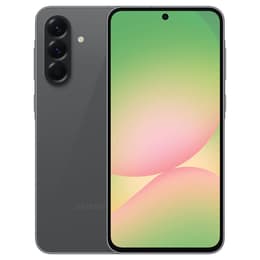



Galaxy A56 Vs OnePlus 10 Pro

Galaxy A56
Galaxy A56
Starting at

Refurbished price:259.00

Versus €502.00 new

See options
OnePlus 10 Pro
OnePlus 10 Pro
Starting at

Refurbished price:228.00

Versus €999.00 new

See options

Ratings

The Samsung Galaxy A56 and the OnePlus 10 Pro are distinct smartphones catering to different user expectations. The Galaxy A56, a 2026 release, represents Samsung's refined mid-range offering, focusing on a balanced user experience with modern features. In contrast, the OnePlus 10 Pro, launched in early 2022, was a flagship device designed for high performance and advanced capabilities. While both operate on the Android platform, their core strengths and target audiences diverge, with the A56 emphasizing accessibility and consistent updates, and the 10 Pro prioritizing raw power and premium features from its era.

Scores

Durability

When considering the practical lifespan of these devices, several factors come into play, including their release timelines and software support policies.

  • Release Timeline: The OnePlus 10 Pro was released in early 2022, making it a device that has already received several years of software updates. The Samsung Galaxy A56, being a 2026 model, benefits from a more recent launch, inherently offering a longer period of future software support from its release date.
  • OS Support Duration: Samsung typically provides substantial software support for its A-series, with the A55 (predecessor to A56) receiving up to four generations of OS upgrades and five years of security updates. The OnePlus 10 Pro, while a flagship, has a shorter remaining update window due to its earlier release, though it was expected to receive OxygenOS 16 (based on Android 16) in Q1 2026.
  • Durability Features: The Galaxy A56 (based on A55) features Corning Gorilla Glass Victus+ on both the front and back, along with an aluminum frame and IP67 dust and water resistance, offering robust protection against daily wear and tear. The OnePlus 10 Pro also uses Gorilla Glass Victus for screen protection, but its international versions generally lack an official IP rating, which could be a consideration for users in environments where water and dust exposure are common.

Year of Release

2025

2022

Compatible with latest Update

Yes

Yes

OS

Android

Android

Foldable

No

No

Performance

The performance capabilities of these two smartphones reflect their different market positions and release eras, impacting how they handle various tasks.

  • Processor Capabilities: The OnePlus 10 Pro is equipped with a high-end processor from its release year, enabling it to handle demanding applications, intensive multitasking, and graphically rich games with fluidity. The Galaxy A56, featuring a modern mid-range processor, provides smooth performance for everyday use, social media, and moderate gaming, but may show limitations with the most resource-intensive tasks compared to a former flagship.
  • System Responsiveness: Users of the OnePlus 10 Pro can expect a highly responsive experience, with applications launching quickly and transitions feeling immediate, a hallmark of its flagship-tier hardware. The Galaxy A56 offers a consistently smooth and reliable experience for typical smartphone activities, benefiting from optimizations in its operating system and hardware.
  • Multitasking and Storage: Both devices offer configurations with ample RAM (8GB or 12GB) to support efficient multitasking. Storage options are also generous on both, accommodating a large number of applications and media files. The OnePlus 10 Pro's faster storage technology from its flagship design may offer a slight edge in data read/write speeds.

Memory (GB)

8 GB

8 GB

Screen quality

The visual experience on both devices is delivered through high-quality displays, though with some key differences in technology and specifications.

  • Display Technology and Resolution: The Samsung Galaxy A56 features a 6.6-inch Super AMOLED display with Full HD+ resolution (1080 x 2340 pixels), providing vibrant colors and deep blacks suitable for general media consumption. The OnePlus 10 Pro boasts a 6.7-inch Fluid AMOLED display with a higher Quad HD+ resolution (3216 x 1440 pixels), resulting in a sharper image with greater detail.
  • Brightness and Refresh Rate: Both phones offer a 120Hz refresh rate for smooth scrolling and animations. The Galaxy A56's display can reach up to 1000 nits in High Brightness Mode, with peak brightness potentially reaching 1600 nits, ensuring good visibility outdoors. The OnePlus 10 Pro features LTPO 2.0 technology, allowing its 120Hz refresh rate to adapt dynamically from 1Hz to 120Hz for power efficiency, and it achieves a peak brightness of 1300 nits, also providing clear viewing in various lighting conditions.
  • Color Accuracy and Viewing Experience: The OnePlus 10 Pro incorporates 10-bit color depth and dual color calibration, aiming for highly accurate and rich color reproduction across different brightness levels, which can enhance the viewing of high-quality content. The Galaxy A56's Super AMOLED panel also delivers excellent color vibrancy, making it a strong choice for everyday media consumption.

Resolution

1080 x 2340

1440 x 3216

Screen type

Super AMOLED

LTPO2 Fluid AMOLED

Audiovisual

The camera systems on both smartphones offer distinct approaches to photography, reflecting their design philosophies.

  • Rear Camera Systems: The Samsung Galaxy A56 features a versatile triple-camera setup with a 50MP main sensor with optical image stabilization (OIS), a 12MP ultrawide lens, and a 5MP macro camera, designed for capturing a variety of scenes with good detail in daylight. The OnePlus 10 Pro, developed in partnership with Hasselblad, also has a triple rear camera system, including a 48MP main sensor with OIS, a 50MP ultrawide lens with an expansive 150-degree field of view, and an 8MP telephoto lens offering 3.3x optical zoom with OIS.
  • Photography Performance: The Galaxy A56 excels in daylight photography with natural colors and good detail, and its Nightography features provide decent low-light performance. The OnePlus 10 Pro's Hasselblad partnership aims for natural color calibration, and its larger sensors and advanced processing contribute to strong low-light performance and detailed images across its lenses. The 10 Pro also offers a unique 150-degree ultrawide mode and advanced Pro modes for greater creative control.
  • Video Recording Capabilities: The Galaxy A56 supports 4K video recording at 30 frames per second, with OIS and VDIS stabilization for smooth footage. The OnePlus 10 Pro offers more advanced video options, including 8K recording at 24 frames per second and 4K at up to 120 frames per second, along with features like Movie Mode for manual controls and LOG format recording for professional editing.

Main camera

4K@30fps

48 megapixels

Front camera

13 megapixels

32 megapixels

Miscellaneous

Beyond core performance and display, several practical elements differentiate these two smartphones in daily use.

  • Connectivity and Ports: Both devices support 5G connectivity and modern Wi-Fi standards (Wi-Fi 6 for A56, Wi-Fi 6 for 10 Pro). The Galaxy A56 uses a USB-C 2.0 port, while the OnePlus 10 Pro features a faster USB-C 3.1 port, which can be beneficial for quicker data transfers to and from a computer. Neither device includes a traditional 3.5mm headphone jack.
  • Biometric Security and Build: Both smartphones incorporate in-display fingerprint sensors for secure unlocking. The Galaxy A56 features a metal frame with Gorilla Glass Victus+ on the front and back, offering a premium feel and enhanced durability. The OnePlus 10 Pro also has a glass front and back with an aluminum frame, contributing to its flagship build quality.
  • Weight and Dimensions: The Galaxy A56 weighs 213g and has dimensions of 161.1 x 77.4 x 8.2 mm. The OnePlus 10 Pro is slightly lighter at 200.5g and measures 163.0 x 73.9 x 8.6 mm, making it a bit taller but narrower. These differences can influence one-handed usability and pocketability.

Weight

197 g

201 g

Screen size (in)

6.5

6.7

Network

5G

5G

SIM card

Dual Physical SIM + eSIM

Physical SIM

Carrier compatibility

Unlocked

Unlocked

Connector

USB-C

USB-C

The Samsung Galaxy A56 and the OnePlus 10 Pro offer distinct propositions for smartphone users. The Galaxy A56, as a newer mid-range device, is praised for its robust build quality, including Gorilla Glass Victus+ and an aluminum frame, along with a commitment to extended software updates. Users appreciate its vibrant Super AMOLED display and capable camera system for everyday photography. Criticisms often focus on its processor, which, while efficient for daily tasks, may not match the raw power of older flagships for intensive applications.

The OnePlus 10 Pro, a former flagship, is frequently lauded for its powerful performance, making it excellent for gaming and demanding applications. Its high-resolution LTPO AMOLED display with adaptive refresh rate and advanced camera system, co-developed with Hasselblad, are also strong points. However, some users have noted the lack of an official IP rating for international models and a software experience that, while functional, might not appeal to everyone.

Users prioritizing a device with the longest possible software support and a modern, durable design for general use and media consumption may find the Galaxy A56 well-suited to their needs. Its balanced features make it a reliable choice for those seeking a consistent experience over several years. Conversely, users who prioritize raw processing power, a higher-resolution display, and advanced camera features for creative work or intensive gaming might lean towards the OnePlus 10 Pro. Its flagship-tier hardware from its release year still offers a compelling experience for performance-oriented individuals.

For those considering either device, exploring quality-assured refurbished options can provide an eco-friendly alternative, extending the life cycle of these products and offering a sustainable choice for consumers.


See all articles

Our recent comparisons